
accident in parking lot who is at fault: Liability guide
Disclaimer: This article is for informational purposes only and is not to be construed as legal advice. No attorney-client relationship exists based on the review of this article and none of the information in this article is legal advice.
Determining who’s at fault in a parking lot accident almost always boils down to one simple concept: the right-of-way. As a general rule, the driver moving through a main traffic lane has priority over a driver pulling out of a parking space.
But real life is rarely that simple. Fault isn’t always 100% on one driver, and several factors can muddy the waters when a collision happens on private property.
How Fault Is Determined in Parking Lot Accidents
Figuring out who’s to blame in a parking lot fender bender is tricky because these spaces operate under their own unwritten rules. While the police might not show up to write a ticket like they would for a crash on a public street, the core principles of negligence still absolutely apply.
In plain English, this means the driver who failed to act with reasonable care is the one held responsible. After an accident, insurance companies will launch their own investigation to figure out exactly who was negligent.
These investigations circle around a few key questions to pin down liability. You can get a deeper look into the process by reading our guide on how insurance companies decide who is at fault.
Important Legal Disclaimer: This article is for informational purposes only and is not to be construed as legal advice. No attorney-client relationship exists based on the review of this this article and none of the information in this article is legal advice.
Common Scenarios and Typical Fault
It might surprise you, but parking lots are hotspots for collisions. In fact, they’re the scene for roughly 20% of all vehicle accidents across the United States every single year. These seemingly minor incidents result in more than 60,000 injuries annually.
To protect yourself and get a clear picture of what happened, especially in a confusing situation, many drivers are now taking pre-emptive steps like installing a dash cam.
The flowchart below breaks down a very common scenario: two cars backing out.
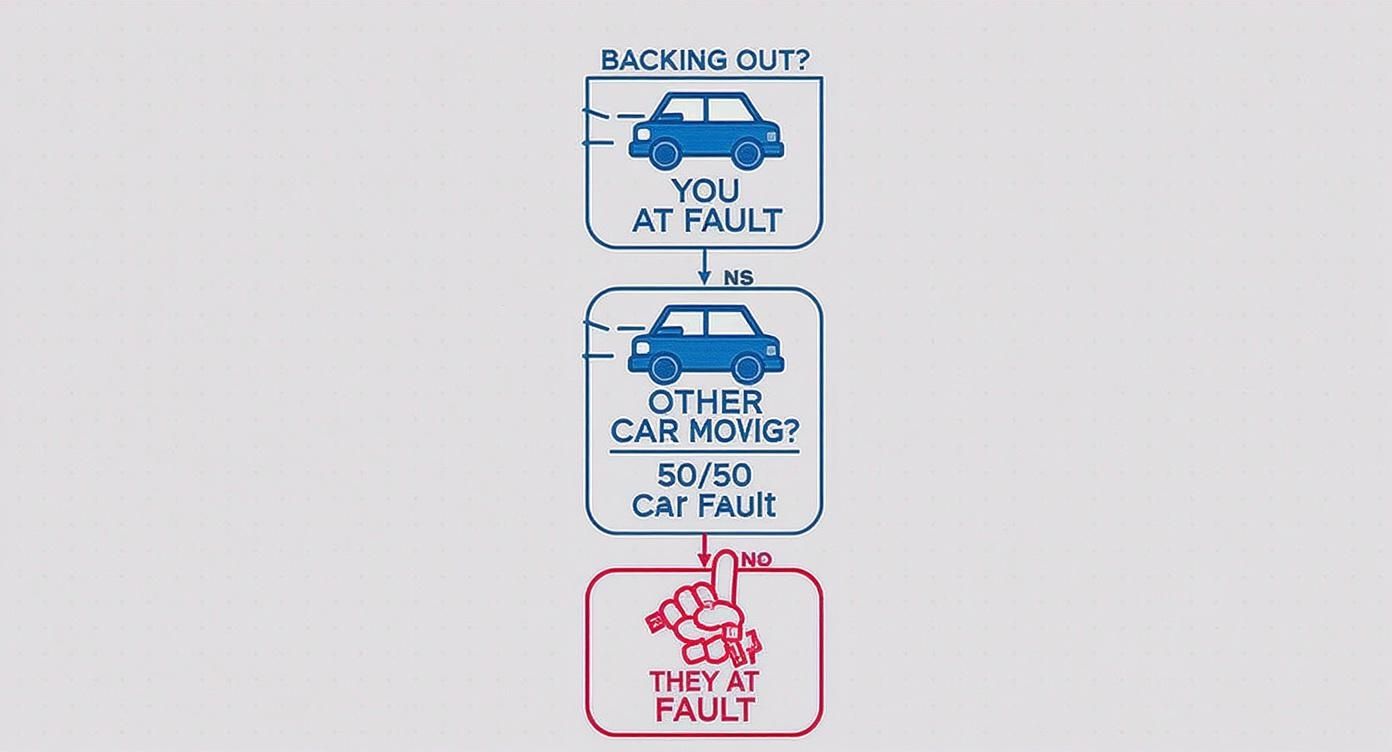
As you can see, a driver backing out is frequently found at fault, but liability can easily be shared if both cars were moving at the same time.
To make things clearer, let’s look at a few of the most frequent types of parking lot accidents and see how fault usually shakes out.
Quick Guide to Fault in Common Parking Lot Scenarios
This table summarizes some classic parking lot crash scenarios and points to the driver most likely to be held responsible.
| Accident Scenario | Typically At-Fault Driver | Reasoning |
|---|---|---|
| Car backs out into traffic | The driver backing out | Vehicles in the traffic lane have the right-of-way. |
| Two cars collide backing up | Both drivers may share fault | Both drivers have a duty to ensure the path is clear before moving. |
| Car pulls through a space | The driver pulling through | This is an unpredictable maneuver that other drivers may not anticipate. |
| Car hits a legally parked car | The driver of the moving car | A stationary, legally parked vehicle cannot be at fault for a collision. |
Remember, these are just general guidelines. Every accident has its own unique details that can shift the balance of fault.
Do Traffic Laws Apply on Private Property?
It’s a common—and often costly—misconception that the rules of the road simply evaporate the moment you pull into a private parking lot. While it’s true a police officer is less likely to hand out a ticket for a minor fender bender there, that doesn’t mean it’s a lawless free-for-all.
The truth is, the core principles of the California Vehicle Code are the exact standards that insurance companies and courts use to figure out who’s at fault. Every single driver has a fundamental duty of care to operate their vehicle safely. That duty doesn’t vanish, whether you’re on a six-lane freeway or navigating a crowded shopping mall lot.
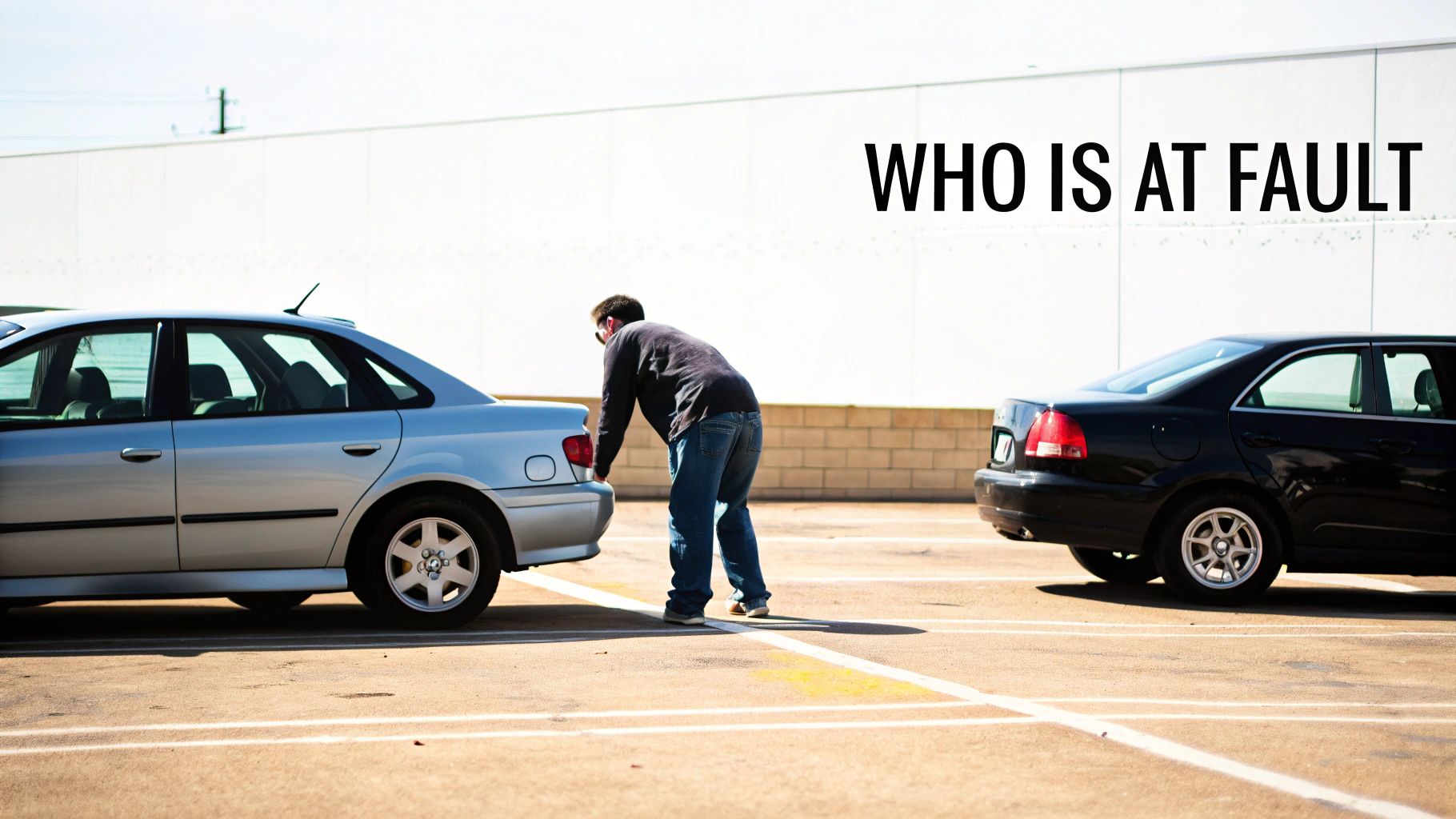
Visualizing Right-of-Way in a Parking Lot
Here’s a simple way to think about it: picture the parking lot as a miniature city grid. The main lanes that circle the lot or lead straight to the exits are your “main streets.” The smaller feeder lanes between the rows of parking stalls are the “side streets.”
- Main Lanes (“Main Streets”): Just like on a real road, drivers in these main thoroughfares generally have the right-of-way.
- Feeder Lanes (“Side Streets”): Anyone pulling out of a parking spot or driving down these smaller lanes is expected to yield to the traffic in the main lanes.
This analogy makes it pretty clear who needs to yield. A driver backing out of a parking space is like someone pulling out of their driveway onto a busy street—they have the primary responsibility to wait until the coast is clear before moving.
When an insurance adjuster is determining fault, they’re really just asking one question: Which driver had the right-of-way, and which driver failed to yield it? The answer almost always points directly to the negligent party.
What About the Property Owner’s Role?
It’s not always just about the drivers, though. The owner of the property also has a legal responsibility to keep the area reasonably safe. If an accident is caused by something like dangerously poor lighting, massive potholes, or completely faded lane markings, the property owner could share some of the liability.
This area of law falls under what’s known as premises liability. You can learn more in our detailed guide to California premises liability law.
Ultimately, the key takeaway is that safe driving principles always apply. Stop signs, painted arrows, and the basic rules of right-of-way aren’t just suggestions in a parking lot. They are the bedrock for assigning fault when things go wrong.
Understanding California’s Comparative Negligence Rule
When it comes to figuring out who’s at fault in a parking lot accident, the answer isn’t always cut and dried. It’s rarely a simple case of one driver being 100% wrong. California law gets this, recognizing that sometimes, both drivers played a part in causing the collision.
This is where the state’s “pure comparative negligence” rule comes in, and it’s a crucial concept to wrap your head around.
Basically, this rule means you can still get money for your damages even if you were partly to blame for the crash. Think of fault as a pie that gets sliced up and divided between everyone involved. Your final compensation is simply reduced by whatever percentage of the pie is considered your fault.
This is a much different system than you’ll find in a few other states, where being even 1% at fault can completely bar you from recovering a single dime. California’s approach is far more realistic, acknowledging that the real world is full of gray areas.
How Comparative Negligence Works in Practice
Let’s walk through a classic parking lot scenario. Imagine you’re slowly and carefully backing out of a parking spot. At that exact moment, another driver comes flying down the main lane, way too fast, and clips the corner of your bumper. So, who’s at fault here?
An insurance adjuster or a jury would look at the facts and assign percentages of the blame. It might break down something like this:
- The Speeding Driver: They could be found 80% at fault. Why? Because they were driving recklessly and far too fast for a crowded parking lot environment.
- The Backing-Out Driver: You might be assigned 20% of the fault. Even though you were being careful, the driver backing up always has a primary duty to make sure the coast is clear before moving.
Now, let’s say your total damages—for car repairs, doctor’s visits, and so on—add up to $10,000. Because you were 20% at fault, your final payout would be reduced by that amount. You would be able to recover $8,000 ($10,000 minus your 20% share, or $2,000).
Key Takeaway: Under pure comparative negligence, your financial recovery is directly tied to your degree of responsibility. The less fault assigned to you, the more compensation you can receive for your injuries and property damage.
This principle is a real game-changer. It allows people to get justice even if they made a small mistake, ensuring the person who was mostly responsible is held accountable for the majority of the harm they caused. Grasping this rule is fundamental to setting realistic expectations as you navigate your insurance claim after any California car crash.
Disclaimer: This article is for informational purposes only and is not to be construed as legal advice. No attorney-client relationship exists based on the review of this this article and none of the information in this article is legal advice.
Analyzing Common Parking Lot Accident Scenarios
It’s one thing to talk about legal ideas like negligence and right-of-way, but it’s much more helpful to see how they actually work in the real world. Most fender-benders in parking lots aren’t unique; they tend to follow a few predictable patterns.
Let’s walk through the five most common types of parking lot crashes. By looking at these specific situations, you can get a much clearer picture of how an insurance adjuster would likely figure out who’s at fault. Just keep in mind, these are general rules of thumb—the specific details of your accident can always change the outcome.
Disclaimer: This article is for informational purposes only and is not to be construed as legal advice. No attorney-client relationship exists based on the review of this this article and none of the information in this article is legal advice.
Scenario 1: Driver Hits a Legally Parked Car
This one is about as cut-and-dried as it gets. When a moving car hits a stationary vehicle that is parked correctly in a designated spot, the driver of the moving car is almost always 100% at fault.
A parked car can’t really be negligent. The responsibility falls entirely on the driver in motion to see and avoid obstacles, especially ones that are standing still.
Scenario 2: Two Cars Back Into Each Other
We’ve all seen this happen. It’s incredibly common, and it almost always ends in shared blame. When two drivers are backing out of spots across from each other and collide, both had a duty to make sure the coast was clear before moving.
Since both drivers failed to do so, insurance companies will often assign 50/50 fault. Under California’s comparative negligence rules, this means each driver is seen as equally responsible for the crash.
Scenario 3: Car Pulls Out of a Space Into Traffic
Think of the lanes in a parking lot like mini-streets. A driver pulling out of a parking space has to yield to any cars already moving down that lane.
If someone pulls out and gets hit by a car that was already driving in the through-lane, the driver pulling out of the space is typically found at fault. The car in the main lane has the right-of-way, just like a car on a main road has priority over someone pulling out of a driveway.
This isn’t just an opinion; the data backs it up. A huge percentage of parking lot crashes involve cars in reverse. In fact, around 50% of pedestrian injuries in parking lots are caused by backing vehicles, which shows just how critical it is for drivers to look before they move. You can find more details in these parking lot accident findings on wifitalents.com.
Scenario 4: Two Cars Compete for the Same Spot
When two drivers have their eyes on the same prize—that perfect open spot—things can get complicated. Who is at fault often comes down to which driver had the clearer, safer path.
For example, imagine one driver has to make a wide left turn across traffic to get into the spot, while the other can just pull straight in. If they collide, the driver making the riskier turn will likely shoulder more of the blame. This can easily become a shared-fault situation.
Scenario 5: Driver Cuts Across Empty Parking Spaces
We’ve all been tempted to do it—drive diagonally across a few empty rows to get to the exit faster. But this is a classic example of unpredictable and negligent driving.
Other drivers who are properly exiting a space or turning into a lane aren’t expecting a car to come flying from a random direction. If the driver taking the shortcut hits another car, the shortcut-taker is usually held primarily at fault for their erratic maneuver.
What to Do Right After a Parking Lot Accident
The moments after a crash are a blur of adrenaline and confusion. It’s stressful, but what you do next can make or break your insurance claim. Having a clear plan helps you stay calm and protect your rights.
First thing’s first: make sure everyone is okay. Check yourself, your passengers, and the people in the other car. If anyone seems hurt, don’t hesitate—call 911 for medical help immediately.
If the cars are still drivable, try to move them out of the flow of traffic to a safe spot in the lot. This keeps other drivers from getting into another fender-bender around you.
Gather Your Evidence and Document Everything
Even if it feels like a minor tap, call the police. In California, they might not write a full report for an accident on private property, but just having an officer on the scene to document the incident creates an official record. That record can be a game-changer later on.
Now, pull out your smartphone. It’s your most important tool for gathering evidence. A few good pictures can tell an insurance adjuster the whole story.
Key Takeaway: Whatever you do, never admit fault at the scene. Even a simple, well-intentioned “I’m sorry” can be twisted into an admission of guilt. Stick to the facts when you talk to the other driver and the police.
Make sure you take photos and videos from every angle, capturing:
- The damage to both cars—get close-ups and wider shots.
- The position of the cars right after the crash, before you move them.
- Any stop signs, yield signs, or painted lines on the pavement.
- The license plates of every vehicle involved.
Swap Information and Find Witnesses
Once you’ve documented the scene, it’s time to exchange information with the other driver. You’ll need their full name, phone number, address, driver’s license number, and their insurance policy details. The easiest way to get this right is to just take a picture of their documents.
Then, take a look around. Did anyone see what happened? An independent witness who can back up your story is incredibly valuable. If you spot someone, politely ask for their name and number.
These first moves are critical for building a solid claim. In fact, the first 72 hours after an automobile accident are often the most important for determining the final outcome.
Finally, remember that you’re on a clock. There are strict deadlines for filing a claim. To learn more about these legal timelines, check out this guide on the statute of limitations for personal injury. Acting quickly is the best way to make sure you don’t lose your right to compensation.
Disclaimer: This article is for informational purposes only and is not to be construed as legal advice. No attorney-client relationship exists based on the review of this this article and none of the information in this article is legal advice.
Answering Your Questions About Parking Lot Accidents
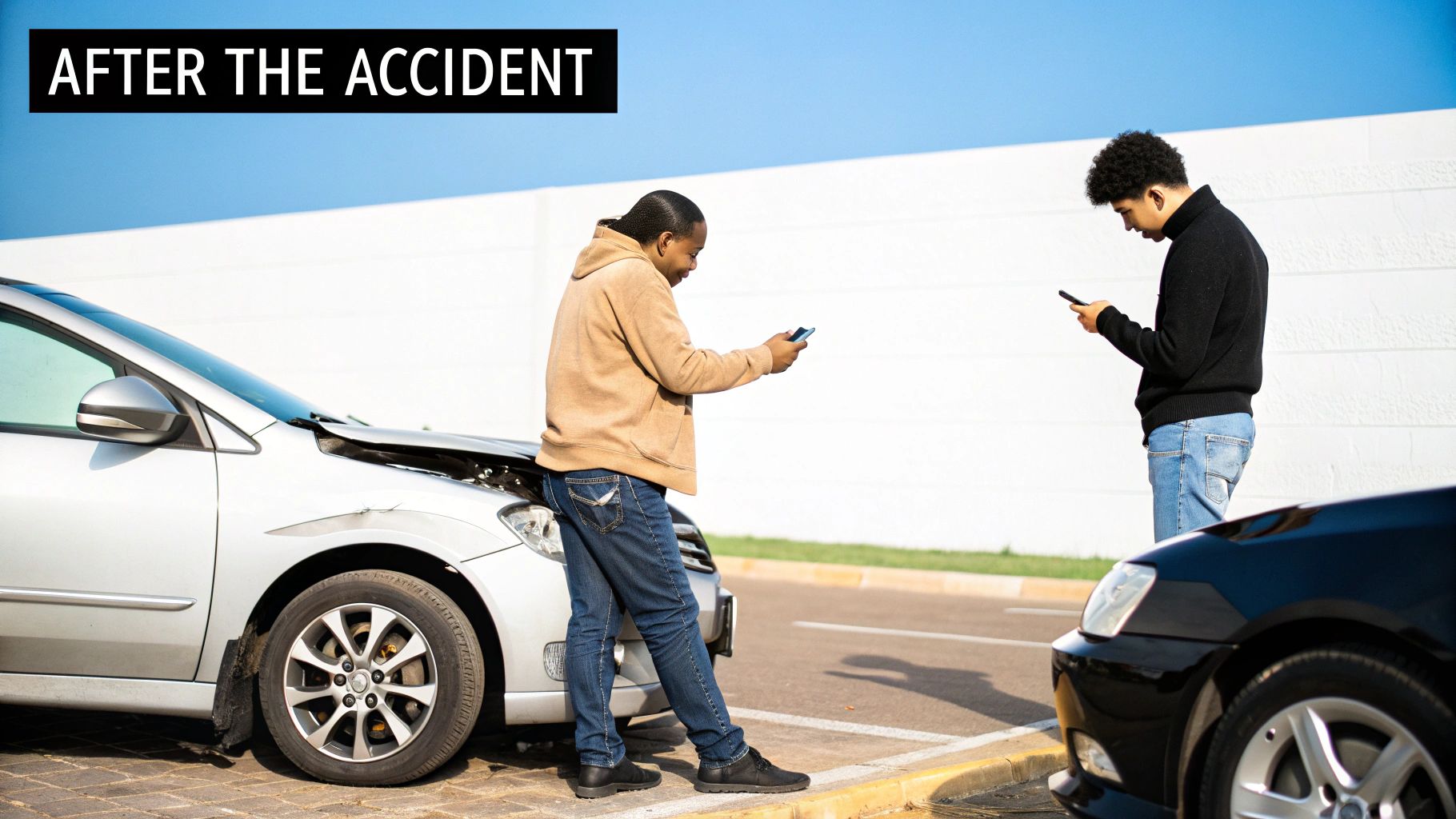
Even once you have a handle on how fault works, you’re bound to have more questions about what comes next. The moments and days after any accident can be a confusing blur of insurance jargon and uncertainty. This section tackles the most common questions we hear from drivers after a parking lot fender bender.
Think of these answers as practical guidance to help you make smart, informed decisions. Knowing the right way to handle these situations can be the key to protecting your rights and making the claims process go smoothly.
What if the Other Driver Left the Scene?
If the other driver takes off, the situation immediately escalates into a hit-and-run, which is a serious crime. Your first, most important move is to call the police and get an official report filed.
When you speak with the officers, give them every single detail you can pull from your memory about the other car. We’re talking make, model, color, and even a partial license plate number if you managed to catch a glimpse.
After you’ve called the police, here’s what to do:
- Look for witnesses: Check with anyone nearby. Did they see what happened? Get their contact information if they did.
- Check for cameras: Scan nearby storefronts and building exteriors for surveillance cameras that might have caught the whole thing on video.
- Contact your insurer: Let them know what happened. This is where your uninsured motorist or collision coverage may come into play.
Will My Insurance Rates Go Up if I Was Not at Fault?
This is a huge worry for most drivers, and for good reason. The good news is that in California, insurance companies are generally prohibited from jacking up your premium for an accident where you were not principally at fault.
If the evidence clearly points to the other driver being 100% responsible, your rates shouldn’t be affected. But, if you’re found partially to blame under those comparative negligence rules we talked about, your insurer might take a second look at your policy when it’s time to renew.
Important Legal Disclaimer: This article is for informational purposes only and is not to be construed as legal advice. No attorney-client relationship exists based on the review of this this article and none of the information in this article is legal advice.
Should I Report a Minor Parking Lot Accident?
Yes. It is always, always a good idea to report any accident to your insurance company, no matter how small it seems. That tiny scratch on a bumper could be hiding thousands of dollars in damage to sensors or the car’s frame. You just can’t know for sure at the scene.
There’s another reason, too: failing to report it can come back to bite you. The other driver could file a claim against you later on and completely twist the facts. By reporting the incident right away, you get your side of the story on the record and protect yourself from potential headaches down the road.
How Is Fault Determined With No Witnesses or Cameras?
When it’s just your word against theirs with no independent evidence, figuring out fault in a parking lot accident comes down to two main things: the driver statements and the physical evidence.
Insurance adjusters are trained to analyze the location and type of damage on each car to piece together how the collision happened. For example, damage to your front bumper and the other car’s rear bumper paints a pretty clear picture of a rear-end impact. This is precisely why the photos you take right after the crash are so incredibly valuable for your claim.
If the stories from both drivers clash and the physical evidence isn’t conclusive, the insurers might just call it a wash and assign 50/50 fault to both of you.
If you’ve been injured in a parking lot accident and are struggling to figure out what to do next, the experienced team at LA Law Group, APLC is here to help. We live and breathe the complexities of California’s fault laws and will fight to protect your rights. For a free, confidential consultation, visit us at https://www.bizlawpro.com.
Attorney Advertising. This article is general information, not legal advice, and does not create an attorney-client relationship. Prior results do not guarantee a similar outcome.