
California Minimum Car Insurance Requirements Explained
Disclaimer: This article is for informational purposes and is not to be construed as legal advice. No attorney-client relationship exists based on the review of this article, and none of the information in this article is legal advice.
California just made a massive change to its auto insurance requirements, the first major update since 1967. As of January 1, 2025, every driver in the state will need to meet new, higher minimum liability limits.
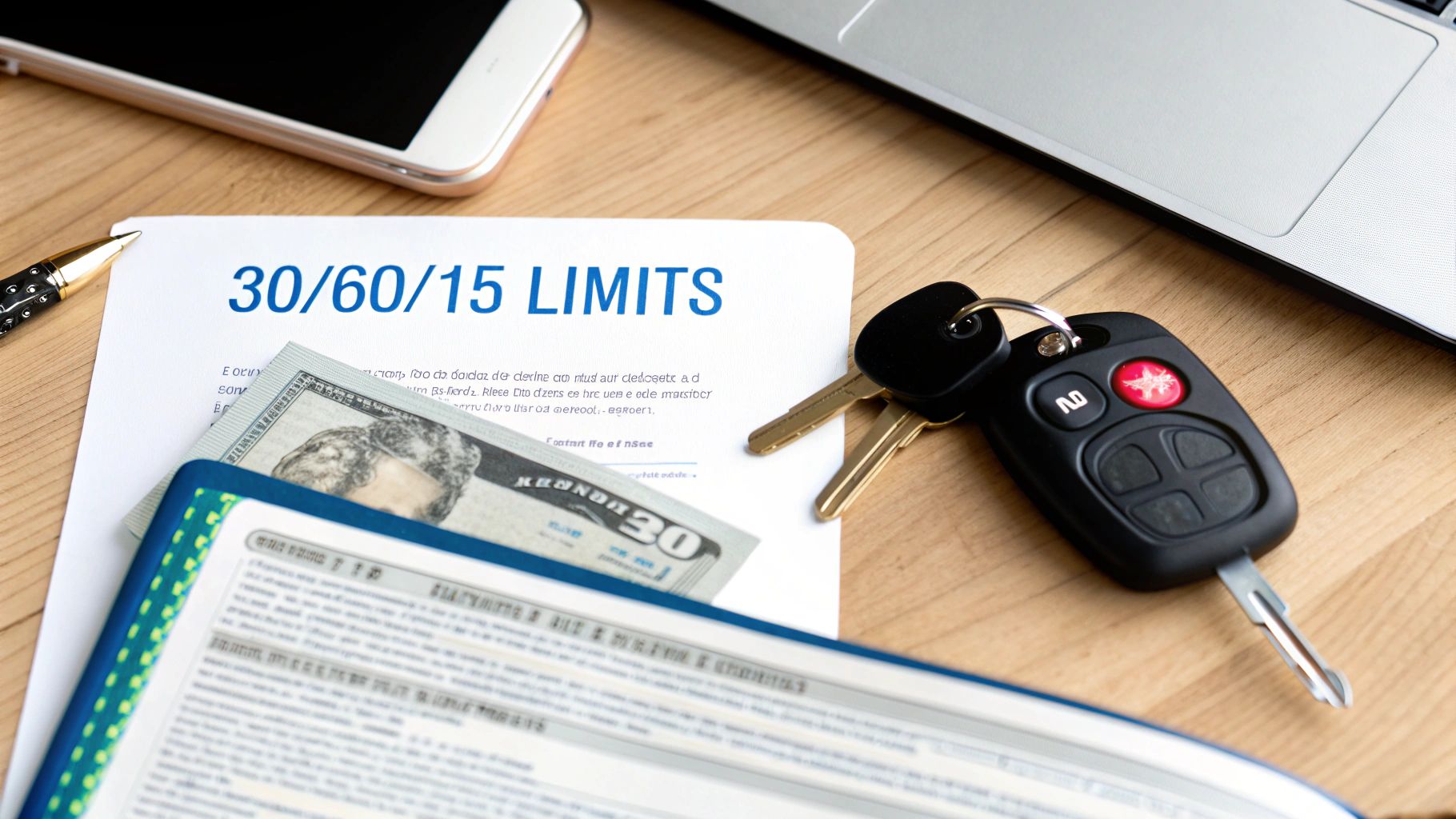
The new standard is now $30,000 for bodily injury per person, $60,000 for bodily injury per accident, and $15,000 for property damage. You’ll hear this referred to as “30/60/15,” and it’s a critical update you can’t afford to ignore.
Navigating California’s New Auto Insurance Landscape
Hitting the road in California comes with a set of rules, and a big one is proving you can cover the costs if you cause an accident. For decades, the state’s minimum insurance limits were stuck in the past, often leaving people hurt in a crash without enough money to cover their medical bills or car repairs.
Recognizing this problem, lawmakers finally took action with Senate Bill 1107, which effectively doubled the old requirements. The old 15/30/5 limits were simply no match for modern costs. Think about it: a typical bodily injury claim can easily run between $20,000 to $50,000, and the median medical bills after a crash are now well over $15,000. The new limits provide a much more realistic safety net for everyone. You can learn more about the impacts of these increased minimums and what they mean for drivers and accident victims.
What These Numbers Mean for You
Breaking down these limits is simpler than it sounds. Imagine them as three separate pools of money your insurance company will pay out if you’re at fault for a crash:
- Bodily Injury Liability (Per Person): This is the most your insurance will pay for a single person’s medical bills and related costs if they are injured in an accident you cause.
- Bodily Injury Liability (Per Accident): This is the total cap your insurer will pay for all injuries combined in a single accident, no matter how many people were hurt.
- Property Damage Liability: This covers the cost to repair or replace someone else’s property you damaged, which is usually their car but could also be a fence, a mailbox, or other structures.
To see just how significant this change is, let’s look at a side-by-side comparison.
California Minimum Liability Insurance Old vs New Limits
The table below clearly shows how much the mandatory minimums have increased for all California drivers.
| Coverage Type | Previous Limit | New Limit |
|---|---|---|
| Bodily Injury Per Person | $15,000 | $30,000 |
| Bodily Injury Per Accident | $30,000 | $60,000 |
| Property Damage | $5,000 | $15,000 |
This is a huge step forward in making sure accident victims have a better chance of being made whole. But as we’ll get into, just meeting the bare minimum might not be enough to protect your own financial security.
Why the Insurance Minimums Had to Change After Half a Century
For more than 50 years, California drivers were operating under an insurance law that felt like a relic from another time. The world had changed dramatically—cars got smarter, medical bills got higher—but the state’s minimum car insurance requirements were stuck in the past, offering a level of protection dangerously out of sync with modern life.
This created a quiet crisis brewing on our roads. The old limits, set way back in 1967, simply weren’t built for a world of advanced vehicle tech, soaring healthcare costs, and the economic realities of the 21st century. As the decades rolled by, the gap between what the minimum insurance covered and the actual cost of an accident grew into a massive chasm.
A Financial Time Capsule from the 60s
Think about this: the original law was passed when a brand-new car cost about $2,750, and a hospital visit was a tiny fraction of what it is today. For decades, California’s minimums hadn’t budged: just $15,000 per person for bodily injury, $30,000 per accident, and a mere $5,000 for property damage.
To put that in perspective, the Bureau of Labor Statistics says that $5,000 from 1967 has the buying power of nearly $50,000 today. That outdated limit left countless accident victims woefully unprotected. Finally, Senate Bill 1107 doubled those limits, effective January 1, 2025—the first real hike in almost sixty years. You can read more about this historic legislative change to understand its full background.
This old system created a really precarious situation. A driver could follow the law to the letter, carry the required insurance, and still cause an accident that leaves the injured party with tens of thousands in uncovered medical bills and repair costs. That financial weight would then fall squarely on the victim, their family, or even taxpayers.
Trying to Fix a Modern Car With a 1960s Budget
Imagine trying to fix a new EV—with all its complex sensors and specialized batteries—using a budget from 1967. The old $5,000 property damage limit was like handing a mechanic a few hundred bucks and expecting them to fix a car with $15,000 in damage. It was an impossible, unfair equation.
The old insurance minimums weren’t just insufficient; they were a recipe for financial disaster. They forced responsible drivers who were injured by at-fault motorists into debt, simply because the mandatory coverage was decades behind the times.
The same problem applied to medical costs. A single trip to the ER, an MRI scan, or a round of physical therapy can easily blow past the old $15,000 bodily injury limit. For anyone dealing with a serious injury, that coverage was little more than a drop in the bucket.
Senate Bill 1107 Was a Necessary Fix
The passage of Senate Bill 1107 was a direct response to this growing problem. Lawmakers finally acknowledged that the old system was failing Californians. Families were being financially ruined by accidents that should have been covered, and the legal minimums were offering a false sense of security.
The new 30/60/15 limits are a long-overdue correction, bringing the requirements more in line with the real-world costs of a crash. It was a crucial move to protect drivers from financial ruin and give victims a more realistic shot at being made whole. This change wasn’t just about updating numbers on a page; it was about addressing the human cost of an obsolete law and creating a safer financial landscape for everyone on California’s roads.
Breaking Down Your Liability Coverage in Real-World Terms
Trying to make sense of your car insurance policy can feel like learning a new language. All those numbers and terms might seem abstract, but they represent a very real financial shield protecting you on the road. Let’s translate the California minimum car insurance requirements into everyday situations to see what they really mean.
Liability coverage is there to pay for the damage you cause to other people when you’re at fault for a crash. It’s crucial to understand that it does not cover your own injuries or vehicle repairs. Think of it as your financial backstop for the harm you might accidentally cause someone else.
The state’s old insurance requirements, which dated all the way back to 1967, had become dangerously out of touch with modern costs. This flowchart shows just how these obsolete rules created massive financial risks for everyday drivers.
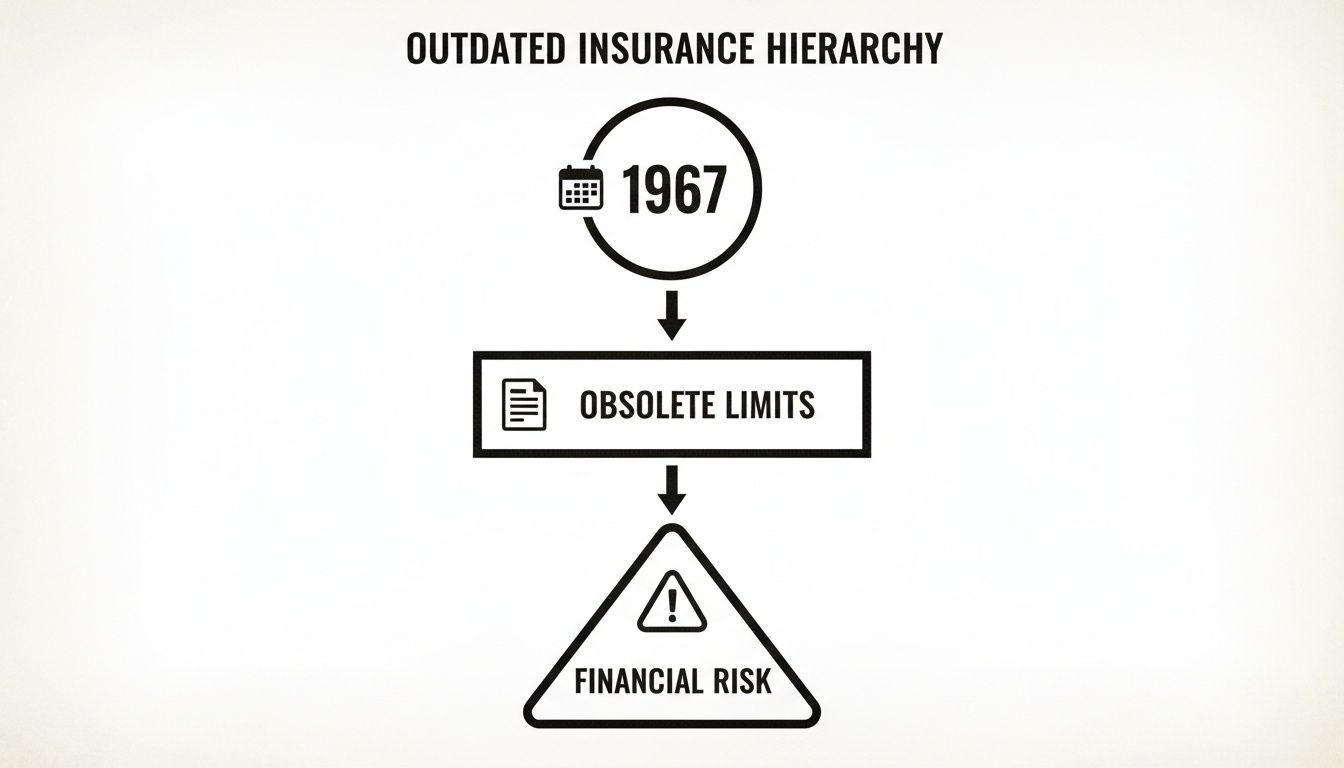
As you can see, sticking with half-century-old limits meant that even law-abiding drivers weren’t truly protected. Being “legal” didn’t equal being safe from financial ruin after a serious accident.
How Bodily Injury Liability Works in a Multi-Car Pileup
Picture this: you’re driving on a packed California freeway and accidentally trigger a chain-reaction crash involving two other cars. In the chaos, three people are injured—the driver in the car you hit, and two passengers in the car behind them. This is exactly where your Bodily Injury (BI) liability coverage springs into action, but it has two key limits.
The two parts of this coverage are:
- $30,000 Per Person: This is the absolute most your insurance company will pay for any one person’s medical bills, lost income, and other related damages.
- $60,000 Per Accident: This is the total cap your policy will pay out for all injuries combined in a single crash, no matter how many people were hurt.
In our freeway pileup, let’s say the first driver’s medical bills total $25,000. The two passengers in the third car each have $20,000 in medical costs. Your $30,000 “per person” limit is high enough to cover each of their individual claims.
But here’s the problem. The total medical bills add up to $65,000 ($25,000 + $20,000 + $20,000). Your “per accident” limit is stuck at $60,000. That means your insurance pays its max, but you are now personally on the hook for the remaining $5,000. For a more detailed look at these specifics, it helps to understand what bodily injury coverage is and why it’s so vital.
When Property Damage Limits Fall Short
Now, let’s look at that third number in a 30/60/15 policy: the $15,000 for Property Damage Liability. This part of your policy is meant to repair or replace other people’s property you damage in an accident. Usually, that means their car, but it could also be a guardrail, a storefront, or even a mailbox.
With the average price of a new car now topping $48,000—and many electric vehicles costing far more—that $15,000 minimum for property damage gets eaten up shockingly fast.
Imagine a simple fender-bender in a parking lot where you accidentally back into a brand-new EV. The damage might not look catastrophic, but modern cars are loaded with expensive tech. That little bump could easily damage sensitive cameras, radar sensors in the bumper, and specialized body panels.
The repair shop hands over an estimate for $18,500. Your insurance policy will cover the first $15,000, which certainly helps. But that leaves you to pay the remaining $3,500 right out of your own pocket. These real-world examples show why just meeting the California minimum car insurance requirements is only the first step toward being truly protected.
The Steep Penalties for Driving Without Insurance
Thinking about skipping car insurance in California? Think again. It’s far more than a simple ticket—it’s a high-stakes gamble with severe financial and legal blowback. The state comes down hard on uninsured drivers, and for good reason. Driving without coverage starts a domino effect of problems that can haunt you for years.
The trouble starts the second you’re caught. For a first-time offense, you’re looking at a base fine between $100 and $200. But that’s just the beginning. Once all the extra court assessments and fees get tacked on, that number can easily balloon to nearly $1,000. The financial hit is swift and painful.
If you get caught a second time, the consequences get much worse. The fines jump to $200 to $500 before fees, but the real pain comes from the other penalties that kick in. At this point, it’s not just about money—it’s about your freedom to drive.
From Fines to License Suspension
California doesn’t just hit your wallet to enforce insurance laws. One of the most immediate consequences is having your vehicle impounded right on the spot. If an officer pulls you over and you can’t show proof of insurance, they have the power to tow your car. You’ll be on the hook for all the towing and storage fees, which add up every single day until you can pay the fines and prove you’ve gotten insured.
On top of losing your car, you’ll likely lose your license, too. The California DMV can suspend your driving privileges for failing to maintain financial responsibility. Getting your license back isn’t as simple as paying a reinstatement fee; you have to prove you’re no longer a high-risk driver. This is where the dreaded SR-22 comes into play.
An SR-22 isn’t actually an insurance policy. It’s a certificate your insurance company files with the DMV for you, acting as proof that you’re carrying the state’s required minimum liability coverage.
You can think of an SR-22 as being on probation with the DMV. It’s a formal notice that you’re insured and that your insurer will immediately alert the state if your policy lapses for any reason. This certificate is usually required for several years after a major violation like a DUI or driving uninsured. It’s the state’s way of keeping you on a short leash, and any slip-up means your license gets suspended all over again. The paperwork after an accident can also be tricky; you can learn more about filing an SR-19 form in California in our essential guide.
Why California Is So Tough on Uninsured Drivers
The penalties are so harsh because uninsured drivers are a massive problem, putting everyone else on the road in a tough spot. For years, California has struggled with a huge number of drivers operating without any insurance at all. Historically, the uninsured driver rate has hovered around 15-17%, meaning nearly one out of every six drivers on the road might not have a way to pay for the damage they cause in a crash.
That reality leaves responsible, insured drivers vulnerable to footing the bill for an accident that wasn’t even their fault.
To combat this, the state created programs like the California Low Cost Automobile Insurance Program (CLCA). By the end of 2023, the CLCA had helped insure over 226,577 drivers who might otherwise be uninsured. What’s truly telling is that around 73% of the program’s applicants were uninsured when they signed up, highlighting just how big this issue is.
This high rate of uninsured motorists is exactly why one particular type of optional coverage is so critical in California: Uninsured Motorist (UM) coverage. If you get hit by someone with no insurance, your own UM policy is designed to step in and cover your medical bills, lost wages, and other damages. It’s a financial lifesaver that protects you from the fallout of someone else’s illegal choice. In the end, staying insured isn’t just about avoiding penalties—it’s about protecting yourself from the very real risks all around you.
Why Minimum Coverage May Not Be Enough to Protect You
Disclaimer: This article is for informational purposes and is not to be construed as legal advice. No attorney-client relationship exists based on the review of this article, and none of the information in this article is legal advice.
So, you’ve done the responsible thing and bought car insurance that meets California minimum car insurance requirements. You have your 30/60/15 policy in hand and feel protected. But in the chaos of a real-world accident, you might find that this legal baseline is more of a thin safety net than a solid financial shield.
While the new limits are a step up, they’re still just a starting point. A single, moderate accident can generate costs that blast right past these minimums, leaving you personally on the hook for a potentially devastating amount of money.
The Anatomy of a Costly Accident
Let’s walk through a scenario. You’re driving on a busy street and glance away for a split second. You run a red light and t-bone a minivan carrying a family of three. Everyone seems shaken but okay at first, but the financial fallout is just getting started.
The minivan is totaled, and its replacement value is $22,000. Your $15,000 property damage limit covers a big chunk, but you’re immediately responsible for the remaining $7,000. That’s cash you have to find, right now.
Then the medical bills start rolling in. The minivan’s driver has a broken arm and whiplash, requiring surgery and months of physical therapy. Their medical costs and lost wages from missing work add up to $40,000.
Your $30,000 per-person bodily injury limit kicks in, but that still leaves a $10,000 shortfall. You now owe $17,000 out of your own pocket, and we haven’t even touched on the other passengers. Maybe one passenger has minor injuries totaling $5,000, which your policy covers. But what if their injuries had been more severe?
In this all-too-common scenario, being a legally insured driver still leaves you with a $17,000 bill. A lawsuit could come after your savings, your home, or even garnish your future wages until the debt is paid.
This is the harsh truth of relying on minimum coverage. It’s built to offer a basic cushion for others, not to fully protect you from the financial shockwave of a serious crash.
Building a Stronger Financial Shield with Optional Coverages
The gap between what’s legally required and what you actually need for financial safety is where optional coverages come in. These aren’t just upsells from an insurance agent; they are crucial tools for protecting your assets and your future. It’s also worth noting that the legal world is always changing, and developments like tort reform impacts on liability can reshape how personal injury claims are handled.
Here are a few key options you should seriously consider:
- Higher Liability Limits: Most insurance professionals recommend carrying limits of at least $100,000/$300,000. The price difference is often surprisingly small, but the jump in protection is massive.
- Uninsured/Underinsured Motorist (UM/UIM) Coverage: This is arguably one of the most important coverages you can buy. It protects you when you’re hit by a driver with no insurance or not enough to cover your medical bills.
- Medical Payments (MedPay) Coverage: This helps pay for your and your passengers’ medical bills right after an accident, no matter who was at fault. It’s great for covering immediate costs like health insurance deductibles and copays.
Protecting Yourself from the Uninsured
With nearly one in six California drivers on the road without insurance, UM/UIM coverage isn’t a luxury—it’s a flat-out necessity. It steps in to act as the at-fault driver’s missing insurance, covering your medical bills, lost income, and pain and suffering up to the limits you select. Without it, an accident with an irresponsible driver could leave you with a mountain of debt.
To get a better handle on how this vital protection works, it’s worth exploring what uninsured motorist coverage is and the peace of mind it offers. By thoughtfully choosing coverages that go beyond the state minimums, you turn your auto insurance from a simple legal checkbox into a powerful tool for preserving your financial security.
How a Personal Injury Attorney Can Help After a Crash
Disclaimer: This article is for informational purposes and is not to be construed as legal advice. No attorney-client relationship exists based on the review of this article, and none of the information in this article is legal advice.
Even with California’s updated minimum car insurance requirements, a serious crash can easily leave you with bills that dwarf the other driver’s policy limits. When that happens, trying to handle the aftermath on your own is a recipe for disaster. This is precisely when a skilled personal injury attorney becomes your most powerful ally.
Don’t forget, insurance adjusters work for the insurance company. Their job is to protect their employer’s bottom line by paying out as little as possible. An experienced attorney, on the other hand, works for you. Their only goal is to fight for fair compensation that covers the true scope of your losses.
Accurately Calculating Your Total Damages
One of the first things a good lawyer does is figure out what your case is actually worth. This goes way beyond adding up the initial ER bills. A legal professional will bring in medical and financial experts to document every single cost, both now and in the future.
This includes:
- Future Medical Care: This isn’t just about the bills you have now. It covers ongoing physical therapy, future surgeries, medications, and any long-term care you might need down the road.
- Lost Earning Capacity: If your injuries mean you can’t go back to your old job—or can’t work at all—this calculation projects the income you’ll lose over the course of your working life.
- Pain and Suffering: This is a big one. It assigns a real dollar value to the physical pain and emotional trauma the accident caused. It’s a critical piece of your claim that insurance companies love to downplay.
Without a thorough accounting of these damages, you could accept a lowball settlement that runs out long before your bills do, leaving you to pay for someone else’s mistake for years to come.
Investigating and Negotiating on Your Behalf
A law firm does a lot more than just write a letter. They kick off a full-blown investigation into the crash, gathering evidence, interviewing witnesses, and identifying every single person or entity that could be held responsible. Knowing what steps to take immediately following a car accident is critical, but a lawyer takes that evidence and builds an unbreakable case with it.
Your attorney also becomes a shield, handling all the calls and emails from insurance adjusters. They know the pressure tactics and won’t let you get bullied into settling for less than you deserve. They’ll also look for every possible source of compensation, whether that’s making a claim on your own Uninsured/Underinsured Motorist (UM/UIM) policy or finding a third party who shares some of the blame.
An attorney levels the playing field. They make sure you aren’t taken advantage of when you’re most vulnerable, managing all the legal complexities so you can focus on one thing: getting better.
If you’ve been hurt in an accident and are staring down a mountain of medical bills and lost income, you don’t have to go it alone. The first step is often the easiest—a free consultation with an experienced personal injury attorney can put you on the path to getting the resources you need to rebuild your life.
Frequently Asked Questions About California Auto Insurance
Disclaimer: This article is for informational purposes and is not to be construed as legal advice. No attorney-client relationship exists based on the review of this article, and none of the information in this article is legal advice.
Even after getting the basics down on California minimum car insurance requirements, a lot of specific questions can pop up. Let’s tackle some of the most common issues drivers run into, both when picking a policy and after a crash.
Getting clear, straightforward answers is the best way to feel confident about your coverage. Here are a few things that often trip people up.
What if the At-Fault Driver’s Insurance Isn’t Enough?
This is a scenario nobody wants to face: the other driver’s policy maxes out, but your medical bills are still piling up. The good news is, you have options. Your best first move is tapping into your own Underinsured Motorist (UIM) coverage, assuming you have it.
A good lawyer will also dig deeper. They’ll investigate the accident to see if anyone else might share the blame. They can also look into whether the at-fault driver has personal assets that could be pursued in a lawsuit to cover the rest of your damages. The goal is to make sure no stone is left unturned in getting you compensated.
It’s a smart habit to review your auto insurance policy at least once a year. Life changes—buying a home, landing a new job, or adding a teen driver—can change what you need to protect. A quick check-in ensures your coverage is still doing its job.
Do I Still Need Uninsured Motorist Coverage?
One hundred percent, yes. It’s easy to think the new, higher state minimums have you covered, but those limits don’t mean a thing if the person who hits you has no insurance at all. And the hard truth is, a shocking number of drivers in California are on the road illegally without any policy.
Think of Uninsured Motorist (UM) coverage as your personal financial safety net. If you or your family get hurt by someone with zero insurance or a hit-and-run driver, this is the coverage that steps in. Without it, you could find yourself paying for all the damage out of your own pocket for a crash you didn’t even cause.
Attorney Advertising. This article is general information, not legal advice, and does not create an attorney-client relationship. Prior results do not guarantee a similar outcome.