
Can I Sue for Pain and Suffering? Yes, Here's How
You’re dealing with the worst part of an injury claim right now. The pain is real, the missed work is real, and the insurer still wants a clean answer before you’ve even figured out what your body is going to do next. This article is for informational purposes only and isn’t legal advice. No attorney-client relationship exists from reading it, and nothing here should be treated as legal advice.
The short answer to can I sue for pain and suffering is yes, if the facts support a valid California personal-injury claim. The hard part is that pain and suffering isn’t priced like a receipt, and it’s not paid just because you were hurt. It turns on liability, causation, the seriousness of the injury, how long it lasted, and the proof you can put in front of an insurer, a judge, or a jury.
Where You Stand Right Now After an Accident in California
You’re probably staring at medical bills, dealing with a sore neck or back, and hearing from an insurance adjuster who sounds polite while pushing for a recorded statement. You may be sleeping poorly, skipping workouts, missing family events, or pushing through the workday while the injury keeps interrupting everything you do. That is the point where people start asking whether the law cares about more than invoices.
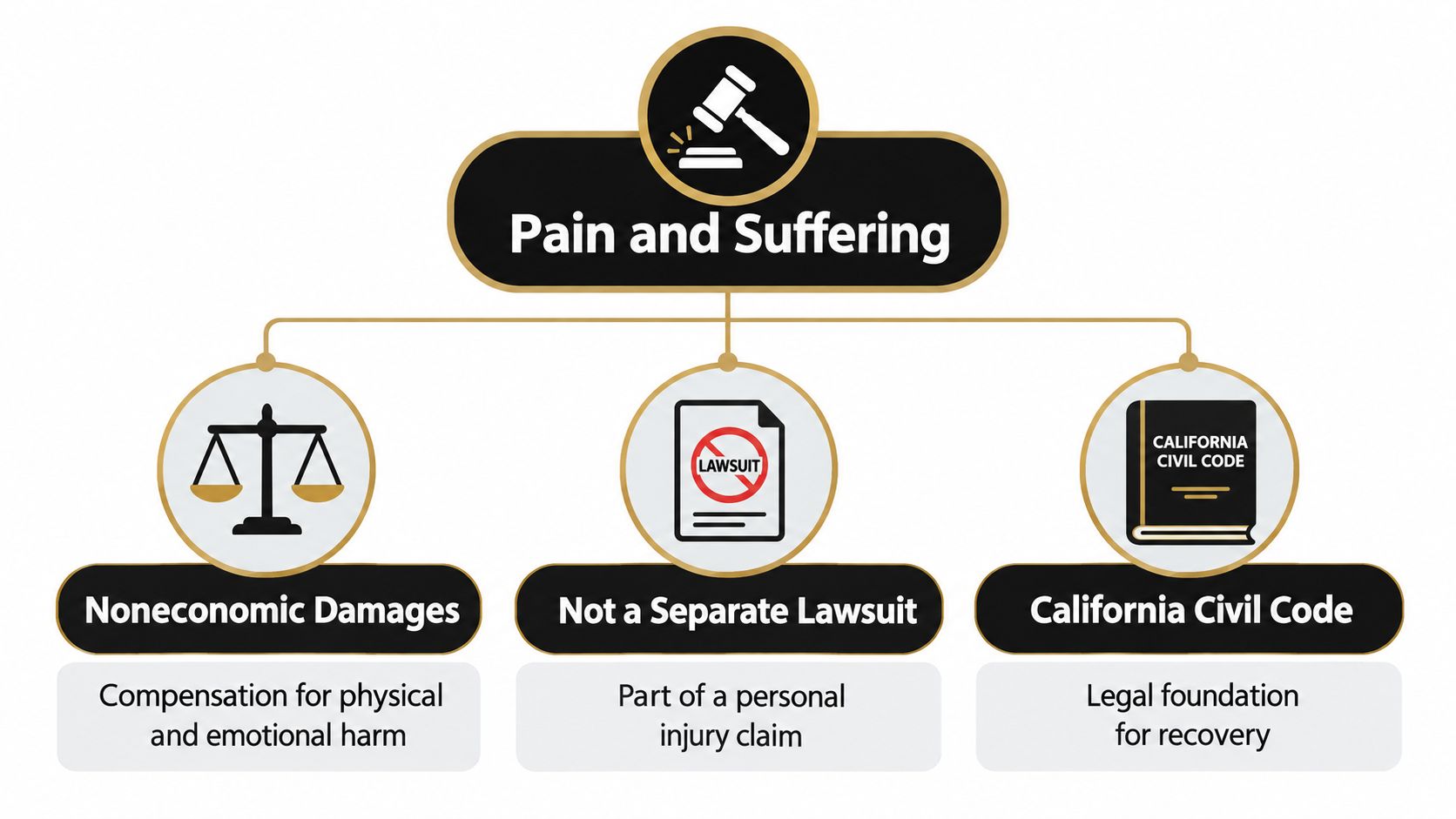
It does, but only if you treat the claim like evidence. California recognizes pain and suffering in the right case, yet it is part of a broader personal-injury claim, not a standalone payout that appears automatically after a crash.
Read the claim through a legal lens, not a gut feeling
Start with the facts that control value. Who likely caused the injury? Do your medical records tie the crash or incident to the pain you feel now? Did your daily life change in a way a stranger could understand from the paper trail?
That is the practical filter. It keeps weak claims from being overstated and strong claims from being ignored.
Practical rule: If the insurer can argue your pain is undocumented, preexisting, or unrelated, your number drops fast.
One more thing matters in California, and it changes a lot of borderline claims. The sections below walk through the statutory definition, the CACI 3905A no-formula rule, and the § 3333.4 uninsured-driver bar that decides many cases before anyone starts arguing about a number.
What Pain and Suffering Means Under California Law
California does not treat pain and suffering as a separate bill. It treats it as noneconomic damages, which include pain, suffering, inconvenience, mental suffering, emotional distress, loss of society and companionship, loss of consortium, reputational injury, and humiliation under California Civil Code § 1431.2 (statutory text and definitions). The point is simple, the law separates those harms from economic damages, meaning the bills and losses you can document, such as medical expenses, lost earnings, and repair costs.
Why that distinction matters in a real case
Adjusters like tidy numbers. They can total your ER bill, physical therapy, and wage loss quickly. They cannot point to a receipt for the sleep you lost, the hobbies you dropped, or the strain the injury put on your daily life.
California’s Statement of Damages form reflects that reality. It expressly includes “pain, suffering, and inconvenience” as a claimed category, because those harms belong in the case even though they do not come from invoices.
That is why pain and suffering damages should never be treated as a bonus on top of the claim. In a serious injury case, they often drive the value because they measure the human cost of the harm, not just the out-of-pocket total.
The working definition to use with an adjuster
Use a straight answer: pain and suffering is the legally recognized compensation for the physical and emotional impact of an injury, separate from medical bills and wage loss. It must be tied to the facts, the medical record, and what changed in your life.
The carve-outs matter just as much as the definition. California’s uninsured-driver rule can block recovery in some cases, the medical-malpractice cap limits pain and suffering in that setting, and the CACI 3905A instruction rejects any formula that pretends there is a clean multiplier. Those exceptions decide a lot of claims before anyone starts arguing about a number.
When Pain and Suffering Becomes Recoverable
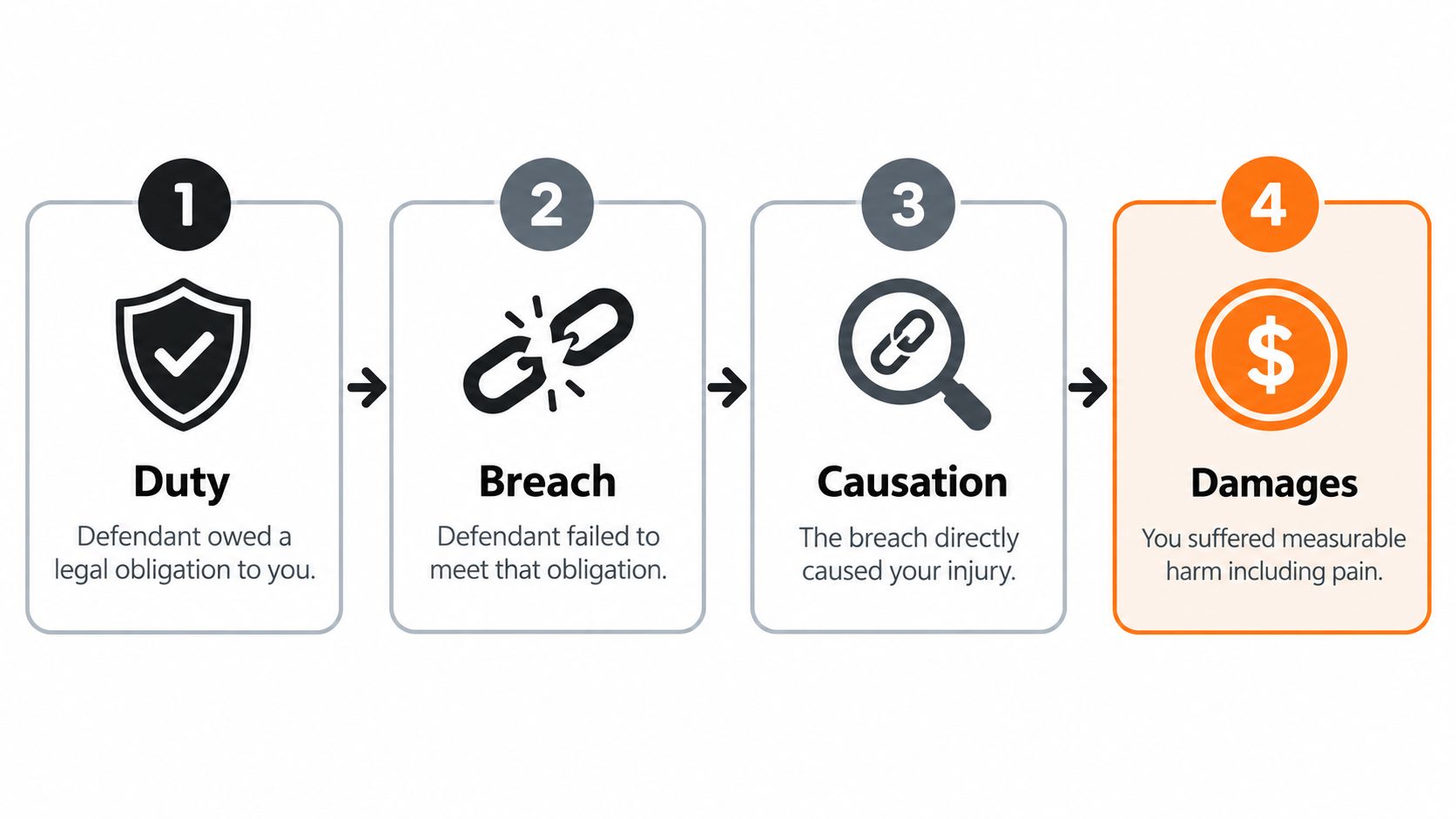
A painful injury doesn’t automatically create a recoverable claim. The law still wants duty, breach, causation, and damages, and it wants evidence tying those pieces together. If the other side can break the chain anywhere, the pain component shrinks or disappears with it.
Liability comes first, pain comes second
The legal question isn’t “Were you hurt?” It’s “Did the other party owe you a duty, fail to meet it, and cause the injury that produced your pain?” That sequence matters because an accident can happen without legal liability, and liability can exist without the kind of proof that supports a serious noneconomic award.
The claim gets stronger when the medical record and the human story line up. Consistent treatment, physician testimony, work restrictions, caregiving limitations, photographs, and credible observations from people who saw the change all help show that the injury wasn’t minor or fleeting.
If the injury changed how you move, sit, sleep, lift, drive, parent, or work, that’s where pain and suffering stops being abstract and starts becoming a case value issue. Claims involving lasting spinal problems are a good example of why the medical narrative matters, including issues such as understanding FBSS after surgery, where the injury picture can become more complicated over time.
Comparative fault can cut the number down
California Civil Code § 1431.2 generally limits each defendant’s responsibility for noneconomic damages to that defendant’s percentage of fault (statute). So if a jury values pain and suffering at $100,000 and assigns the defendant 60% fault, the defendant’s allocated noneconomic exposure is roughly $60,000.
That’s why fault fights matter so much. Every point of fault you lose is a point of noneconomic recovery you may never get back. The injury may still be serious, but the recovery can shrink fast if multiple actors are involved or if the defense pushes some blame onto you.
How California Juries and Insurers Value the Unpriceable
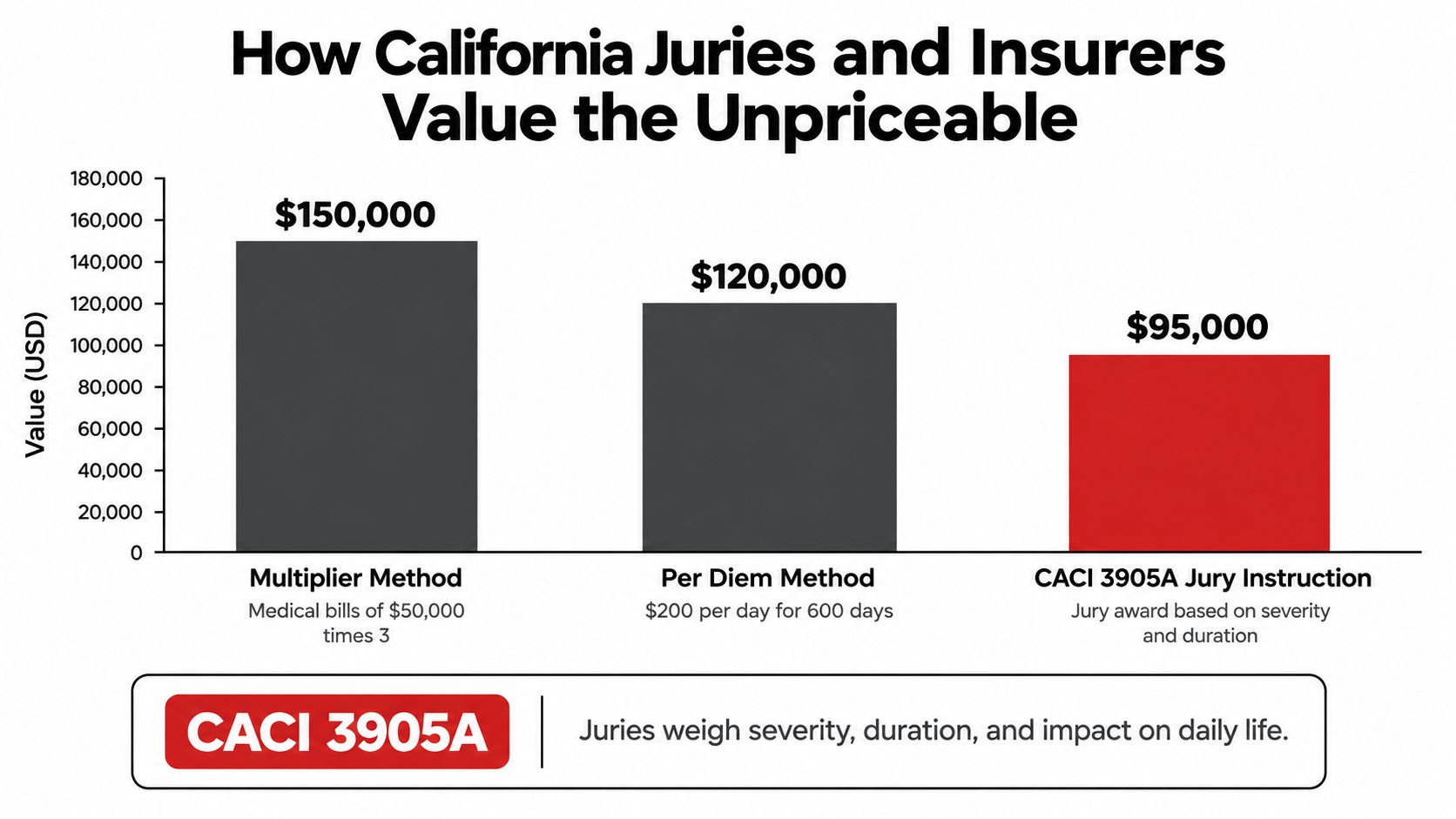
A rear-end crash leaves you with months of pain, missed work, and a stack of medical records. The defense still asks the same question: what is that pain worth? California does not use a fixed formula. CACI 3905A tells jurors there is no fixed standard for noneconomic damages, so they must rely on judgment, evidence, and common sense (Judicial Council instruction).
Why the multiplier myth is a trap
Insurance adjusters love shortcuts because shortcuts lower payouts. Juries are not supposed to do that. They look at how severe the injury is, how long the symptoms lasted, what treatment was needed, and how the injury changed ordinary life.
Thin records usually produce thin offers. If the chart is sparse, the prognosis is unclear, or treatment ended before the story was complete, the defense argues that the pain was minor or short-lived.
For a practical look at how carriers talk about value, personal injury settlement amounts shows the same pressure points that drive negotiations.
Future pain has its own burden
Future noneconomic damages require proof that the harm is reasonably certain. Under the same CACI 3905A instruction cited above, the award is stated in current dollars at judgment, not further discounted to present cash value. That means future pain is not a guess. It has to rest on medical support for prognosis, expected procedures, permanent restrictions, or chronic symptoms.
CACI 2941 gives the factfinder room to decide reasonable compensation without mathematical precision. That flexibility helps a real claimant, but it does not give anyone permission to speculate. A stronger medical record makes a larger future-pain number easier to defend, and easier to accept.
The same principle shows up in a lot of California settlement discussions, because pain and suffering tends to rise or fall with proof, not emotion. Juries do not reward drama. They reward evidence that the injury will keep affecting daily life.
The California Deadlines and Exceptions That Catch People Out
A painful injury can still lose on procedure. California generally gives you two years to file a personal-injury lawsuit under Code of Civil Procedure section 335.1, and the California Courts’ self-help guidance says the same thing in plain language (deadline guidance). Miss that deadline, and even a strong claim can be barred. Our statute of limitations for personal injury guide explains the exceptions in more detail.
The part people miss is that pain and suffering does not follow one clean rule. Some claims lose access to noneconomic damages because of the claimant’s status, not because the injury is weak.
| Rule | Source | Effect on Pain and Suffering |
|---|---|---|
| Two-year filing deadline | CCP § 335.1 and court guidance, see above | Late filing can bar the claim, subject to exceptions |
| Uninsured-driver bar | Civil Code § 3333.4 | Can block recovery of noneconomic damages in motor-vehicle cases |
| Medical-malpractice cap | Civil Code § 3333.2 | Limits noneconomic recovery differently from ordinary accident claims |
The uninsured-driver rule is a real problem
California Civil Code § 3333.4 generally bars an uninsured vehicle owner or a driver who cannot prove required financial responsibility from recovering pain, suffering, inconvenience, physical impairment, disfigurement, and other noneconomic losses in a motor-vehicle case. The exception for a DUI conviction under Vehicle Code § 23152 or § 23153 still matters, but the bigger point is this, coverage status can wipe out the very damages people assume are automatic.
The trap is factual detail. Ownership matters. Driving status matters. Insurance status matters. Proof of financial responsibility matters. If you blur those together, you can miss the bar entirely.
Medical malpractice follows a different ceiling
Medical-malpractice claims do not use the same noneconomic framework as ordinary car-wreck cases. Civil Code § 3333.2 imposes collective noneconomic limits, with inflation adjustments scheduled to begin January 1, 2034. That means you cannot value a hospital or doctor case the same way you value a standard auto claim.
If your injury came from medical treatment, the cap can control the settlement conversation before anyone argues about pain, loss of enjoyment, or daily disruption. If your injury came from a car crash, premises issue, or similar negligence case, that cap usually is not the right lens.
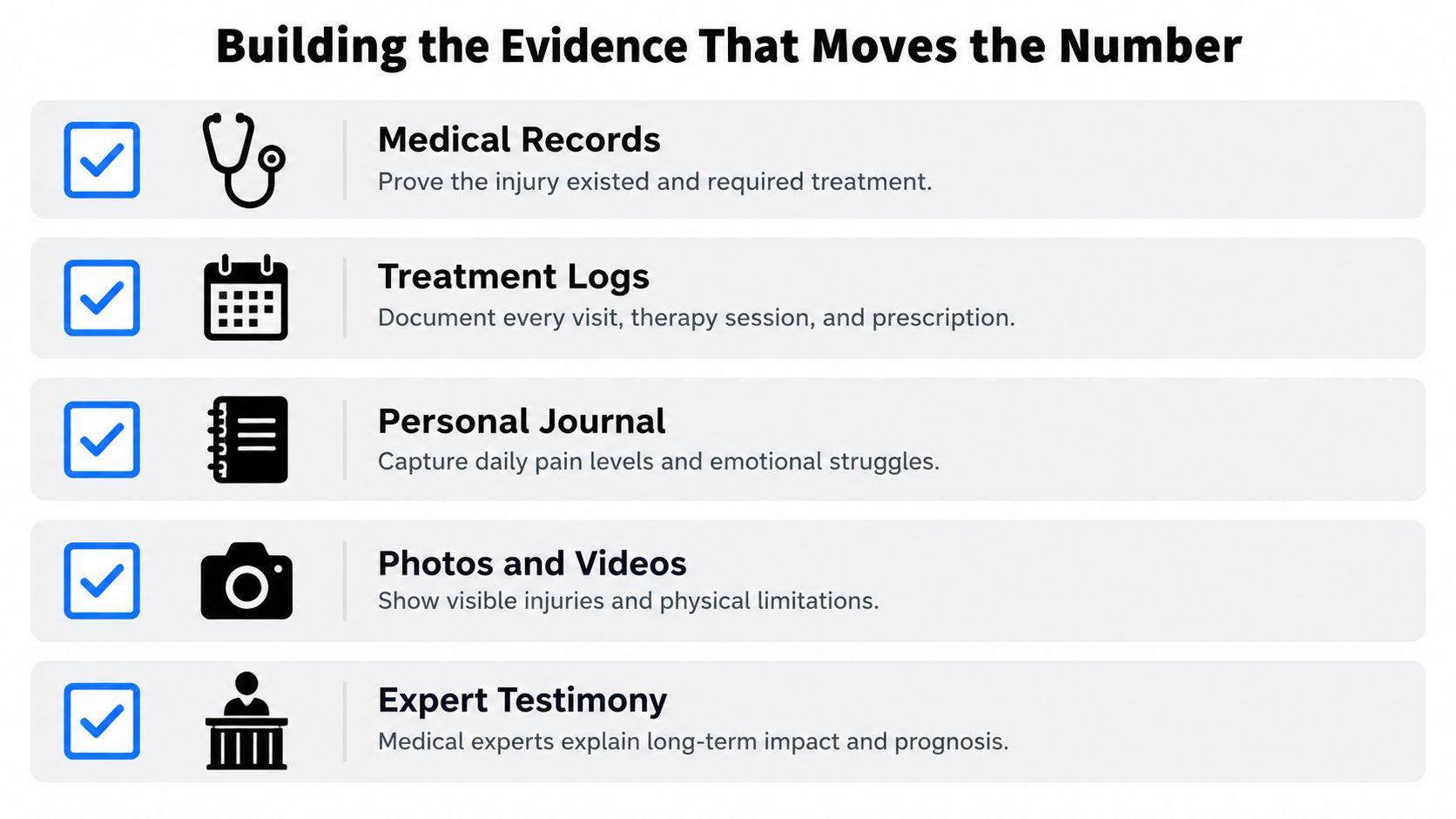
Building the Evidence That Moves the Number
Pain and suffering gets bigger or smaller based on what the file proves, not on how upset you feel telling the story. The best records show both that the injury happened and that it changed daily life in a persistent way. Thin records let the defense argue the pain was temporary, exaggerated, or unrelated.
What actually helps
- Medical records: ER notes, imaging, prescriptions, treatment timelines, and follow-up visits show the injury existed and required care.
- Treatment consistency: Regular visits and therapy records make it harder for the defense to say the pain resolved quickly.
- Prognosis notes: Written opinions about permanent restrictions, future procedures, or chronic symptoms support future noneconomic loss.
- Daily-life proof: Journals, photos, work restrictions, caregiving impacts, and witness observations make the pain concrete.
- Corroboration: Employer notes, family observations, and clinician testimony help connect the dots between injury and disruption.
Federal tort trial data also show why compensation claims are never just about one number. Among plaintiff winners in tort trials, 84% received monetary damages, with an estimated median award of $201,000, and the Bureau of Justice Statistics explains that compensatory awards commonly include both economic and noneconomic damages (BJS data). That doesn’t predict your case, but it does confirm that the pain-and-suffering piece often sits inside a larger compensatory picture.
If you’re still in active treatment for wounds or tissue damage, records from the right treating provider matter a lot. A resource on outpatient care for traumatic wounds can help you understand why consistent follow-up and documentation matter when healing is still underway.
What hurts the number
A long gap in treatment hurts. A single visit followed by silence hurts. Ignoring referrals hurts. So does acting normal on social media while claiming severe limitations elsewhere in the file.
The cleanest cases are the ones where the medical paper trail matches the lived experience. If your chart, your symptom journal, and your testimony tell the same story, the number is easier to defend.
Your Next Steps and When to Call a California Attorney
Start with the basics. Preserve photos, keep every medical appointment, save receipts, track missed work, and stop giving the other insurer casual recorded statements. Calendar the two-year deadline now, not later. If the injury is still changing, keep a simple symptom log and ask your treating clinician to document prognosis in writing.
A consultation is worth it when liability is disputed, the injury may be permanent, the at-fault party is uninsured or underinsured, or the claim sits in one of the special categories that change the rules. Rideshare passengers, premises-liability victims, and people hurt by an uninsured driver who may still fit the DUI exception need that issue spotted early.
If you’re trying to figure out whether your pain is legally valuable or just medically frustrating, a focused review can save time and bad decisions. LA Law Group, APLC handles California personal-injury matters and can evaluate how your records, fault issues, and deadlines affect a pain-and-suffering claim. A short consultation is often enough to tell you whether the case deserves pressure, patience, or a faster filing strategy.
If you want a straight answer on your claim, gather your medical records, photos, and deadline dates, then visit LA Law Group, APLC for a case review. They handle California personal-injury matters, and they can help you pressure-test whether your pain and suffering claim is worth pursuing before the insurer sets the narrative for you.
Attorney Advertising. This article is general information, not legal advice, and does not create an attorney-client relationship. Prior results do not guarantee a similar outcome.