
How to Find a Good Personal Injury Lawyer in California

Disclaimer: This article is for informational purposes and not to be construed as legal advice. No attorney-client relationship exists based on the review of this this article and none of the information in this article is legal advice.
When you’re dealing with an injury, the last thing you need is the stress of a complicated legal search. But finding the right lawyer is the first real step toward getting things back on track. The best way to find a good personal injury lawyer isn’t about one magic trick; it’s about combining recommendations from people you trust with some smart, practical research.
Starting Your Search for the Right Legal Partner
After an accident, everything can feel a bit chaotic. Your first move, though, should be methodical. The goal here is to build a small, solid list of potential attorneys—not just anyone with a law degree, but people who live and breathe California personal injury cases.
Forget scrolling endlessly through search results. You’re aiming to find three to five highly qualified candidates to look into more deeply.
Where to Look for Potential Lawyers
Start with the resources and people you already have in your corner. Word-of-mouth is still one of the most powerful tools out there.
- Ask for Referrals: Your first call should be to friends, family, or coworkers. A personal recommendation from someone who had a good experience is invaluable. Don’t forget other professionals you trust, like your accountant or family doctor—they often have networks and can point you to reputable legal experts.
- Use the State Bar of California: This is non-negotiable. Before you even think about calling someone, look them up on the State Bar’s website. You can instantly confirm they are licensed, see how long they’ve been practicing, and check for any public disciplinary actions. It’s a simple check that tells you a lot.
- Consult Legal Directories: Websites like Avvo and Martindale-Hubbell are great resources. They let you filter by practice area (you want personal injury, specifically) and location. More importantly, they often have reviews from past clients and ratings from other lawyers, giving you a well-rounded picture of their reputation.
As you start your search, you might hear different terms used. It can be helpful to understand the difference between an attorney and a lawyer, though most people use them interchangeably.
Before you pick up the phone for a consultation, do your homework. A few minutes spent verifying a lawyer’s credentials with the State Bar and confirming their specialty ensures you’re only talking to professionals who are truly equipped to handle a case like yours.
This simple, three-step approach—getting referrals, checking directories, and verifying credentials—is the best way to build your initial list of candidates.
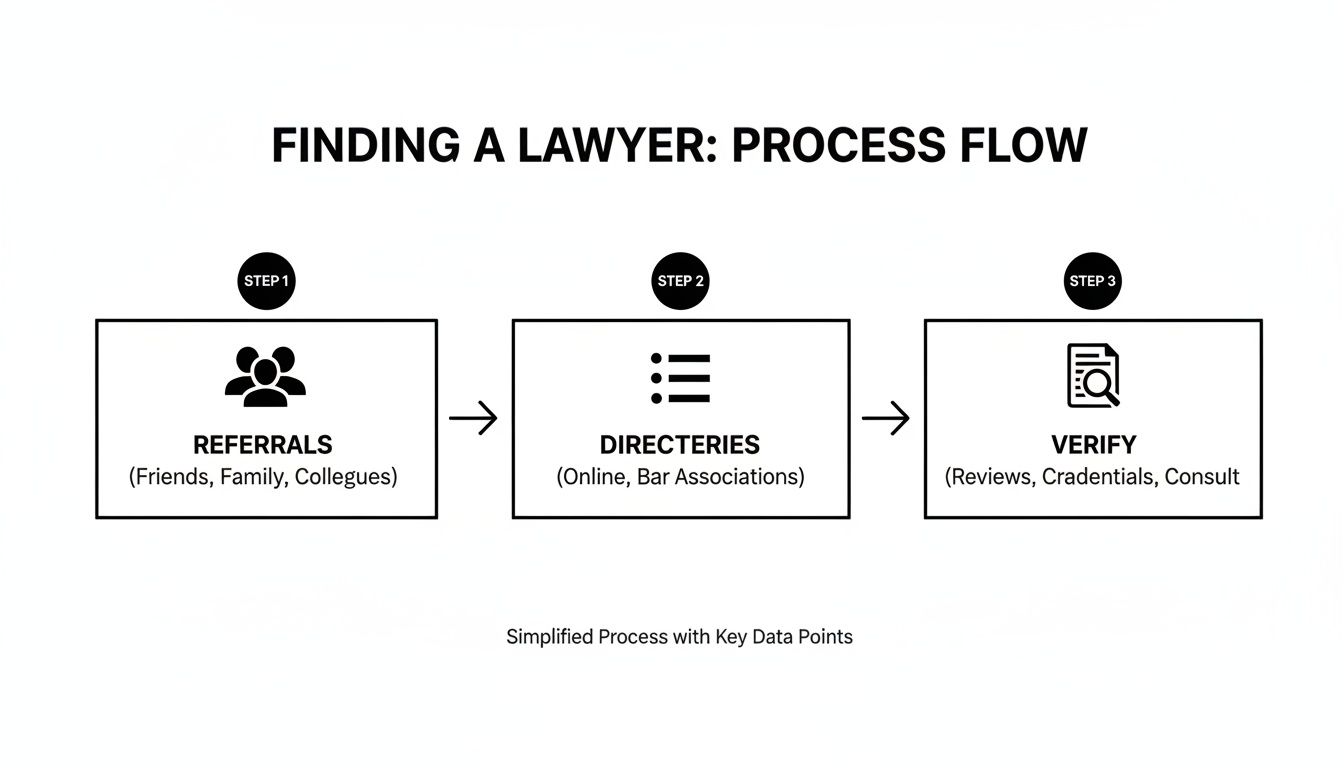
Following this process ensures your shortlist is filled with credible, specialized attorneys. Once you have that list, you’re ready to start vetting them more seriously, which is a key part of figuring out when to hire a personal injury attorney.
Disclaimer: This article is for informational purposes and not to be construed as legal advice. No attorney-client relationship exists based on the review of this this article and none of the information in this article is legal advice.
Diving Into a Lawyer’s Experience and Track Record
Once you’ve got a shortlist of potential attorneys, it’s time to roll up your sleeves and do some real digging. You’re moving past the glossy ads and first impressions to investigate each candidate’s professional history, zeroing in on their specific expertise and how often they actually win for their clients. This is where you separate the true specialists from the generalists.

Let’s be clear: in personal injury law, specialization is everything. An attorney who handles divorces on Monday and DUIs on Tuesday simply won’t have the focused, deep-seated knowledge your case demands. You need a lawyer who lives and breathes personal injury claims. They know the insurance companies’ playbook inside and out and are far better equipped to counter their tactics.
What to Look For on Their Website
Think of a law firm’s website as more than just a digital brochure—it’s their professional portfolio. A genuinely experienced personal injury lawyer will use their site to prove they know what they’re doing.
Here’s what to hunt for:
- Specific Practice Area Pages: Do they have dedicated, detailed pages for car accidents, slip and falls, or rideshare incidents? Vague, one-size-fits-all descriptions are a huge red flag. You want to see that they get the unique challenges of your type of case.
- Real Case Results: Look for a section proudly labeled “Case Results,” “Verdicts,” or “Settlements.” While past performance doesn’t guarantee future results, this page shows you the kind of outcomes they’ve delivered. Pay close attention to cases that sound a lot like yours.
- Authentic Client Stories: Go beyond the generic five-star ratings. Look for written testimonials or, even better, video reviews where real clients talk about their experience. Did they feel heard? Was the attorney a good communicator? Did they feel fought for?
This initial online check helps you verify if their claims of expertise are backed by actual, verifiable proof. For a deeper dive into this process, check out our guide on how to select a personal injury attorney.
Reading Between the Lines of a Lawyer’s Track Record
A lot of people think a long list of multi-million dollar trial verdicts is the only thing that matters. While courtroom experience is definitely important, it doesn’t paint the full picture. The truth is, the vast majority of personal injury cases never see the inside of a courtroom. They’re settled beforehand.
This is where a lawyer’s skill as a negotiator becomes their most powerful weapon. In fact, legal experts report that a staggering 95-96% of personal injury lawsuits in the United States are settled out of court. This statistic alone shows why finding an attorney with a proven talent for negotiation is non-negotiable.
A lawyer who consistently secures substantial settlements for their clients isn’t just “avoiding a trial.” They’re demonstrating a masterful understanding of case valuation and an ability to dismantle the arguments of insurance adjusters. Their success at the negotiation table is often a far better sign of their ability to maximize your compensation than a single, rare courtroom victory.
So, as you review an attorney’s background, remember to give just as much weight—if not more—to their settlement wins. These successes prove the lawyer can build such a rock-solid case that the other side is forced to offer a fair payout, saving you the immense time, cost, and stress of a full-blown trial.
Making The Most Of Your Initial Consultation
Think of your first meeting with a potential lawyer as a two-way interview. You’re not just there to tell your story; you’re there to decide if this is the right person to fight for you. This is your chance to really gauge their expertise, see how they communicate, and figure out if you can trust them with your case.
Any reputable personal injury lawyer will offer this first meeting for free. If a firm tries to charge you just to walk in the door, that’s a big red flag.

To make this meeting count, you need to come prepared. A little prep work goes a long way and helps the attorney give you a real, meaningful assessment of your situation.
Try to gather these key documents:
- Police Reports: This is the official, neutral account of what happened.
- Medical Records and Bills: These documents are crucial for proving the extent of your injuries and the financial costs you’re already facing.
- Photos and Videos: Visuals are incredibly powerful. Bring any pictures or videos you have of the scene, your injuries, and any property damage.
- Insurance Correspondence: Have any letters or emails from an insurance company? Bring them.
Handing these over gives the lawyer the raw materials they need to start building a picture of your claim.
Key Questions To Ask The Attorney
This meeting is your opportunity to ask the tough, direct questions that will tell you everything you need to know. Don’t be shy. You want to understand their experience, how they work, and exactly who you’ll be dealing with. For a full rundown, check out our detailed guide on how to prepare for your personal injury lawyer consultation.
Before you go, it helps to have a checklist of questions ready. Here’s a table with some of the most important ones to ask to get a clear picture of who you might be hiring.
| Category | Essential Questions to Ask |
|---|---|
| Experience & Focus | “What percentage of your firm’s cases are personal injury? How many cases similar to mine have you personally handled?” |
| Case Handling | “Will you be the main attorney on my case, or will it be passed to a junior lawyer or paralegal?” |
| Initial Strategy | “Based on what you’ve heard so far, what are your initial thoughts on my case and a potential strategy?” |
| Communication | “How often will I get updates on my case? What’s the best way to reach you if I have questions?” |
| Trial Experience | “Are you willing to take my case to trial if the insurance company won’t offer a fair settlement?” |
| Client References | “Can you provide testimonials or references from past clients with cases like mine?” |
These questions cut through the sales pitch and get to the heart of what matters: their expertise, their process, and how they treat their clients.
Observing More Than Just The Answers
Pay close attention to how the attorney acts, not just what they say. This meeting is a preview of what it will be like to work with them for months, or even years.
Are they actively listening, or are they interrupting you to jump to conclusions? Can they explain complex legal ideas in plain English you can actually understand? You should walk out of that meeting feeling heard, respected, and confident.
If you feel rushed, dismissed, or more confused than when you walked in, that’s your gut telling you to keep looking. Finding the right lawyer is about more than just legal skill; it’s about finding an advocate who is a clear and compassionate communicator. If the vibe feels off, trust that feeling and move on.
Understanding Legal Fees and Firm Resources
Let’s clear the air about one of the biggest myths out there: that you can’t afford a great lawyer. Worries about cost should never stop you from getting the justice you deserve, especially after an injury.
The good news is that personal injury law works differently. The entire system is built on something called the contingency fee model.
Simply put, you pay zero upfront. Your lawyer’s fee is just a percentage of the money they win for you, whether that comes from a settlement with an insurance company or a verdict in court. This setup puts you and your attorney on the exact same team. Their success is tied directly to yours—if you don’t get paid, neither do they. It’s a powerful incentive for them to fight for every last dollar you’re owed.
How Contingency Fees Work
In California, a standard contingency fee usually lands between 33% and 40% of the total recovery. So, if your case settles for $100,000, the attorney’s fee would be around $33,333.
Before you sign anything, you need a crystal-clear written agreement that spells everything out. Make sure it covers:
- The exact percentage the firm charges.
- When that percentage might change (for instance, it might increase if the case has to go to trial, which involves a lot more work).
- How case costs are handled. These are expenses separate from the lawyer’s fee, covering things like court filing fees, hiring expert witnesses, and paying for deposition transcripts.
Always ask if these costs are taken out of the settlement before or after your lawyer’s percentage is calculated. It can make a real difference in the final amount you receive.
While it might seem like a big chunk, the value a skilled lawyer adds often far outweighs their fee. An Insurance Research Council study found that people who hire a personal injury lawyer often receive settlements up to 3.5 times larger than those who go it alone. With 85% of all money paid out by insurance for bodily injuries going to clients with lawyers, the numbers don’t lie. You can dig into more of the data in this in-depth analysis of accident statistics.
Why a Firm’s Resources Matter
It’s not just about the fee structure. The financial muscle of a law firm is a huge factor in whether you win or lose. Insurance companies are corporate giants with deep pockets, and their favorite tactic is to drag things out, hoping you’ll get desperate and accept a lowball offer.
A well-funded law firm has the resources to stand up to these insurance bullies. They can afford to hire the top accident reconstruction experts, fund deep-dive investigations, and cover all the court costs without ever needing to cut corners. This ensures your case is built to win from day one.
A smaller firm or a solo lawyer might not have the cash to fund a complicated case that could take years to resolve. When you’re evaluating potential attorneys, ask them directly about their ability to see a tough, expensive case all the way through to the end. That financial stability is your case’s lifeline.
Recognizing Red Flags Before You Hire
Choosing the right lawyer isn’t just about finding the best fit; it’s also about steering clear of the wrong one. Knowing what to avoid is a huge part of finding a good personal injury lawyer who will actually have your back. Some warning signs are subtle, but others are blaring alarms telling you to run, not walk, away.

Be extremely wary of any attorney who makes promises that sound too good to be true. If a lawyer guarantees a specific dollar amount or promises a quick, massive settlement before they’ve even dug into your file, that’s a massive ethical breach.
Similarly, high-pressure sales tactics have no place in a professional law firm. An ethical lawyer will give you the time and space you need to make an informed decision. If you feel like you’re being pushed to sign a contract right then and there, take it as a clear signal to look somewhere else.
Evaluating Communication and Experience
Poor communication right out of the gate is another huge red flag. If an attorney is impossible to reach, cancels appointments at the last minute, or can’t give you a straight answer to your initial questions, just imagine what it will be like once they officially have your case. You absolutely need an advocate who is responsive and accessible.
Also, a lack of specific, relevant experience should be a dealbreaker. A lawyer who dabbles in personal injury alongside a dozen other practice areas simply won’t have the focused know-how to take on powerful insurance companies. You need a specialist, not a generalist.
Here are a few critical warning signs to watch for:
- Guaranteed Outcomes: No ethical lawyer can promise a specific result. Every single case is different, with its own unique variables.
- High-Pressure Tactics: Feeling rushed to sign a fee agreement means they’re more interested in their own bottom line than your well-being.
- Poor Communication: If they’re unresponsive before you hire them, it will almost certainly get worse later.
- Vague Experience: An attorney who can’t point to specific cases they’ve handled that are similar to yours is not the right fit.
The Importance of Trial Readiness
It’s true that most personal injury cases settle out of court. But here’s a crucial piece of inside baseball: an attorney’s reputation for being willing to go to trial is one of their most powerful negotiating tools. Insurance companies keep tabs on lawyers; they know who will fight and who will fold for a quick, lowball offer.
An attorney known for being trial-ready commands more respect from insurers. This reputation gives them immense leverage during settlement talks, often resulting in much higher offers because the insurance company wants to avoid a costly and unpredictable court battle.
Statistics show that only about 4-5% of personal injury cases actually go to trial. Still, hiring a lawyer who prepares every single case as if it will end up in front of a jury is essential for maximizing your potential compensation. To get a better handle on these dynamics, you can discover more insights about trial statistics on jjslawoffice.com.
After you’ve weeded out the bad fits, your final decision should come down to a mix of professional credentials and personal comfort. Compare the lawyers you met with, review their fee agreements line by line, and ultimately, trust your gut. Your goal is to find an advocate who not only has the right skills but also makes you feel confident and supported during a tough time.
Disclaimer: This article is for informational purposes and not to be construed as legal advice. No attorney-client relationship exists based on the review of this this article and none of the information in this article is legal advice.
Last-Minute Questions Before You Hire
Even with a solid game plan, you’re bound to have some final, nagging questions pop up. It’s totally normal. As you get ready to make a final decision, you might be wondering about deadlines, dealing with insurance companies, or what happens if you pick the wrong lawyer. Let’s clear up a few of the most common concerns I hear from clients.
“How Long Do I Have to File a Claim in California?”
This is one of the most critical questions, and the answer is unforgiving. California has a strict statute of limitations, which is a legal deadline to file a lawsuit. For most personal injury cases, you have just two years from the date you were hurt.
Miss that deadline, and you almost certainly lose your right to seek compensation forever. It doesn’t matter how strong your case is. This is why it’s so important to talk to a lawyer sooner rather than later.
Navigating Insurance and Attorney Relationships
“The insurance company called me with an offer. What should I do?”
Simple: Do not accept it. Do not sign anything. Don’t even give a recorded statement until you’ve spoken with a lawyer.
Insurance adjusters are masters of their craft, and their job is to pay you as little as possible. That quick offer they dangle in front of you? It’s almost always a lowball tactic. They’re hoping you’ll take the fast cash before you realize the true cost of your injuries, including future medical care and lost wages. A good lawyer will calculate the real value of your claim so you don’t get short-changed.
It’s a classic insurance company playbook: act like your best friend while actively working to undermine your claim. Taking their first offer means signing away your rights to any future compensation, even if your injuries turn out to be much worse than you initially thought.
“I already hired a lawyer, but I’m not happy with them. Can I switch?”
Yes, you absolutely can. You have the right to fire your attorney at any time during your case. It usually just involves sending them a formal written notice. Your new lawyer will then handle getting your case file and sorting out any fee arrangements with your old firm, so you don’t have to worry about the awkward details.
“What If I Was Partially at Fault?”
This is a huge source of anxiety for many people. They worry that if they share even a tiny bit of the blame, they don’t have a case. Thankfully, that’s not how it works in California.
Our state uses a “comparative negligence” rule. All this means is that you can still recover money even if you were partly responsible for the accident. The court will assign a percentage of fault to each party, and your final compensation will be reduced by your percentage.
It works like this:
- Let’s say your case is valued at $100,000.
- The court finds you were 20% at fault for the accident.
- Your final award would be reduced by that 20%, leaving you with $80,000.
A skilled attorney will fight to minimize your percentage of fault, which directly translates to more money in your pocket. Never assume you don’t have a case just because you might have made a mistake.
Disclaimer: This article is for informational purposes and not to be construed as legal advice. No attorney-client relationship exists based on the review of this this article and none of the information in this article is legal advice.
If you’ve been injured and need an advocate who understands both the law and your needs, the team at LA Law Group, APLC is here to help. We offer free consultations to discuss your case and provide clear, actionable guidance. Contact us today to get the dedicated legal support you deserve at https://www.bizlawpro.com.
Attorney Advertising. This article is general information, not legal advice, and does not create an attorney-client relationship. Prior results do not guarantee a similar outcome.