
Immigration Lawyer in Spanish: A Practical Guide for 2026

You open the mail, see a USCIS notice or court paper, and your stomach drops. The deadline is short, the language is English, and everyone around you has a different opinion. One person says translate it and answer yourself. Another says refile. Another says go to a notario because they “help immigrants.” That’s how people lose good cases.
If you’re searching for an immigration lawyer in Spanish, ask a better question. Don’t ask only who speaks Spanish. Ask who can solve an immigration problem that will be judged in English, under federal rules, with real deadlines and real consequences.
This article is for informational purposes only, is not to be construed as legal advice, and no attorney client relationship exists based on the review of this this article and none of the information in this article is legal advice.
Why Spanish-Speaking Immigrants in California Need the Right Lawyer
A bad hire can damage an immigration case faster than bad facts.
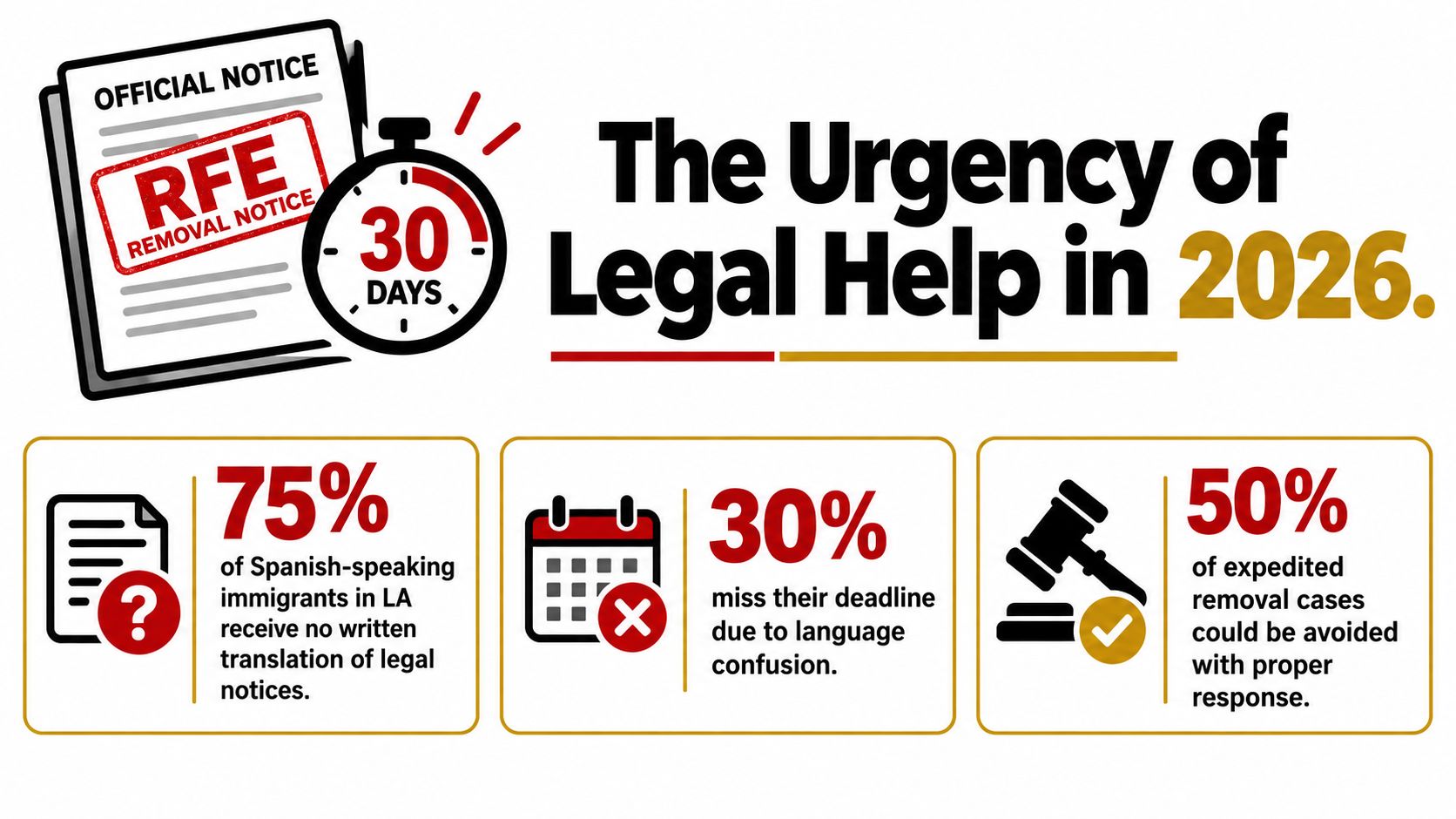
A Spanish-speaking client in California gets a Request for Evidence, a biometrics notice, or a hearing notice and assumes the main problem is translation. It usually is not. The harder problem is legal fit. The government wants a response in the right forum, on the right timeline, with the right evidence, and in the right procedural posture. If your lawyer misses that, fluent Spanish will not save the case.
Fluency alone does not fix a posture problem
Some lawyers speak excellent Spanish and still mishandle cases because they fail to identify what kind of case they are handling. An affirmative filing with USCIS is different from a defensive case in Immigration Court. A naturalization problem has its own standards, risks, and timing. Those differences control strategy from day one.
Spanish is not a side issue in immigration practice. Analysts compiling immigration-court demographics reported that Spanish speakers made up the large majority of language-coded cases in the dataset (Open Immigration demographics data). That tells you something important. The demand for Spanish-speaking legal help is huge, but demand alone does not separate a capable lawyer from a bilingual office with weak case execution.
The deeper problem is mismatch
A lot of Spanish-speaking clients choose counsel based on intake comfort. I understand why. If the staff is warm and clear in Spanish, you feel immediate relief. But relief is not strategy.
The lawyer you want is the one who can read an English notice correctly, diagnose what the agency or court is asking for, and choose the right response before the deadline closes. That is the job.
Practical rule: If the person helping you can explain your case in Spanish but cannot confidently handle the English-dominant process around it, you still have a problem.
This is also where people get fooled by notarios, consultants, and general-practice offices that “also do immigration.” They often sound helpful at intake. Then the case hits a legal issue involving admissibility, removability, prior entries, criminal history, inconsistent filings, or appeal deadlines, and the mistakes start getting expensive.
What the right lawyer actually does
Look for a lawyer who can do three things well.
- Spot posture immediately: They know whether your case belongs with USCIS, Immigration Court, the BIA, or a federal court review.
- Treat deadlines like legal events: They do not treat notices as routine paperwork. They identify response windows, filing risks, and what happens if you miss one.
- Explain consequences in plain Spanish: They tell you what signing, filing, withdrawing, appealing, or staying silent will do to your case.
That is the standard I would use for my own family. A Spanish-speaking office is helpful. A lawyer who can resolve an English-dominant immigration case for a Spanish-speaking client is the one worth hiring.
What Language Access Looks Like in Immigration Cases
A lot of firms advertise bilingual service. Fine. That’s the floor, not the ceiling.
Real language access in immigration work means more than someone answering the phone in Spanish. It means the legal team can move a case from intake to filing to hearing without the client guessing what they just signed.
Conversation is not the same as legal execution
Federal immigration systems still run in English. Legal documents in U.S. legal settings are only guaranteed to be available in English, and that gap affects whether clients understand deadlines, evidence standards, and appeal rights. Recent reporting also shows that people are still relying on translation tools and multilingual hotlines to bridge the gap, which tells you the need is still not fully met (language-access analysis on ScholarWorks).
If a lawyer’s office says, “Don’t worry, we speak Spanish,” ask the next question. Who drafts the declaration? Who reviews the English exhibits? Who explains inconsistencies before filing?
Conversational fluency versus operational fluency
| Capability | Surface-Level Bilingual | Operational Bilingual |
|---|---|---|
| Intake call | Staff can greet you in Spanish | Attorney or trained legal team can gather facts accurately in Spanish |
| Document review | Basic summary of forms | Full review of English notices, evidence, and risks line by line |
| Declarations | Client tells story informally | Legal team shapes facts into usable declarations and supporting records |
| Court preparation | General reassurance | Preparation for testimony, interpreter use, and likely government questions |
| Agency process | Ad hoc translation | Repeatable workflow for USCIS, court, and follow-up notices |
Interpreters matter because procedure matters
For immigration representation involving Spanish-speaking clients, agencies commonly require interpreters to be arranged in advance and allow only certain interpreter setups. In practice, that means any serious immigration practice needs a repeatable interpreter and translation process for USCIS and related proceedings, not improvised bilingual conversations (EOIR legal representation guidance).
Courts and agencies don’t care that your cousin “understands enough English.” They care whether the procedure was followed.
California court-access materials also emphasize that courts must provide certified interpreters in a wide range of proceedings, which matters when a case moves into courtroom settings and testimony has to be understood precisely (California interpreter discussion).
The bottom line is blunt. Google Translate is not a case strategy. If one word changes the meaning of an arrest record, a prior entry, or a family relationship, casual translation can sink the case.
How to Find and Vet a Spanish-Speaking Immigration Lawyer
You meet someone who speaks flawless Spanish, answers fast on WhatsApp, and says your case is “easy.” Then you learn they do not go to court, do not write legal briefs, and do not spot the problem buried in your old entry record. That is how people lose cases they might have won.
Start with a simple rule. Hire for legal judgment first, language access second. Spanish helps. It does not cure weak lawyering. Immigration cases are still built in English, reviewed in English, and decided through English-heavy records, notices, and legal standards. If your case involves court, prior arrests, fraud concerns, unlawful presence, waivers, or a denied filing, you need a lawyer who can handle the actual substance, not just explain the process in Spanish.
Confirm the person is allowed to give legal advice
Check whether the person is a licensed attorney before you discuss the facts in detail. Use the California State Bar’s immigrant legal resources and the California pro bono immigration directory to identify real legal providers and immigration service organizations.
Then ask the blunt question: Are you a licensed attorney, an accredited representative, or neither?
Do not accept a fuzzy answer. “Consultant,” “immigration specialist,” and “notario” are danger words unless the person clearly explains their legal authority. If they cannot tell you where they are licensed or who supervises the work, leave.
Vet the lawyer for your kind of case
A lawyer can be honest, licensed, and still be the wrong fit. Family petitions are one lane. Removal defense, waivers, asylum, appeals, and post-denial strategy are different lanes. Spanish-speaking clients often get steered to the nearest bilingual office instead of the right office. That is a mistake.
Ask questions that force specifics:
- What type of case do you think this is, exactly? A real lawyer should classify it clearly.
- What is the hard part of my case? Listen for issues like unlawful entry, timing problems, prior orders, crimes, misrepresentation, or missing evidence.
- Who writes and reviews the filing? If staff does everything and the lawyer barely touches the file, that is a problem.
- How often do you handle this exact type of matter? “We do immigration” tells you almost nothing.
- If my case gets worse, can you handle court or appeals, or will you refer it out? You want that answer before you sign.
If you want a local example of how case-specific immigration help differs from general legal help, read this page on Bakersfield immigration representation.
Watch for red flags that end the meeting
Some warnings are so serious that more conversation is a waste of time.
- Guaranteed approval
- Pressure to sign and pay on the spot
- No written fee agreement
- Cash only, or resistance to giving receipts
- Refusal to let you review what will be filed
- Advice to hide facts, use fake documents, or “fix the story”
- A Spanish-speaking salesperson does the intake, but you cannot speak to the lawyer
Read this immigration lawyer scam alert before you hand over money. Fraud often sounds polished, confident, and community-based. That does not make it lawful.
Know when a lawyer is overkill
Not every immigration task requires full representation. If you need a clean renewal, translation help, or basic filing support with no criminal history, no prior fraud issues, no removal risk, and no deadline mess, you may not need the most expensive attorney in town.
But if your case has consequences, hire for skill, not comfort. Bilingual friendliness is nice. The better question is whether the lawyer can read the English record, spot the legal trap, and fix it before USCIS or the immigration judge uses it against you.
That is the standard.
Documents to Bring and Questions to Ask at the First Consultation
You sit down for a consultation, and the lawyer spends the first twenty minutes trying to figure out when you entered, what you filed, and whether that old denial was yours or a relative’s. That is a wasted meeting. The office cannot judge risk if you show up with scraps, guesses, and half a story.
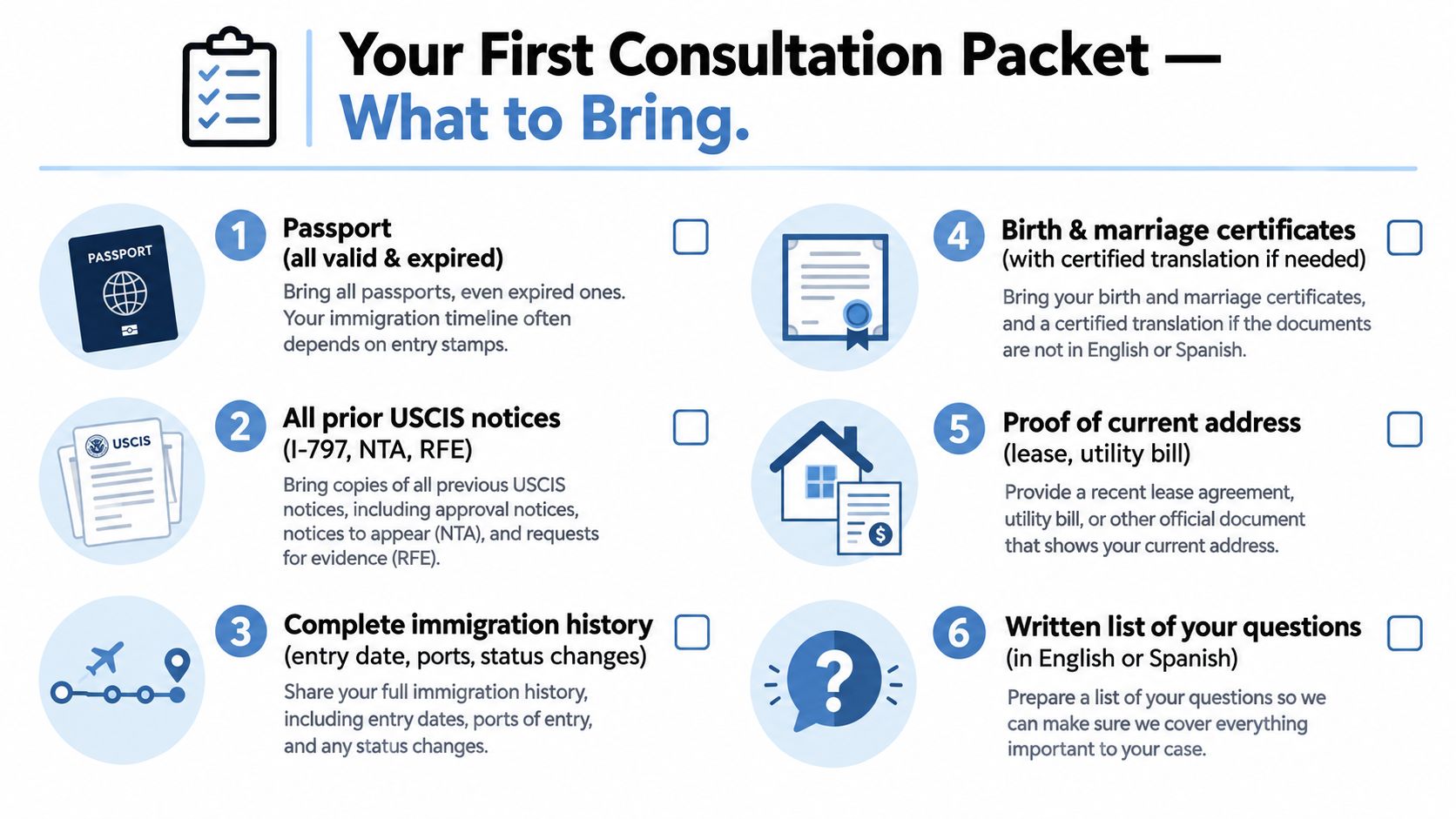
Bring a packet that lets the lawyer read your case the way USCIS, ICE, or the immigration court will read it. These agencies work in English, on paper, and against deadlines. A lawyer who helps Spanish-speaking clients must be able to take your Spanish explanation, match it to the English record, and spot the problem fast.
Start with the papers that control the case:
- Passports and travel documents. Bring current and expired passports, visas, I-94 records, border paperwork, and entry stamps.
- All immigration notices. Include I-797 notices, receipt notices, RFEs, interview notices, approval notices, denials, biometrics notices, and any Notice to Appear.
- Identity and family records. Bring birth certificates, marriage certificates, divorce judgments, adoption records, and any certified translations you already have.
- Prior applications and petitions. Copies of anything filed before matter. Petitions, waivers, asylum applications, work permit applications, consular forms, everything.
- Court records. If you were arrested, charged, convicted, sued in family court, or placed in immigration court, bring the final certified records. Do not summarize them from memory.
- Proof of residence and contact information. Recent mail, lease papers, utility bills, and your current phone number and email.
Bring copies the office can keep. Bring originals so the lawyer can compare them. If something is missing, say so plainly. Do not guess.
A one-page timeline is just as important as the documents. List every entry to the United States, every exit, every filing, every marriage, every arrest, and every notice you received. Put dates in order. If you do not know an exact date, mark it as approximate instead of inventing one.
That timeline does two jobs. It helps the lawyer test whether the file makes legal sense, and it exposes contradictions before the government uses them against you.
Then ask questions that reveal who is handling the case. Spanish service at the front desk is nice. It tells you nothing about whether the lawyer can resolve an English-dominant immigration problem.
It is worth asking these questions:
- What case strategy do you see based on the documents I brought?
- What facts could hurt me, and what records do you still need before giving real advice?
- Who will review my file and sign off on the legal work?
- Who prepares forms, declarations, and supporting evidence?
- Will I speak with the attorney again before anything is filed?
- Will you attend my interview or hearing yourself, or hand me to another lawyer?
- What is included in the fee, and what triggers extra charges?
Listen for plain answers. A good lawyer will tell you what is missing, what looks dangerous, and what cannot be promised yet. A weak office talks around the question, keeps everything vague, or treats your consultation like intake for a payment plan.
One more rule. Bring every bad fact.
Bring the prior denial. Bring the false-name issue. Bring the arrest record. Bring the marriage separation. Bring the removal order you hoped was old enough to ignore. Immigration cases usually break because the client hid something embarrassing, not because the government missed it.
If your matter is simple, this first meeting should make that clear quickly. If the record shows fraud concerns, criminal exposure, prior removals, or conflicting filings, hire for legal judgment, not bedside manner. That is the whole point of the consultation.
Common Immigration Case Types and How Fees Vary
A Spanish-speaking client walks into a consultation believing the case is simple because the forms look simple. Then the lawyer spots an old overstay, a prior denial, or a bad entry record in English-language government files. That is the divide in immigration work. The issue is not who can chat with you in Spanish. The issue is who can handle the English-dominant record, spot the legal risk, and choose the right level of help.
The case type does not set the fee by itself
Fees rise or fall based on risk, not just the form number. A marriage-based case with clean entries and no prior problems may stay mostly document-driven. The same filing gets much more expensive if the file includes unlawful presence, inconsistent prior applications, fraud concerns, or criminal history.
Use this table as a practical guide, not a price list.
| Case Type | How fees usually work | What drives the cost |
|---|---|---|
| Family-based petitions and adjustment | Often a flat fee plus government filing fees. For example, a clean one-step marriage case usually costs far less than a case with waivers or prior denials. | Entry history, unlawful presence, prior filings, marriage evidence, interview prep |
| Asylum | Commonly priced much higher because the work is declaration-heavy and credibility-sensitive. Some lawyers charge a flat fee for early-stage work and separate hearing fees if the case moves deeper. | Detailed client statement, country-conditions evidence, trauma issues, interpreter time, hearing prep |
| Deportation defense in Immigration Court | Usually the most expensive category. Many lawyers require an initial retainer and bill additional work as the case expands. | Court appearances, motions, appeals, detention issues, bond, government opposition |
| Naturalization | Often the lowest-cost category if the history is clean. The price rises fast if there are trips, arrests, tax problems, or old immigration issues that can trigger deeper review. | Criminal record review, tax compliance, travel history, prior misstatements |
That is the point many articles miss. You are not paying for Spanish. You are paying for legal judgment applied to an English-heavy government process.
Spend according to risk
Naturalization and straightforward renewals are often poor places to overspend. If your record is clean, your documents are in order, and no one sees fraud, criminal, or prior-removal issues, limited help may be enough. For readers comparing narrow filings, a lawyer handling a work permit application and related employment authorization issues is solving a different problem than a lawyer preparing to defend you in court.
Asylum, waivers, fraud issues, prior removal orders, and Immigration Court cases are different. In those matters, cheap representation is expensive in the end. A missed inconsistency in a declaration or a bad concession in court can follow you for years.
Who tends to charge what, and why
Solo lawyers often give you more direct attorney access. That can be a strong fit if the lawyer personally reviews the evidence, writes the strategy, and appears in the case.
Nonprofits and legal-aid groups can be the right choice for humanitarian matters or very tight budgets. The trade-off is limited capacity and stricter intake rules.
Larger firms may have better staffing for document-heavy cases, but you need to ask who does the analysis. If the Spanish-speaking staff member is only translating while the legal strategy is handled elsewhere, find out whether the attorney in charge has real experience with the kind of problem your English-language record presents.
One rule matters here. Do not pay court-level fees for a routine filing. Do not bargain-hunt on a case that could end in removal, denial, or a permanent credibility problem.
LA Law Group, APLC is one option among California firms that states it offers immigration consultations in English, Spanish, and Farsi and handles immigration guidance and representation through the process. That matters if direct language access is part of your screening, but it should never be the only reason you hire.
What to Expect on Timelines, Fees, and Client Rights
A lawyer can control strategy and paperwork quality. A lawyer cannot magically force the government to move fast. Anyone selling you speed as the main product is selling nonsense.
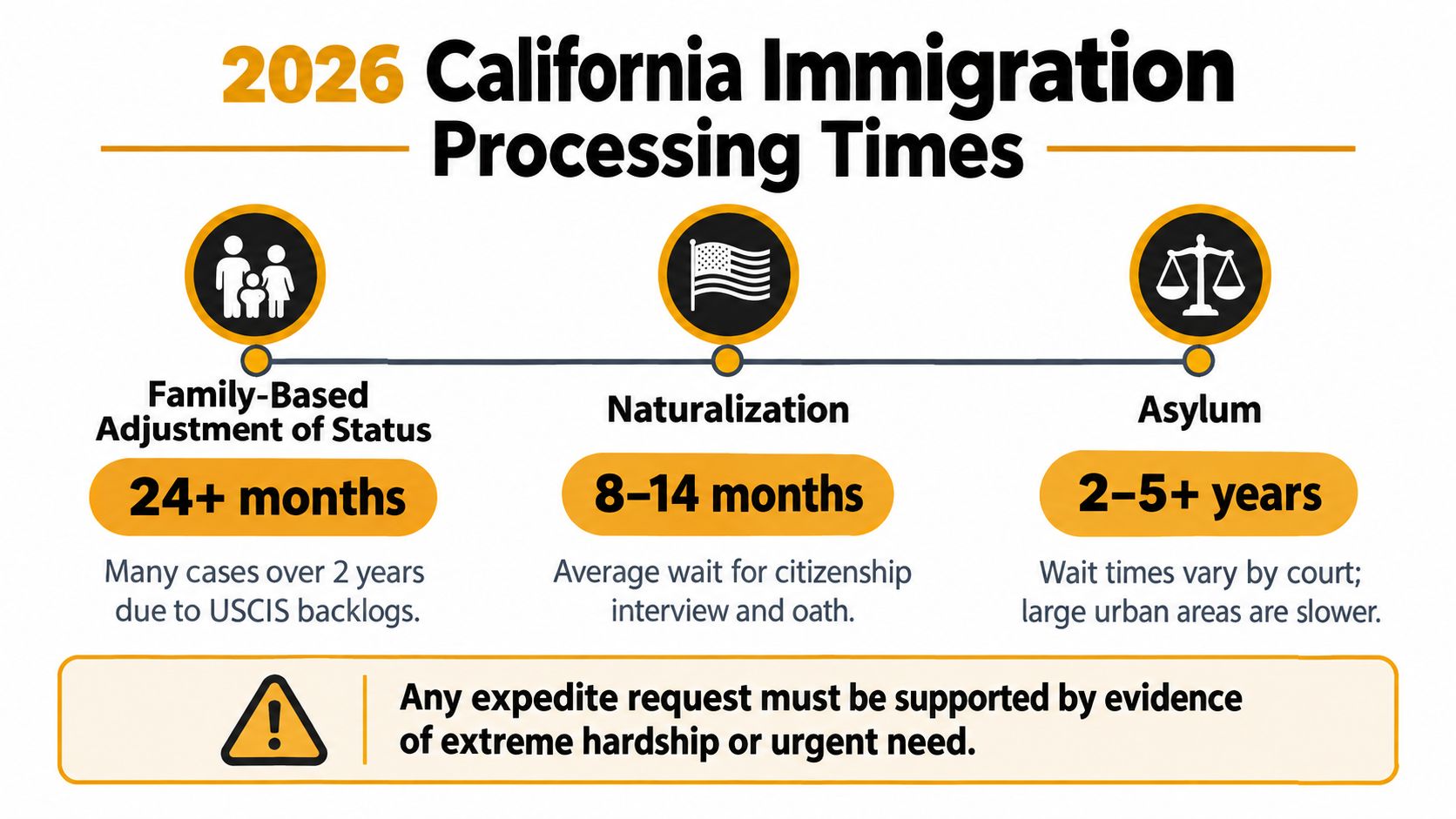
Be realistic about timing
In California practice, family-based adjustment can stretch beyond two years. Naturalization may be much faster than asylum, while asylum matters can drag on for years depending on posture and venue. The exact timeline depends on the agency, the local office, the evidence, and whether the case stays administrative or turns adversarial.
If a lawyer promises a fast approval without carefully qualifying what they mean, that’s a warning sign. Honest lawyers talk about process, not fantasy.
You have rights about money and paperwork
You are entitled to clarity. A law-firm website and legal materials should plainly say the content is informational only, not legal advice, and does not create an attorney-client relationship (Oregon practice guide on disclaimers). A proper disclaimer should also say that sending information through a web form does not create an attorney-client relationship and that unsolicited submissions may not be confidential or privileged (Arizona standard disclaimer language).
That same spirit should carry into representation. Before you pay, insist on:
- A written fee agreement
- A clear scope of work
- An explanation of additional costs
- A copy of what you sign
- A copy of filings made on your behalf
Your rights are not optional
You have the right to hire a licensed attorney instead of a notary or self-styled consultant. You can end the relationship if it isn’t working. You can ask for your file. You can complain to the State Bar if a lawyer acts improperly.
A Spanish-speaking non-lawyer can be helpful as support staff. They should never be the person giving you legal advice for a fee.
Never confuse friendliness with authority. The person taking your payment should be clear about whether they are the lawyer, whether they supervise the work, and what exactly they’re being hired to do.
When You Actually Need a Lawyer and When You Don’t
A lot of people waste money because they assume every immigration task requires full representation. That’s wrong. Language barriers matter, but risk matters more.
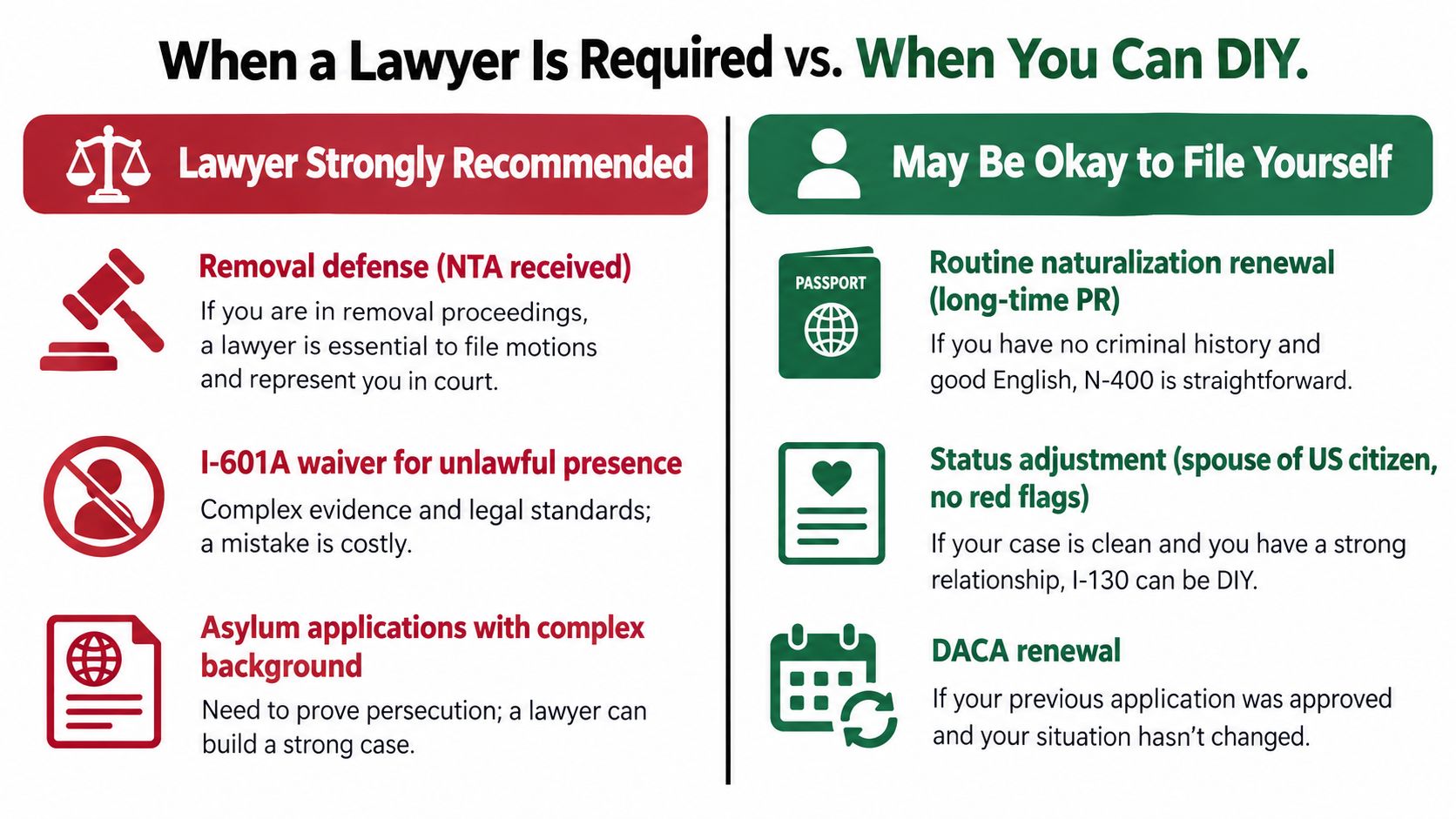
Cases where paying for a lawyer makes sense
Hire counsel if your case has any of these features:
- Criminal history: Even minor facts can have outsized immigration consequences.
- Prior denial or prior removal issue: Repeat problems usually mean deeper legal questions.
- Missed deadlines or bad prior filings: Cleanup work is harder than doing it right the first time.
- Asylum or waiver issues: These turn on legal standards, evidence, and credibility.
- Anything heading to court: If you received an NTA or expect litigation, get counsel.
For readers dealing with active court risk, this overview of a deportation defense attorney gives a good sense of why defensive cases are different from basic filings.
Cases that may not justify full legal fees
Some matters can be manageable with careful self-preparation or help from a DOJ-accredited representative or recognized nonprofit:
- Routine renewals where nothing important changed
- Simple records requests
- Clean, low-risk filings with straightforward eligibility
- Administrative tasks where the main issue is organization, not legal judgment
The question is not “Do I need Spanish help?” The question is “Will one wrong answer create a legal disaster?”
A useful rule of thumb is this. If the main challenge is translating forms and gathering documents, full legal representation may be overkill. If one USCIS question, one old arrest, one prior entry, or one inconsistency could put you at risk of denial or removal, hire a lawyer.
Paying for a consultation to measure risk is often cheaper than paying someone later to repair a denial.
Your Next Steps and How to Reach Out for Help
Don’t sit on the notice. Do something concrete this week.
Start with a short action list
- Pull every immigration document you have. Don’t sort later. Gather first.
- Write a one-page timeline. Dates, entries, filings, denials, interviews, arrests, marriages, moves.
- List your top goals. Stay in the U.S., avoid removal, get work authorization, fix status, prepare for citizenship.
- Set your budget. If funds are tight, look at legal aid, recognized organizations, and limited-scope consultations.
- Shortlist three California options. Verify licenses and compare how each office answers your first questions.
Make the first call the right way
You don’t need to tell your life story in the first minute. Say what the notice is, what the deadline is, whether you’ve filed before, and whether there is any criminal or court history. Ask whether the attorney handles that exact type of matter and whether you’ll meet with the lawyer directly.
Keep sensitive facts off social media. Don’t post your notice, your timeline, or your immigration strategy online. Save that for a confidential legal consultation.
Keep your rights in view
You can ask for an interpreter in proceedings where one is available through the system, and court-access rules require meaningful language access in many settings, as noted earlier. You can seek a second opinion. You can refuse to hire on the spot. You can ask whether the person advising you is a licensed attorney or a DOJ-accredited representative.
This article is provided for informational purposes only. It is not legal advice, it does not create an attorney-client relationship, and submitting information after reading it does not, by itself, make anything confidential. Before filing anything or missing any deadline, confirm the current rules with a licensed California attorney or a DOJ-accredited representative.
If you need direct help sorting out whether your case is simple, risky, or already in trouble, LA Law Group, APLC offers immigration guidance and consultations in English, Spanish, and Farsi. If you want to speak with a California firm about your options before you file, respond, or sign with the wrong person, visit LA Law Group, APLC.
Attorney Advertising. This article is general information, not legal advice, and does not create an attorney-client relationship. Prior results do not guarantee a similar outcome.