
Lyft Car Accident Lawyer: How Claims Actually Work
You’re in the back seat on a weekend night, approaching a busy intersection. Your Lyft driver has the app open when another vehicle hits the car. Now you’re hurt, your ride has ended, and an insurance adjuster wants to know exactly what the driver was doing when the collision happened.
This article is for informational purposes only and must not be construed as legal advice. None of its information is legal advice, and reviewing it does not create an attorney-client relationship.
What You Are Really Facing After a Lyft Crash
The first problem isn’t finding Lyft’s advertised insurance limit. It’s proving which coverage applied at the moment of impact, who caused the crash, and what injuries the collision produced. Those are separate questions, and a strong claim needs evidence for each.
A passenger may reasonably assume that being inside a Lyft settles the insurance question. It helps establish the trip context, but it doesn’t establish fault or the value of an injury claim. Another motorist might have caused the collision, several people might be injured, or an insurer might dispute the connection between the crash and your treatment.
Separate the immediate problems
- Your health: Get evaluated and give your medical provider an accurate description of symptoms and how the collision happened.
- Your claim: Preserve information that connects you, the driver, and the vehicle to the Lyft trip.
- Vehicle damage: Keep photographs and repair documentation separate from medical records. If you’re also handling a damaged vehicle, Seat Belt Repair’s guide to what to know about collision repair provides useful repair-related context, not a substitute for a medical or liability assessment.
Practical rule: Don’t confuse an insurer opening a claim with an insurer accepting coverage, fault, or your damages.
A Lyft car accident lawyer should help you evaluate all those issues, not send a demand letter with medical bills attached. You should expect an explanation of the insurance layers, an evidence-preservation plan, and a realistic assessment of the difficult parts.
This guidance fits injured passengers, Lyft drivers, and people struck by a Lyft vehicle in California. Their routes to compensation differ, but each needs more than proof that a car displayed a Lyft emblem.
What a Lyft Car Accident Lawyer Actually Handles
The job is to connect responsibility, insurance, and documented losses. A lawyer who establishes only one of those has left the case unfinished.
In an ordinary collision, the other driver’s personal auto policy is usually the initial coverage issue. In a rideshare case, counsel must investigate the driver’s activity before deciding which policies deserve notice and which coverage position to challenge. That requires more than general familiarity with negotiating car accident settlements.
Different clients require different claim strategies
| Claimant | Counsel’s immediate focus | Mistake to avoid |
|---|---|---|
| Injured passenger | Identify the responsible drivers and the coverage connected to the ride | Assuming the Lyft driver caused the crash |
| Injured Lyft driver | Evaluate occupational benefits alongside claims against responsible third parties | Treating benefits and negligence damages as interchangeable |
| Other motorist, cyclist, or pedestrian | Establish fault and the Lyft driver’s platform status | Assuming a Lyft decal proves active coverage |
A careful lawyer also examines whether someone beyond the drivers contributed to the crash. Vehicle maintenance, roadway conditions, and other vehicles can matter. The investigation should follow evidence, not a predetermined decision to pursue only the most recognizable company.
The work must extend beyond submitting bills
Ask counsel how they’ll organize medical causation, income records, future treatment needs, and disputed coverage. A settlement demand should explain why the evidence supports payment, not merely announce a dollar figure.
The lawyer must also distinguish an insurance claim from a claim against Lyft itself. A policy issued for platform-related driving doesn’t automatically establish that the platform is legally responsible for every driver’s conduct.
My recommendation is straightforward: choose someone who can explain the status-evidence problem without retreating into advertising language. General personal injury experience is valuable, but it isn’t enough by itself. You need counsel who knows what records to request, how to evaluate conflicting timestamps, and when an insurer’s explanation leaves a material question unanswered.
The Three Driver-Status Periods That Control Coverage
Driver status at impact is a coverage question, not a technical footnote. For practical comparison, separate offline driving, waiting for a request, and accepted-trip activity. The last category combines travel to a pickup with carrying the passenger.
California’s framework took effect through Assembly Bill 2293 on July 1, 2015. It requires primary third-party liability insurance while a driver is logged in and available but hasn’t accepted a request; Lyft’s California disclosures also identify $200,000 in excess liability during that waiting stage and $1 million per incident while traveling to a rider or on a trip, as described in Lyft’s California insurance disclosures.
Lyft Driver-Status Periods and Coverage in California
The waiting-period minimums and accepted-trip coverage below are reflected in the rideshare coverage framework summarized by Lyft, including $50,000 per person, $100,000 per incident, and $30,000 for property damage during the waiting stage.
| Driver Status | What the Driver Is Doing | Lyft Liability Coverage |
|---|---|---|
| Offline | Not logged into the platform | No Lyft platform liability coverage for ordinary offline driving; examine personal insurance |
| Logged in and waiting, Period 1 | Available but hasn’t accepted a request | Waiting-period limits described above, with California excess coverage addressed separately |
| En route or on trip, Period 2/3 | Has accepted a request and is traveling to pickup or transporting the passenger | Higher accepted-trip liability coverage described above |
The distinction is easier to recognize visually.
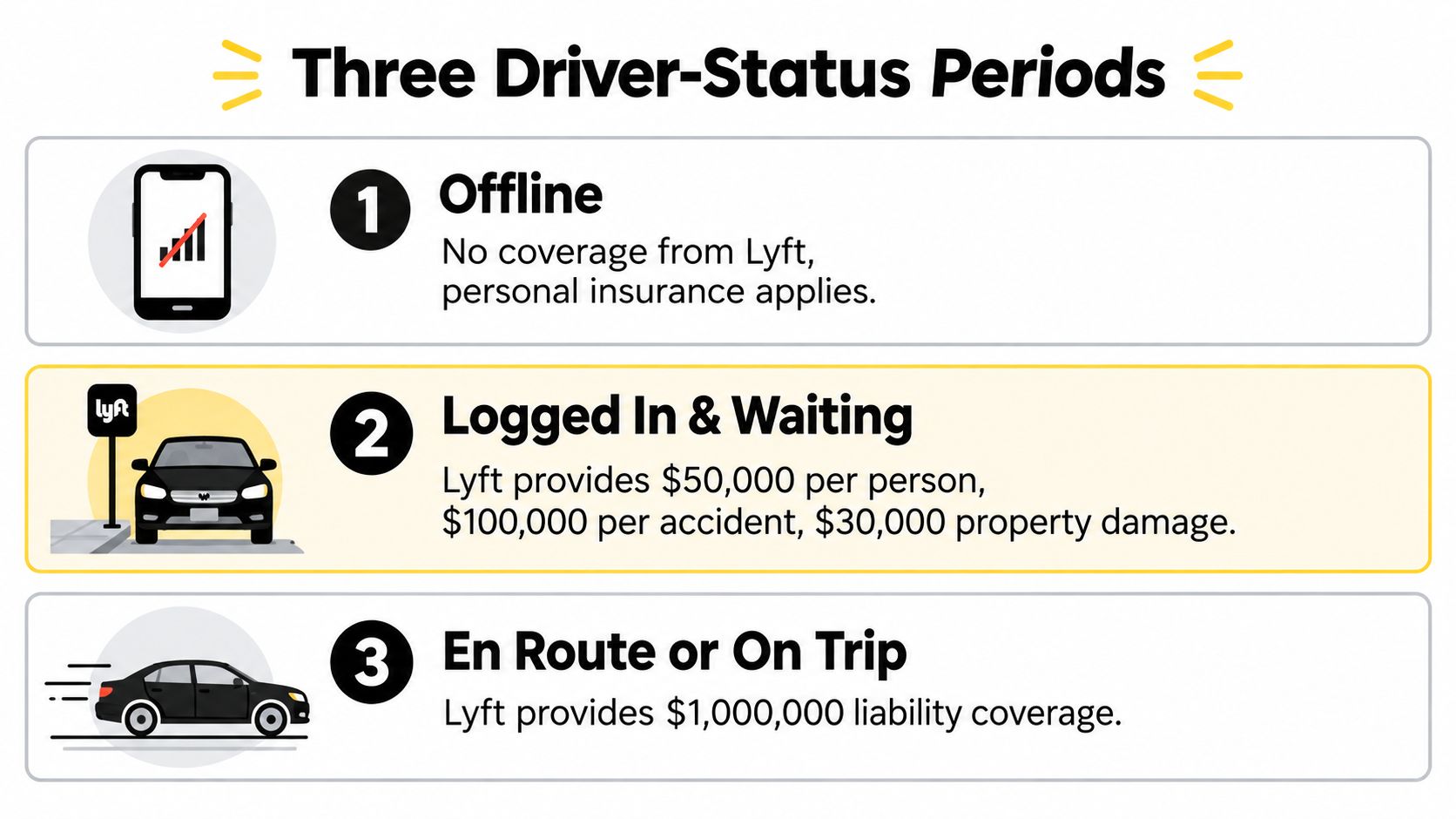
Don’t add the waiting-stage figures together and call the result guaranteed compensation. Primary coverage, excess coverage, and the conditions for accessing each layer require examination of the actual policies.
The difficult case is often a transition: the driver says a request had just arrived, but acceptance timing is unclear. Whether acceptance occurred before or after impact can change the coverage analysis.
Geography and the policy’s effective date matter. Don’t assume another state’s framework matches California’s or that an older summary describes every current benefit. Questions about later changes should prompt review of the actual policy and the discussion of California rideshare coverage changes, rather than treating a headline as a coverage determination.
How to Prove Which Coverage Period Actually Applied
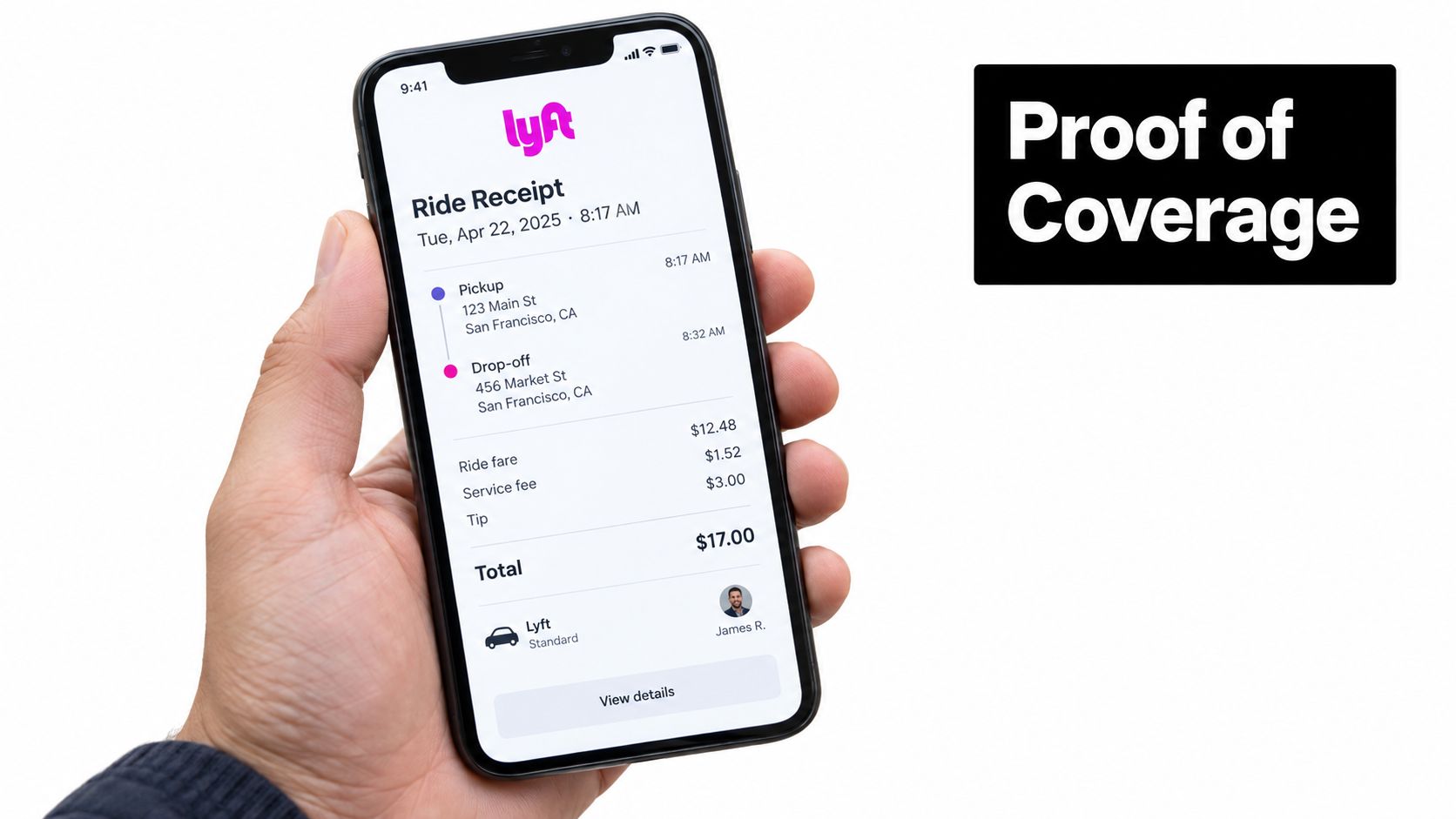
What records determine whether higher trip coverage or a lower layer applies, and who obtains them? Start with records you control, then identify the records held by Lyft, insurers, and responding agencies. A receipt is useful evidence, but it isn’t a complete platform activity log.
Save the receipt and confirmation screen in their original form where possible. Keep the trip identifier, driver details, pickup information, and timestamps together rather than scattering screenshots across messages.
Build a timeline from independent records
- Passenger-held evidence: You can preserve receipts, app screens, messages, and your own recollection of pickup and impact.
- Platform evidence: Login, dispatch, acceptance, cancellation, and trip-end timestamps can clarify the driver’s activity. Lyft holds the internal records needed to fully examine that sequence.
- Police evidence: The narrative may record what the driver and passengers said at the scene. Request available body-camera footage and emergency-call records through the appropriate agency process.
- Insurer correspondence: Counsel can ask the adjuster to identify the accepted coverage period and the records supporting that decision.
A Lyft car accident lawyer should request preservation promptly and determine whether voluntary production, insurer cooperation, or formal discovery is necessary. Subpoenas and other discovery tools depend on procedural requirements; hiring counsel doesn’t create instant access to every internal record.
Compare timestamps carefully. An approximate time in a police narrative should not override a more precise dispatch record, and a driver’s memory should not replace available electronic evidence.
Read the policies, not just the coverage letter
Lyft warns that personal policies may provide no platform-related liability, collision, other-than-collision, uninsured- or underinsured-motorist, personal-injury-protection, or medical-payments coverage, depending on their terms. Its disclosures also describe contingent other-than-collision and collision coverage up to actual cash value, generally subject to a $2,500 deductible, in Lyft’s insurance policy explanation.
That vehicle-damage deductible isn’t a blanket deduction from every passenger’s bodily-injury claim. Different coverage categories address different losses.
A policy limit describes a coverage boundary. It isn’t a settlement offer or a promise that the entire limit is available to you.
Fault, exclusions, applicable deductibles, other injured claimants, and uninsured- or underinsured-motorist issues still require separate analysis.
What to Do in the First 72 Hours After a Lyft Crash
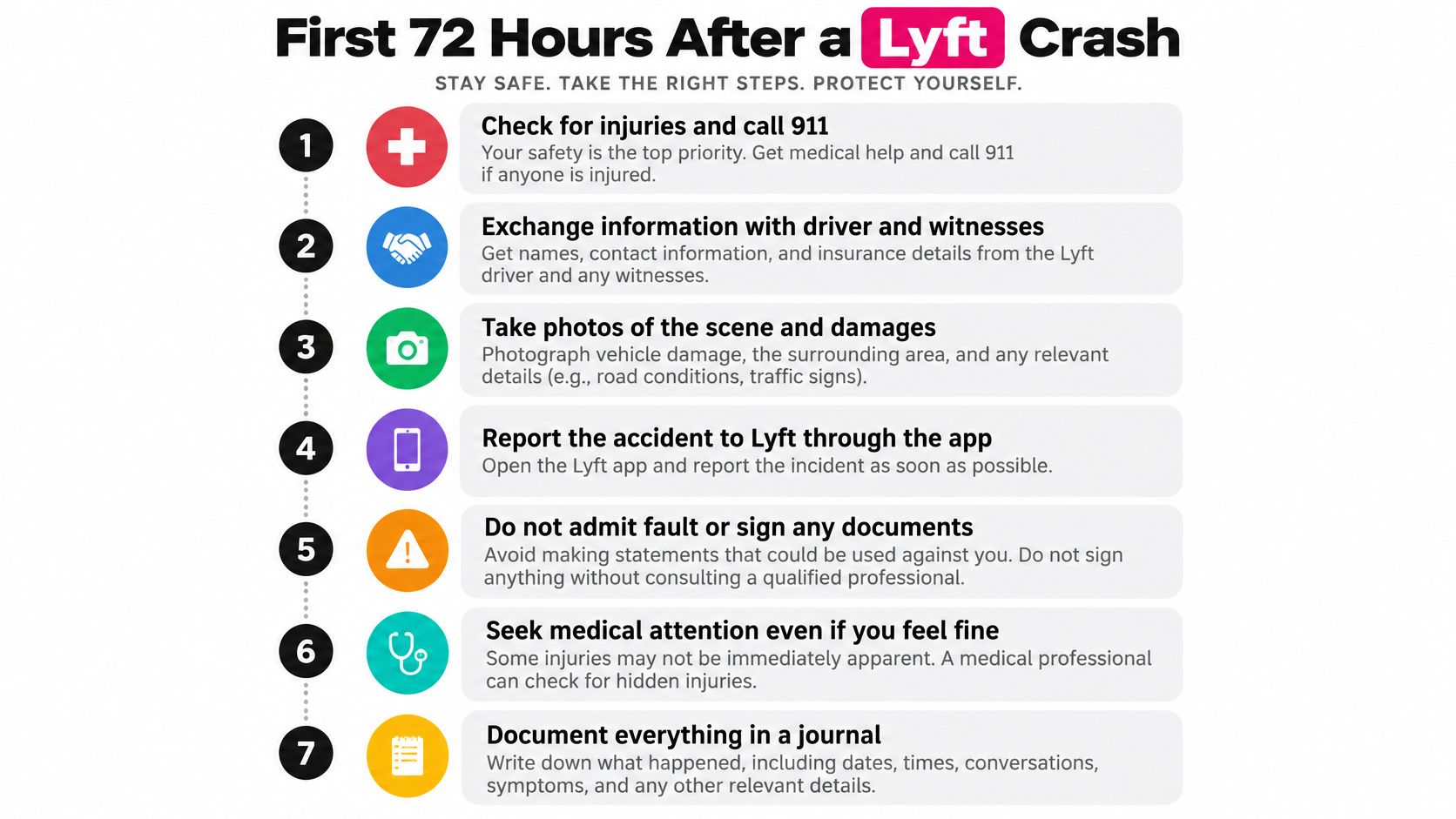
Treat the first 72 hours as an evidence-preservation priority, not a legal safe harbor. Your medical needs come first, and you shouldn’t put yourself in danger to collect photographs.
Use this checklist to organize the immediate response.
At the scene and after you leave
- Get emergency help: Call 911 when injuries, danger, or the circumstances require emergency assistance. Follow responders’ safety instructions.
- Exchange facts: Collect driver, vehicle, insurance, and witness information. Describe what you observed without guessing about speed, medical diagnoses, or fault.
- Photograph context: If safe, capture vehicle positions, license plates, impact areas, traffic controls, the intersection, and visible injuries.
- Preserve the ride: Save the receipt and driver-information screen before you lose track of them. Don’t rely on the driver to send everything later.
- Seek medical evaluation: Arrange prompt assessment, preferably the same day when feasible, even if symptoms initially seem minor. Let a clinician determine what evaluation is appropriate.
Report the collision through Lyft’s app and retain confirmation. The practical steps in filing a Lyft accident report in California can help organize that task, but reporting isn’t a substitute for protecting your legal deadlines.
Don’t argue with the driver, make speculative admissions, or sign a settlement release at the scene. Give truthful information to police and medical providers, and don’t withhold information needed for treatment.
For an additional visual reference, use this video alongside your documentation checklist.
Keep documenting after the initial response
Maintain a factual record of symptoms, appointments, work restrictions, and missed work. Save employer communications and income records rather than estimating lost earnings from memory.
Avoid public social-media commentary about the crash or your recovery. Before a substantive recorded insurance interview, understand who the interviewer represents and obtain advice about any cooperation obligations under your own policy.
The point isn’t to manufacture a perfect story. It’s to preserve an accurate one that can withstand questions about fault, timing, and injury causation.
Passenger, Driver, and Third-Party Claims Compared
An injured passenger and an injured Lyft driver shouldn’t receive the same claim strategy. Their available benefits, responsible parties, and coverage routes differ. The common task is to connect the correct route to supported losses.
The comparison below illustrates the claimant categories, but don’t treat its shorthand as a legal determination.
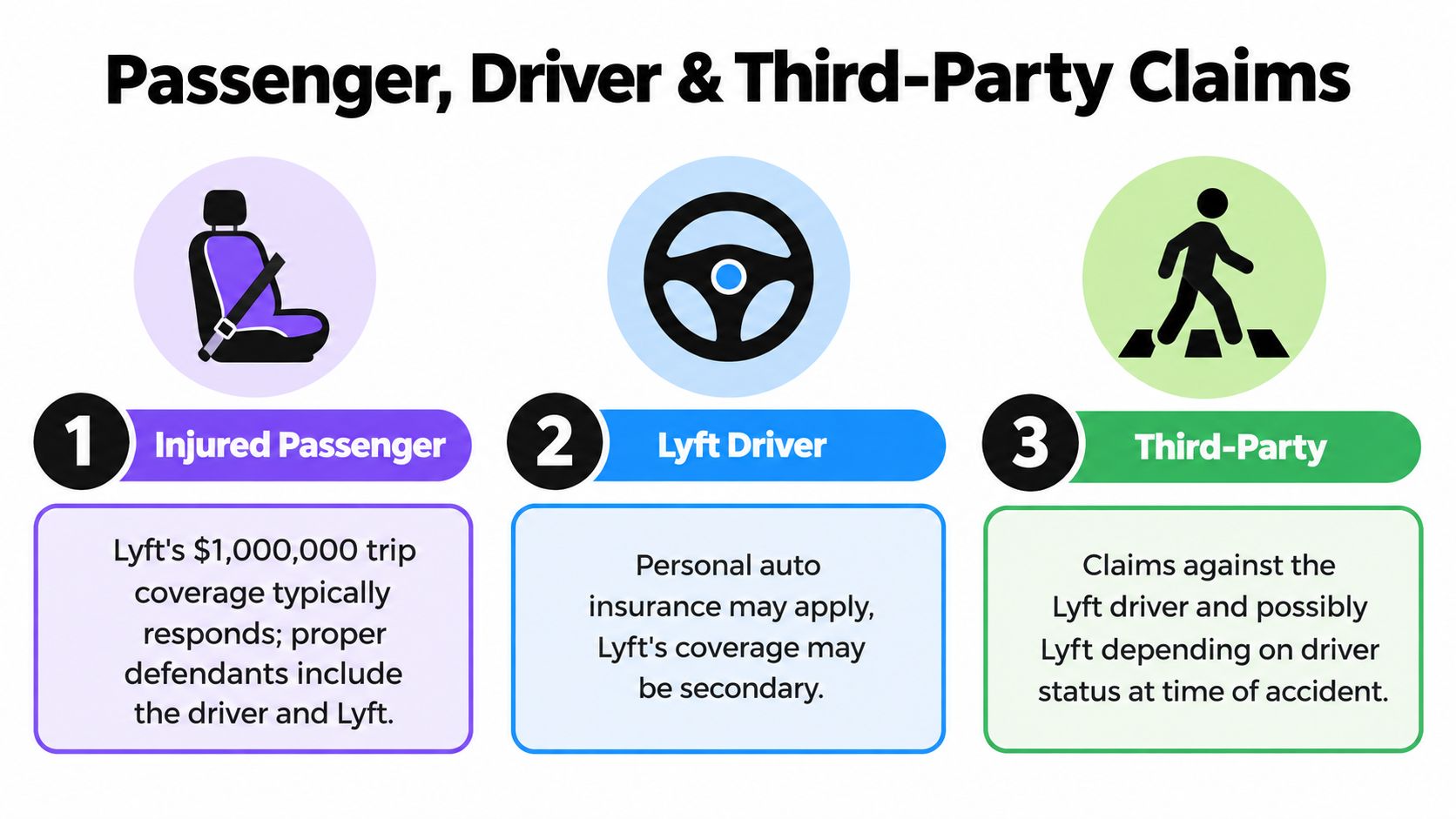
Injured passengers
An accepted passenger trip generally points toward the higher coverage category already described. Whether that policy owes payment still depends on responsibility and policy terms.
Potential defendants include the Lyft driver, another negligent motorist, and any other party supported by the investigation. Naming Lyft requires a legal basis beyond its name appearing on the receipt. If an insurer alleges comparative fault, require evidence of what the passenger supposedly did rather than accepting an unsupported allocation.
Injured Lyft drivers
A driver should evaluate occupational accident benefits and third-party liability claims together. Neither route should be abandoned merely because the other exists.
Lyft identifies coverage for qualifying California injuries occurring on or after December 16, 2020, with medical-expense benefits up to $1 million and temporary-total-disability payments generally equal to 66% of average weekly earnings, subject to limits and conditions. The program also covers qualifying trips originating in Massachusetts from October 1, 2024, and Minnesota from January 1, 2025, according to Lyft’s occupational accident benefit information.
These benefits may help with medical expenses or income while a separate fault dispute continues. Eligibility depends on location, trip activity, documentation, policy terms, and coordination with other coverage, not merely having the app open.
Other motorists, cyclists, and pedestrians
Someone struck by a Lyft driver can present a liability claim to the applicable insurer when the evidence supports driver responsibility and covered activity. That claims process isn’t the same as automatically having a direct lawsuit against the insurer.
For offline driving, personal auto insurance may be the relevant starting point. For every claimant category, evaluate medical expenses, future care, wage loss, reduced earning capacity, property damage, and non-economic harm individually. Don’t force every loss into whichever benefit category happens to respond first.
Deadlines, Defenses, and What Lyft’s Insurers Will Argue
California generally gives an injured person two years from the injury date to file most personal-injury lawsuits under Code of Civil Procedure section 335.1, as explained by California Courts’ statute-of-limitations guidance. That is a lawsuit-filing deadline, not a deadline for notifying Lyft.
Submitting documents, exchanging settlement offers, or receiving a claim number doesn’t mean a lawsuit has been filed. Public-entity claims and unusual defendants can involve different, potentially shorter notice or limitation requirements, so obtain a case-specific deadline review early.
Deadline warning: Don’t assume an adjuster’s continued willingness to talk protects your right to sue.
Expect challenges to the evidence
The coverage-status dispute is only part of the defense. An insurer can accept that a policy applies while disputing responsibility, the cause of an injury, or the amount demanded.
- Treatment gaps: Expect questions about why care stopped or began later. Record the actual reason, including access or scheduling problems, rather than inventing an explanation afterward.
- Comparative fault: Insurers may argue that another driver or the claimant contributed. Test that position against photographs, witness accounts, and collision evidence.
- Medical causation: Distinguish a documented aggravation of an existing condition from an unsupported claim that every symptom began with the crash.
Don’t hide prior injuries from your lawyer or treating provider. Accurate history allows counsel to address the core dispute instead of being surprised by records later.
Platform liability requires its own analysis
Be prepared for an independent-contractor argument intended to resist holding Lyft responsible for a driver’s conduct. Insurance availability and platform liability remain different questions, and counsel should analyze each rather than assuming one resolves the other.
The sensible approach is to prepare for litigation while attempting settlement. That means identifying defendants, reviewing deadlines, preserving evidence, and building a medically supported damages presentation before negotiations become a last-minute scramble. Missing a filing deadline can defeat an otherwise well-supported case.
Choosing the Right California Lyft Car Accident Lawyer
Hire for investigative judgment, not the size of the advertised policy. A lawyer who immediately promises a large recovery without reviewing the trip history, liability evidence, and medical records is skipping the work that matters.
Ask for a concrete explanation of rideshare experience and California licensure. The distinction between a rideshare accident attorney and a regular car accident lawyer is useful only if the lawyer can translate that experience into a plan for your case.
Questions worth asking before you sign
- Evidence strategy: What records would you preserve immediately, and how would you investigate a disputed acceptance timestamp?
- Attorney involvement: Who evaluates coverage, communicates with me, and makes recommendations about settlement?
- Trial readiness: If the insurer denies responsibility or undervalues documented injuries, who will handle litigation and trial preparation?
- Written fees: What contingency percentage applies at each stage, how are costs handled, and how could those terms affect the amount I receive?
Don’t accept vague answers about fees or responsibility for the file. Read the agreement, ask questions, and understand what representation includes before signing.
Take useful records to the consultation
Gather your trip receipt, photographs, medical records, insurance correspondence, and available work-loss documentation. Write down what you remember, clearly separating your observations from what someone else told you.
Schedule a free initial consultation with a California Lyft car accident lawyer who will assess those materials. Ask what is known, what remains disputed, and what the lawyer would do next.
This article remains informational only, not legal advice, and reviewing it creates no attorney-client relationship. A consultation lets you explore representation; any relationship should be confirmed through the firm’s intake and engagement process, not assumed from reading online information.
LA Law Group, APLC offers free initial consultations and representation for California rideshare injury claims, including evidence investigation and insurance negotiations. Visit the firm to request a case evaluation, and bring your trip receipt, medical documentation, and insurer correspondence so an attorney can assess the coverage-status questions that matter in your Lyft crash.
Attorney Advertising. This article is general information, not legal advice, and does not create an attorney-client relationship. Prior results do not guarantee a similar outcome.