
Uninsured Motorist Claim Guide: Steps, Deadlines
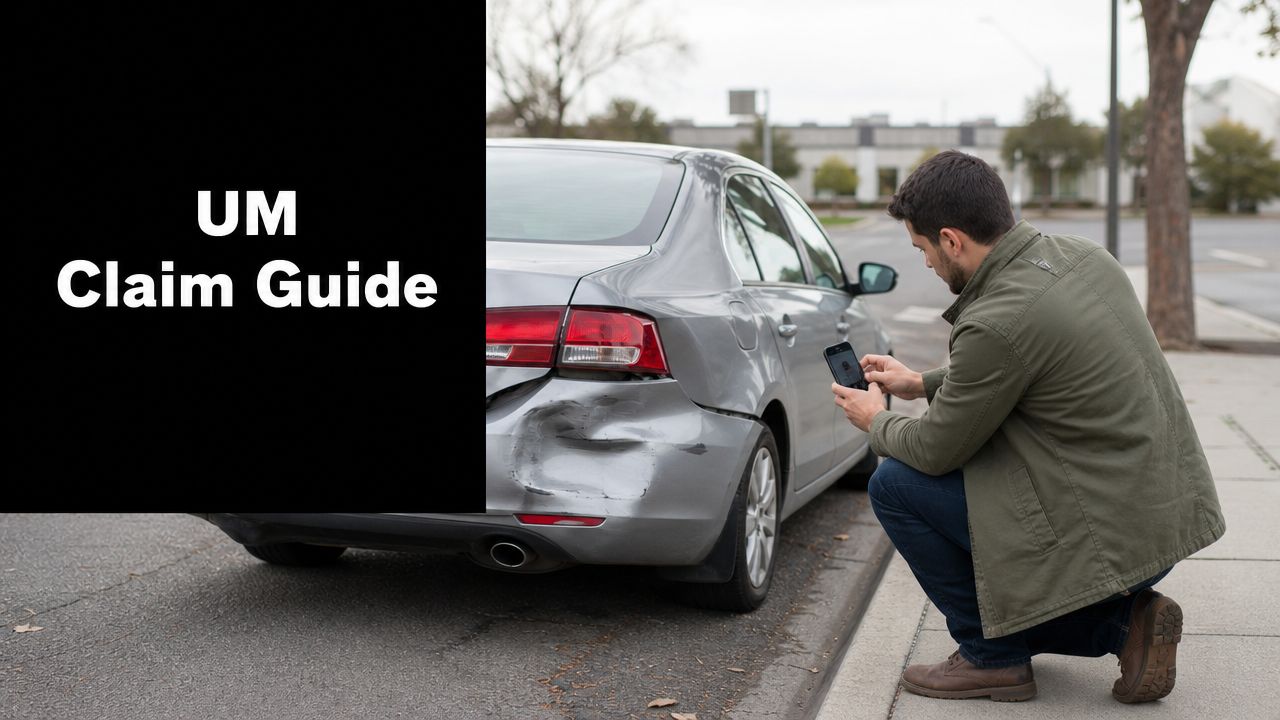
In 2023, 15.4% of motorists in the United States were uninsured, meaning more than one in seven drivers had no liability coverage when they got behind the wheel, according to the Insurance Research Council’s uninsured-motorist findings. If one of those drivers injures you, your own policy may be the only realistic source of compensation.
That protection is called uninsured motorist coverage, and filing an uninsured motorist claim is not the same as making an ordinary claim against another driver’s insurer. You’re dealing with your own carrier, but the adjuster still has a financial incentive to challenge fault, medical causation, policy limits, and the value of your losses.
This article is for informational purposes only and is not to be construed as legal advice. No attorney-client relationship exists based on your review of this article, and none of the information in this article is legal advice.
Why Uninsured Motorist Claims Matter More Than Ever
The uninsured-driver problem is not theoretical. Nationally, the uninsured rate was 15.4% in 2023, and state rates ranged from 5.7% in Maine to 28.2% in Mississippi, according to the Insurance Research Council’s national benchmark. That spread matters because the value of uninsured motorist coverage depends heavily on where you drive, how much traffic you encounter, and whether your state has meaningful protection for hit-and-run collisions.
UM coverage steps in when the at-fault driver has no liability insurance. In many policies, related underinsured motorist coverage, or UIM, applies when the responsible driver has insurance but the available limits cannot cover the full value of your injuries. A hit-and-run driver may also be treated as an uninsured motorist, but those claims often carry stricter proof requirements.
The coverage usually protects bodily injuries suffered by you and eligible passengers. Depending on the policy and state law, it can address medical expenses, lost income, and non-economic harm such as pain and suffering. It doesn’t automatically pay every loss connected to a crash, and it doesn’t turn your policy into unlimited accident insurance.
The financial logic is straightforward. Industry reporting places the average uninsured motorist claim cost at about $20,000, excluding vehicle physical damage, while cited premium benchmarks are approximately $50 per year for uninsured motorist bodily injury coverage and $38 per year for uninsured motorist property damage coverage. Those figures appear in industry coverage and premium guidance. Your policy, deductible, limits, and state law control your actual recovery, but the risk-to-premium relationship explains why declining UM protection can be a poor bargain.

Coverage is not the same as collection
Having UM coverage gives you a contractual claim. It doesn’t guarantee a prompt or fair payout. Your insurer can investigate whether the other driver caused the collision, whether the claimed injuries came from that collision, whether your treatment was reasonable, and whether your damages fit within the policy limits.
The exposure is broader than uninsured drivers alone. In 2023, 33.4% of U.S. drivers were either uninsured or underinsured, and the Insurance Research Council reported that this combined figure was 10% higher than in 2017 in its UM and UIM analysis. That means a driver may carry insurance and still leave you with a serious coverage gap.
Pull out your declarations page before an accident happens. Look for UMBI, UIMBI, and UMPD, then confirm the per-person and per-accident limits, deductibles, exclusions, and whether you signed a rejection or reduction form. If you’ve already been injured, notify the carrier promptly and preserve every document. Delay gives the adjuster an argument, even when the underlying claim is legitimate.
Filing an Uninsured Motorist Claim in California
California UM claims succeed or fail on documentation. Treat the first report, medical visit, photograph, and insurer communication as evidence that may later be reviewed by an adjuster, arbitrator, or judge.
Start at the scene. Call law enforcement, exchange information if the other driver remains present, photograph the vehicles and roadway, and obtain witness names and contact details. Seek medical evaluation for any symptom or injury, even if the pain appears later. Then notify your own insurer that you intend to pursue an uninsured or underinsured motorist claim.
Build the claim in the right order
Use a simple file, whether paper-based or digital. Save the police report, photographs, repair estimates, medical records, bills, prescriptions, wage-loss documentation, health-insurance explanations of benefits, and every email or letter from the insurer.
A practical sequence looks like this:
- Report the collision: Ask for the report number and preserve any supplemental report or officer follow-up.
- Open the claim: Tell the insurer the accident involved a suspected uninsured or underinsured driver and request the applicable UM and UIM policy provisions.
- Document treatment: Follow medically appropriate care and keep a visit-by-visit record of symptoms, restrictions, medication, and missed work.
- Prove insurance status: Preserve the other driver’s policy information, cancellation notice, insurer correspondence, or evidence that the driver couldn’t be identified.
- Submit a demand package: Organize liability evidence, medical proof, wage loss, vehicle damage information where relevant, and a reasoned valuation.
- Control communications: Be accurate and cooperative, but don’t speculate about fault, recovery, or pre-existing conditions.
Practical rule: Report the claim early, but don’t give a recorded statement or sign a broad medical authorization without understanding what the insurer is requesting and why.
California hit-and-run claims create an additional evidence burden. An industry legal summary states that the claimant must show physical contact with the unknown vehicle, report the accident to police within 24 hours, and file the claim with the insurer within 30 days. Those requirements are described in the California UM and UIM case summary. Follow your policy language as well, because the policy may impose its own notice and cooperation requirements.
Physical contact isn’t always self-proving. Photograph paint transfer, broken parts, debris, damage patterns, nearby surveillance cameras, and vehicle positioning. Witness statements can matter when the unknown vehicle disappears, particularly if the contact occurred quickly or the damage is subtle.
The insurer will compare your account with the police report, photographs, medical history, treatment gaps, and statements from witnesses. A clean timeline helps. So does consistency. If your symptoms, treatment, work restrictions, and claimed losses appear in chronological order, the adjuster has less room to characterize the claim as vague or manufactured.
A short visual guide may help you understand the process, but it doesn’t replace reading your policy or meeting a legal deadline.
Understanding UM Bodily Injury vs Property Damage Coverage
The phrase “uninsured motorist coverage” hides several different protections. The distinction between bodily injury and property damage determines whether your policy addresses medical losses, vehicle damage, or neither.
California consumer guidance identifies a $30,000/$60,000 structure for uninsured and underinsured motorist bodily injury coverage and a $3,500 limit for uninsured motorist property damage. The California Department of Insurance coverage guidance provides those listed figures. Confirm your own declarations page because a policy may contain different selected limits, waivers, deductibles, or conditions.
| Coverage Type | What It Covers | California Default Limits | Key Restrictions |
|---|---|---|---|
| UM bodily injury | Injuries to covered people caused by an uninsured driver, including covered economic and non-economic losses | $30,000/$60,000 structure listed in California consumer guidance | Limited by the policy, proof of fault, injury evidence, and applicable exclusions |
| UM property damage | Physical damage to your vehicle caused by an uninsured driver | $3,500 | California guidance says the uninsured driver must be identified; policy terms and deductibles also apply |
| Underinsured motorist bodily injury | Bodily-injury losses exceeding the responsible driver’s available liability insurance | Depends on your selected UIM limits | The other driver’s available limits and your policy wording control what remains payable |
Bodily injury coverage has a separate valuation
UMBI is the part that is often meant when discussing a serious uninsured motorist claim. It may address medical treatment, lost wages, and the human consequences of an injury, but the insurer will still demand proof that the collision caused the condition and that the claimed damages are supported.
Passengers may have claims under the applicable policy, but coverage depends on the policy’s definition of an insured person, the vehicle involved, and other insurance provisions. Don’t assume every occupant receives the same limit without reviewing the declarations page and policy language.
Property damage has narrower boundaries
UMPD is not a substitute for full collision coverage. California consumer guidance states that UMPD carries a $3,500 limit and pays only when the uninsured driver is identified, which can block a property-damage claim after an unidentified hit-and-run. Vehicle repairs, rental expenses, deductibles, and personal belongings may also be treated differently under the policy.
UIM is different again. The at-fault driver has insurance, but the available limit may be inadequate. That is where policy limits, settlement consent, and proof of the remaining damages become central.
Stacking requires policy-specific analysis
“Stacking” generally refers to seeking available coverage under more than one qualifying policy or combining limits where the contract and state law permit it. Whether stacking is available depends on the policy language, the vehicles insured, household relationships, premiums paid, and applicable law. Never assume that multiple cars or policies automatically create a larger recovery. Have the full policies reviewed before accepting a settlement that may release another source of coverage.
Why Insurers Deny UM Claims and How to Respond
A UM policy does not guarantee a fair payout. Your insurer may sound helpful while investigating, yet it still evaluates its own financial exposure. A denial or low offer usually rests on a specific argument. Identify that argument, then answer it with documents.
The common disputes involve four areas:
- Late notice: The adjuster says delayed reporting impaired the investigation. Provide the notice date and method, claim number, communications, and a clear explanation for any delay.
- Uninsured status: The carrier questions whether the other driver lacked valid insurance. Submit the police report, identifying information, insurer correspondence, cancellation records, or proof that the driver remained unknown.
- Causation: The insurer attributes your symptoms to a prior condition or unrelated event. Medical records, diagnostic findings, treatment chronology, and a physician’s opinion should connect the injury to the collision.
- Failure to mitigate: The carrier claims you worsened the loss by ignoring treatment or refusing reasonable care. Follow medical instructions, explain unavoidable gaps, and document changed or discontinued appointments.
Hit-and-run claims create the greatest evidence burden. Without an identified driver, you must establish that the collision occurred, that another vehicle caused it, and that reasonable efforts failed to identify the driver. Preserve the police report, photographs, witness details, surveillance leads, vehicle descriptions, and every communication with law enforcement and insurers.
A strong response is a dated packet that closes the evidentiary gap the adjuster identified. Emotional disagreement does not.
Low offers are valuation disputes
The carrier may accept fault and coverage while disputing the amount. It may focus on paid medical bills, discount future treatment, challenge wage-loss calculations, or minimize pain and suffering. Separate every category of loss and connect it to supporting evidence.
Prepare a damages schedule covering medical charges and payments, available support for future care, wage records, work restrictions, photographs, treatment notes, and a personal account of how the injury changed ordinary activities. Avoid exaggeration. Credibility carries more weight than dramatic language.
The need to prove value becomes more pressing when available coverage must absorb medical treatment, lost income, and lasting impairment. The Insurance Research Council estimated that 33.4% of drivers were uninsured or underinsured in 2023, with the combined population up 10% since 2017, as reported in its uninsured and underinsured motorist data. A policy limit can look substantial until those losses consume it.
A denial letter is not the final word. It is the insurer’s position, and it should be tested against the policy, the evidence, and the deadline.
Escalate when the carrier refuses to explain its decision, ignores material evidence, misstates the policy, demands an improper release, or treats a serious injury as minor. Arbitration or litigation may be necessary when the dispute involves coverage limits, stacked policies, causation, or permanent harm. Check the policy’s arbitration clause before making a demand, because it may control how the dispute proceeds.
Arbitration, Litigation, and Critical Deadlines
A UM dispute can settle through negotiation, but prepare from the start for arbitration. That approach forces you to preserve evidence, calculate damages carefully, present a supported demand, and track every deadline instead of relying on an adjuster’s assurances.
California generally requires the insured to file a lawsuit against the uninsured motorist or formally demand UM arbitration within two years of the accident, subject to tolling rules. California’s UM and UIM deadline discussion explains that tolling may apply until the at-fault driver’s liability insurer pays its policy limits or another recognized event occurs.
Do not treat tolling as permission to wait. The result can depend on the policy language, written communications, settlement activity, and the precise event that allegedly started or paused the period. Put the deadline on your calendar and obtain legal advice before it approaches.
Arbitration is often the contractual path
Many auto policies require UM disputes to proceed through arbitration rather than a conventional civil trial. The process can include a formal demand, arbitrator selection, document exchange, witness testimony, medical evidence, legal briefing, and a decision under the policy and applicable law.
Review the arbitration clause before making a demand. It may control arbitrator selection, hearing procedures, discovery, costs, confidentiality, and whether the award binds the parties. The demand should identify the accident, coverage, liability position, injuries, damages, and requested relief. Unsupported claims give the insurer an easy reason to attack credibility.
Arbitration also exposes hidden coverage friction. Confirm whether more than one policy applies, whether the policies permit stacking, and how other available coverage affects the amount sought. Having UM coverage does not establish the value of the claim or guarantee payment. The evidence must connect the crash to the injury and the injury to each claimed loss.
Litigation may still be appropriate when a lawsuit against the uninsured motorist preserves rights, a court must resolve coverage, or the policy and governing law permit a court action. Choose the route after reviewing the policy and procedural posture, not because an adjuster prefers one forum.
Deadlines can turn on discovery
Arizona shows why an accident-date calendar may be incomplete. Arizona law requires written notice of intent to pursue a UM claim within three years after the accident causing bodily injury, with alternative three-year triggers tied to when the claimant knew the tortfeasor was uninsured, knew coverage had been denied, or learned of insurer insolvency. See the Arizona statutory notice rule.
List every relevant date: the accident, notice, insurer response, liability-limits payment, settlement, discovery of uninsured status, and any written tolling agreement.
Do not sign the at-fault driver’s release until you confirm its effect on your UM or UIM rights. Coordinate the liability settlement with your carrier, obtain written consent where required, and protect the contractual rights that remain.
Your UM Claim Checklist and When to Hire an Attorney
Use this checklist as a working file, not a substitute for legal review:
- At the scene: Call police, photograph the vehicles and surroundings, identify witnesses, and obtain medical attention.
- At the first report: Notify your insurer that you’re opening a UM or UIM claim. Request the declarations page and complete policy.
- During treatment: Keep medical records, bills, prescriptions, restrictions, mileage information, and wage-loss proof.
- For a hit-and-run: Preserve proof of physical contact, report to police within the applicable period, and submit the insurer notice within the policy and California requirements.
- Before settlement: Confirm liability coverage payments, obtain UM consent where required, analyze all available limits, and avoid a broad release until coverage is evaluated.
- Before the deadline: Calendar the California two-year rule and any tolling event. Don’t rely on a verbal promise from an adjuster.
An attorney becomes particularly useful when the claim involves serious or lasting injuries, a hit-and-run, disputed causation, multiple policies, possible stacking, a denial, a low settlement offer, or unclear deadlines. You should also consider representation when the carrier requests a recorded statement, broad medical records, or a release that may affect other claims.
LA Law Group, APLC can provide direct attorney access, prompt case assessment, evidence review, negotiation, and representation in an uninsured motorist dispute. The firm’s hands-on process is designed to reduce intermediary delays while keeping the client informed about strategy and resolution.
This article is for informational purposes only and is not legal advice. No attorney-client relationship exists based on your review of this article, and reading it doesn’t create an attorney-client relationship with any lawyer or firm.
If you were injured by an uninsured or underinsured driver, gather your policy, police report, medical records, and insurer correspondence before the evidence gets harder to obtain. Visit LA Law Group, APLC to request a case assessment and discuss the coverage limits, deadlines, and collection obstacles affecting your uninsured motorist claim.
Attorney Advertising. This article is general information, not legal advice, and does not create an attorney-client relationship. Prior results do not guarantee a similar outcome.