
What Is a Cease and Desist Letter Your Complete Guide
Disclaimer: This article is for informational purposes and not to be construed as legal advice. No attorney-client relationship exists based on the review of this this article and none of the information in this article is legal advice.
Think of a cease and desist letter as a legal shot across the bow. It’s a formal, written demand that tells a person or a company to stop an activity that’s harming you or your business (cease) and not to do it again in the future (desist). While it isn’t an order handed down by a judge, it’s a very serious first step that signals you’re prepared to file a lawsuit if the behavior doesn’t stop.
What Is a Cease and Desist Letter
A great way to understand a cease and desist letter is to picture a “No Trespassing” sign on a piece of property. The sign itself doesn’t physically stop anyone, but it puts them on notice that they’re crossing a line and there will be consequences. This letter does the same thing for your legal rights.
It’s your way of officially telling someone to stop what they’re doing—whether that’s an Amazon seller using your copyrighted product photos, a former employee violating a non-compete agreement, or a competitor making false statements about your services.

The main point is to solve the problem without having to drag everyone into court, which saves time, money, and a whole lot of headaches. Sending a professionally drafted letter also creates a paper trail, proving you tried to resolve the issue amicably before taking more aggressive legal action.
To give you a clearer picture, here’s a quick breakdown of what these letters are all about.
Cease and Desist Letter at a Glance
| Element | What It Means | Common Reason |
|---|---|---|
| The “Cease” Demand | A direct order to stop the harmful action immediately. | An eCommerce store is using your trademarked logo. |
| The “Desist” Demand | A forward-looking command to never repeat the action. | A competitor must not make defamatory claims again. |
| Legal Standing | Not a court order, but an official warning of a lawsuit. | To show you are serious about protecting your rights. |
| Primary Goal | Resolve the dispute without going to court. | Save time and money on potential litigation. |
This table shows how the letter acts as both an immediate stop sign and a future warning, all while setting the stage for a potential lawsuit if the recipient ignores it.
The Two Core Demands
Every cease and desist letter boils down to two simple but powerful commands that give the letter its name:
- Cease: This is the here-and-now instruction. It means, “Stop what you’re doing, right now.” If a local business is running ads that are confusingly similar to your branding, the “cease” demand tells them to pull those ads immediately.
- Desist: This part looks to the future. It’s the “and don’t you ever do it again” part of the message. In the same example, the “desist” command warns them not to launch any new campaigns using your branding elements down the road.
When you put these two demands together, you create a firm legal boundary. The letter officially notifies the other party that you know your rights, you see them violating those rights, and you’re fully prepared to sue them for damages if they don’t comply. It’s a powerful tool for putting an end to harmful behavior before it escalates.
Understanding the Real Power of This Letter
It’s a common mistake to think a cease and desist letter is some kind of court order. It’s not, at least not on its own. But don’t let that fool you into underestimating its power. The letter’s real strength is in creating an official, undeniable record of your complaint.
When you send one, you’re putting the other party on notice in a way a simple email or phone call never could. You are formally documenting that you told them about their wrongful actions and gave them a clear chance to stop. This single step can shift the entire dynamic from a minor disagreement to a serious legal issue.

This paper trail becomes incredibly important if you end up in court. The letter serves as Exhibit A, proving the other party was fully aware that their conduct was causing you harm.
Proving Willful Infringement
In legal fights, especially over things like trademarks or copyrights, proving willful infringement can dramatically increase the money you can recover. In plain English, this term means the person knew they were breaking the law but decided to do it anyway.
Your cease and desist letter is the key that unlocks this argument. It completely removes the other side’s ability to play dumb. They can no longer say, “I didn’t know I was doing anything wrong,” because your letter told them, in no uncertain terms, that they were.
A cease and desist letter transforms a potential legal oversight into a conscious choice. If the recipient continues the activity after receiving it, a court is far more likely to see their actions as intentional, which can lead to much higher financial penalties.
This strategic move shows the court you acted reasonably by trying to solve the problem directly first. It also paints the other party as defiant. The letter effectively draws a line in the sand, and if they cross it, the consequences get a whole lot steeper.
The Attorney Letterhead Advantage
Sure, anyone can write and send a cease and desist letter. But who it comes from makes all the difference. A letter from you might get a response. A letter from a law firm on official letterhead sends an entirely different, and much louder, message.
Here’s why a letter from a firm like LA Law Group carries so much more weight:
- It Signals Serious Intent: This isn’t just a complaint anymore. It immediately shows you’ve already invested in legal counsel and are ready to take the next step. It’s the first move in a planned legal strategy.
- It Demonstrates Resources: Hiring a lawyer tells the other party you have the means and the determination to see this through, even if it means filing a lawsuit.
- It’s Framed by an Expert: An attorney will frame the legal claims correctly, citing specific laws and spelling out the potential damages. This makes the threat of litigation far more credible and, frankly, intimidating.
At the end of the day, a letter from a law firm isn’t just a warning—it’s a professional challenge. It dramatically increases the pressure on the recipient to stop what they’re doing, because the cost of ignoring your demand just went way up.
When Does It Make Sense to Send a Cease and Desist?
Knowing what a cease and desist letter is helps, but the real power comes from knowing when to use one. Think of it as a serious, cost-effective first move in a dispute. It lets you formally assert your rights and demand someone stop their harmful actions without immediately diving into an expensive lawsuit.
These letters carry the most weight when a clear legal right is being violated. They’re your way of putting the other party on notice, creating a paper trail that says you’re aware of what they’re doing and you’re ready to defend your interests. Let’s walk through some of the most common situations where sending a letter is a smart strategic play.
Disclaimer: This article is for informational purposes and not to be construed as legal advice. No attorney-client relationship exists based on the review of this this article and none of the information in this article is legal advice.
Protecting Your Brand and Creations
One of the most common reasons we draft these letters is to protect intellectual property. This is a crucial first step in protecting intellectual property rights from being trampled on, something we see all the time with our clients, from tech startups in Silicon Valley to Amazon sellers here in Los Angeles.
A few classic intellectual property fights include:
- Trademark Infringement: Imagine you’ve built a successful local brand, and a new competitor opens up with a logo that’s nearly identical to yours. A letter demands they stop, preventing them from confusing your customers and damaging the reputation you worked so hard to build.
- Copyright Violations: Someone rips off the professional product photos you paid for and starts using them on their own Shopify store. A cease and desist tells them to take those images down immediately before they can profit any further from your investment. You can find out more about tackling this in our detailed guide to handling an intellectual property violation.
Defending Your Business and Reputation
Beyond your creative work, these letters are vital for protecting the core of your business operations and your name in the community. False statements or unethical behavior from others can cause real financial damage, and a formal letter is a clear signal that you won’t stand for it.
A cease and desist letter is your formal demand for a party to stop an unlawful activity, sent under the threat of legal action. And they work. Legal analyses from 2020-2023 showed these letters resolved 70-80% of disputes before they ever saw the inside of a courtroom. You can find more insights on their effectiveness at littonlegal.com.au.
Other critical scenarios where a letter is your first line of defense:
- Defamation: A disgruntled ex-employee or a shady competitor starts posting false, damaging reviews about your business online. A letter can demand they retract the statements before they do more harm.
- Breach of Contract: A former business partner starts spilling confidential company secrets, violating the non-disclosure agreement (NDA) they signed. The letter serves as a formal demand to stop the breach and prevent any more information from getting out.
- Harassment: An individual is engaging in a pattern of threatening or harassing communications with you or your team. A letter can be the official first step in demanding they stop all contact.
In every one of these cases, the letter is a powerful, low-cost tool. It aims to resolve the problem quickly while also creating a clear, documented record in case things need to be escalated.
How to Respond When You Receive a Letter
Finding a formal cease and desist letter in your inbox can be jarring. Your first instinct might be to panic or get defensive, but the single most important rule is this: do not ignore it.
Ignoring the letter is the worst possible move. It signals to the sender that you aren’t taking their claim seriously and practically invites them to file a lawsuit. Taking a deep breath and approaching the situation calmly and methodically is your best course of action. The letter is a warning, not a court order, which means you have time to assess the situation and decide on the best path forward.
This decision tree shows a simplified view from the sender’s perspective, illustrating the common reasons—like intellectual property theft or defamation—that might lead to a letter being sent your way.
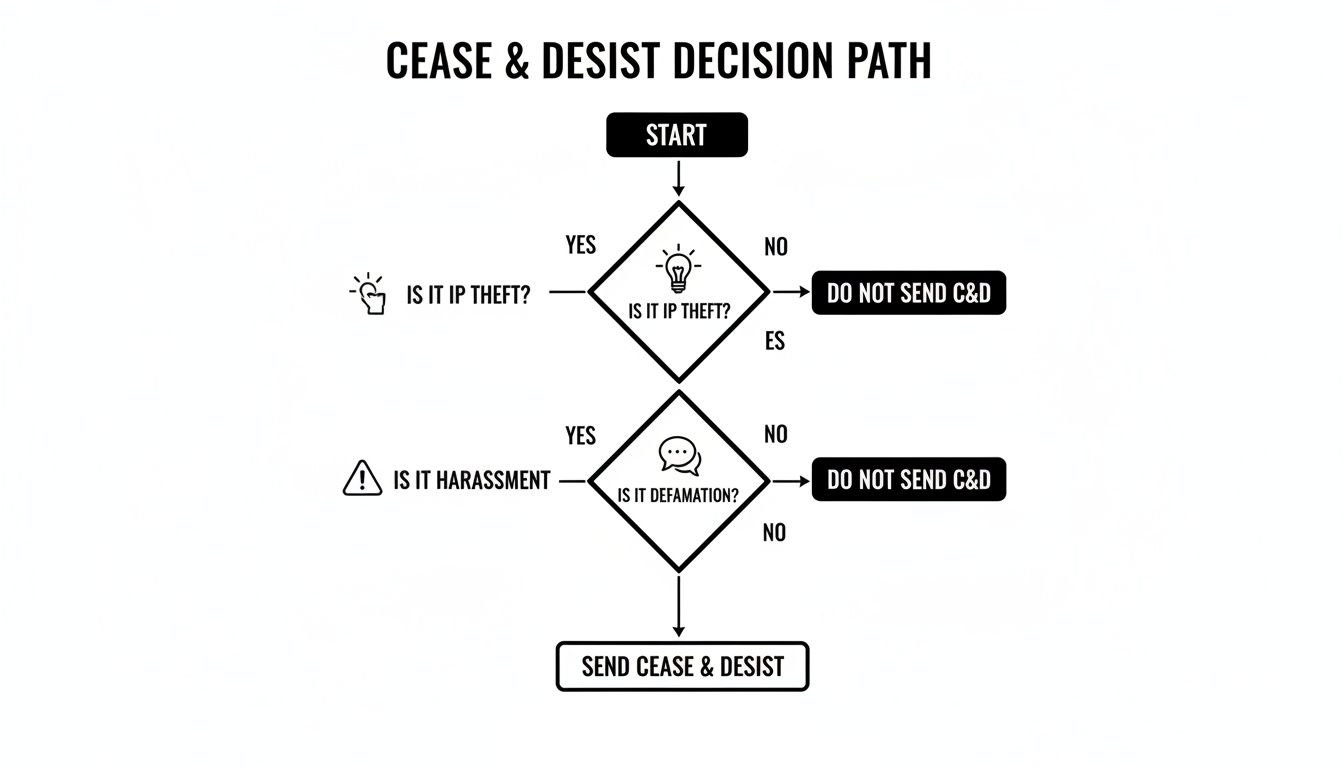
Understanding what motivates them helps you anticipate their position as you figure out how to respond.
Disclaimer: This article is for informational purposes and not to be construed as legal advice. No attorney-client relationship exists based on the review of this this article and none of the information in this article is legal advice.
Your Immediate First Steps
Before you even think about writing a reply, your priority is to understand exactly what you’re dealing with. A hasty response can do more harm than good.
- Read the Letter Carefully: Go through the document multiple times. Who sent it? What specific actions are they calling unlawful? What legal basis are they claiming (like copyright or trademark law)? And what, exactly, are they demanding you do? Pay close attention to any deadlines they’ve set.
- Preserve All Evidence: Do not delete any emails, files, or social media posts related to the claims in the letter, even if you think they make you look bad. This evidence is critical for your attorney to review.
- Gather Your Own Records: Start collecting any documents you have that relate to the dispute. This could include contracts, emails, timestamps, purchase orders, or any other proof that supports your side of the story.
Evaluate the Claims and Formulate a Plan
Once you understand the sender’s demands, you need to objectively evaluate their validity. Are their claims legit? Do they have a strong legal argument, or are they bluffing? This is often the point where emotions can cloud judgment, making an outside perspective essential.
The most critical step is to consult with an attorney. A legal professional can assess the merits of the sender’s claims, explain your potential liability, and outline all of your available options. Acting without legal counsel is a significant risk that can lead to costly mistakes.
Based on a legal review, your options will generally fall into one of these categories:
- Comply: If the claim is valid and the risk of a lawsuit is high, complying with the demands may be the smartest and most cost-effective solution.
- Negotiate: Maybe the claim has some merit, but their demands are totally unreasonable. Your attorney can open a dialogue to negotiate a more acceptable resolution, like a licensing agreement or a modified set of terms.
- Dispute the Claim: If the claims are baseless, your attorney will draft a formal response refuting their allegations and explaining precisely why you are not in violation of any laws.
Crafting even a preliminary response is a delicate task. It should acknowledge receipt of their letter without admitting any fault whatsoever. A simple statement that you have received their correspondence and are reviewing the matter is often enough for an initial reply.
Remember that proper delivery matters, too. You can learn more about the complexities of serving legal documents via certified mail to ensure your response is officially received.
Navigating the Risks for Senders and Recipients
Sending or receiving a cease and desist letter is a serious strategic move, a lot like the opening of a chess match. Every action has a potential reaction, and a single misstep can spiral into unintended and costly consequences. Think of the letter not as the final word, but as the very first play in a much larger game.
For the sender, the goal is straightforward: get the other party to stop. But there’s always a chance the letter will do the exact opposite and provoke a fight. The recipient might not just toss it in the trash—they could decide to go on the offensive.
Disclaimer: This article is for informational purposes and not to be construed as legal advice. No attorney-client relationship exists based on the review of this this article and none of the information in this article is legal advice.
Risks for the Sender
One of the biggest risks a sender faces is getting hit with a declaratory judgment. This is a preemptive lawsuit where the recipient flips the script, asking a court to officially rule that they haven’t done anything wrong. Suddenly, the sender is forced to defend their claims in court, often on the recipient’s home turf and on their timeline.
Then there’s the court of public opinion. An overly aggressive or threatening letter can make a business look like a corporate bully, a narrative that can explode online in a matter of hours. We’ve all seen stories of big brands sending heavy-handed letters over minor issues, only to face a public backlash that damages their reputation far more than the original problem ever could have.
This isn’t just a modern social media phenomenon; these tactics can backfire spectacularly. For instance, cease and desist letters targeting file-sharers in Germany peaked around 2014, but the strategy sometimes blew up when recipients fought back. In one infamous case, a simple $250 letter ended up triggering millions in litigation that bankrupted the sender’s client. You can discover more about how these enforcement actions can escalate on Statista.com.
Risks for the Recipient
If you’re on the receiving end, the biggest gamble you can take is ignoring a valid claim. While the letter itself isn’t a court order, it is a formal warning shot. If you choose to disregard it, the sender can present your inaction in court as evidence of willful infringement, which can lead to much higher financial penalties.
Ignoring a valid cease and desist letter rarely makes the problem disappear. Instead, it often just speeds up the timeline to a lawsuit, where you could be facing court orders, financial damages, and a mountain of legal fees.
Ultimately, ignoring the letter puts the ball right back in the sender’s court, and their next move is usually filing that lawsuit. At that point, the window for a simple, quiet resolution is likely closed for good. This is exactly why exploring a negotiated outcome is often the smartest move. You can learn more about how to resolve disputes before they end up in court by understanding what is a settlement agreement.
No matter which side you’re on, getting professional legal advice is critical to avoid a mistake that could cost you dearly.
Answering Your Top Questions
Even with a basic understanding, you probably have some real-world questions about how to handle a cease and desist letter. Let’s tackle some of the most common concerns we hear from clients, giving you clear, direct answers for dealing with this intimidating legal document.
Disclaimer: This article is for informational purposes and not to be construed as legal advice. No attorney client relationship exists based on the review of this this article and none of the information in this article is legal advice.
Is a Cease and Desist Letter Legally Binding?
No. A cease and desist letter is not a court order and can’t legally force you to do anything on its own. It’s a formal request, not a legally binding command. You won’t face fines or penalties just for receiving one.
So where does its power come from? The implied—and often very real—threat of a lawsuit. Ignoring the letter doesn’t have immediate legal consequences like disobeying a judge would.
But it does create a paper trail. If the sender follows through and sues you, the letter serves as powerful evidence. It proves to the court they formally warned you about your conduct, and you chose to continue anyway. This can seriously strengthen their case and may lead to higher damages against you for what’s called “willful infringement.”
What If I Cannot Afford a Lawyer to Respond?
Getting a legal threat when money is tight can feel completely overwhelming, but you still have options. The absolute worst thing you can do is nothing.
Start by looking up local legal aid societies or pro bono clinics in your area. Many bar associations also have referral services that can connect you with attorneys offering free or low-cost initial consultations. This can be a huge help just to understand your position.
If hiring a lawyer for a full response isn’t feasible right away, you can send a brief, polite reply yourself. A simple, non-committal letter acknowledging their correspondence and stating you are reviewing the matter is far better than silence. This shows you’re taking it seriously while you figure out your next steps. Most importantly, avoid admitting fault or making any promises in your communication.
How Much Time Do I Have to Respond?
Almost every letter will include a deadline for your response, typically somewhere between 10 and 30 days.
It’s crucial to know that this deadline is set by the sender’s attorney, not by a court. It’s a strategic move on their part, designed to create a sense of urgency and pressure you into a quick response.
While it isn’t a legally mandated cutoff, you should take it seriously. Blowing past their requested date signals that you aren’t cooperating, which might push them to file a lawsuit sooner rather than later. If you need more time to find and speak with an attorney, it’s perfectly reasonable to send a short reply asking for a brief extension.
Can I Send a Cease and Desist Letter Myself?
Yes, you can absolutely draft and send a letter on your own. You can find plenty of templates online that will help you structure your arguments and lay out your demands.
However, a letter coming from a law firm’s office almost always carries significantly more weight. It’s far more likely to get a serious, compliant response from the other party.
An attorney ensures your legal claims are framed correctly, cites the right laws, and avoids any language that could accidentally create new legal problems for you. Their involvement immediately signals that you’re prepared for litigation. It transforms your complaint from a simple grievance into a credible legal threat that can’t be easily ignored.
For instance, a self-written letter about a trademark issue might get tossed aside, while one from a law firm often gets the other party on the phone to resolve the matter quickly.
Disclaimer: This article is for informational purposes and not to be construed as legal advice. No attorney client relationship exists based on the review of this this article and none of the information in this article is legal advice.
Navigating legal disputes can be complex, but you don’t have to do it alone. The experienced team at LA Law Group, APLC is here to protect your rights and business interests. Whether you’re facing intellectual property theft, a contract dispute, or need to defend your reputation, we provide the expert guidance you need to achieve the best possible outcome. Contact us today for a consultation.
Attorney Advertising. This article is general information, not legal advice, and does not create an attorney-client relationship. Prior results do not guarantee a similar outcome.