
What to Do After a Motorcycle Accident: A Complete Guide

You’re sitting on the shoulder of a California highway beside a damaged motorcycle. Your hands are shaking, traffic is rushing past, and someone is asking whether you’re hurt. You may feel embarrassed, angry, or strangely fine. That last feeling can be misleading. Adrenaline can hide serious injuries, and the decisions you make during the first hours can affect both your recovery and your insurance claim.
This guide explains what to do after a motorcycle accident from a California perspective. It focuses on immediate safety, delayed-injury warning signs, motorcycle-specific evidence, reporting obligations, insurance communications, and the point at which a lawyer becomes useful.
The First Hour After the Crash
The first hour has three jobs: stabilize yourself, stabilize the scene, and stabilize the record. Don’t try to solve fault or negotiate with an insurer while you’re still on the pavement.
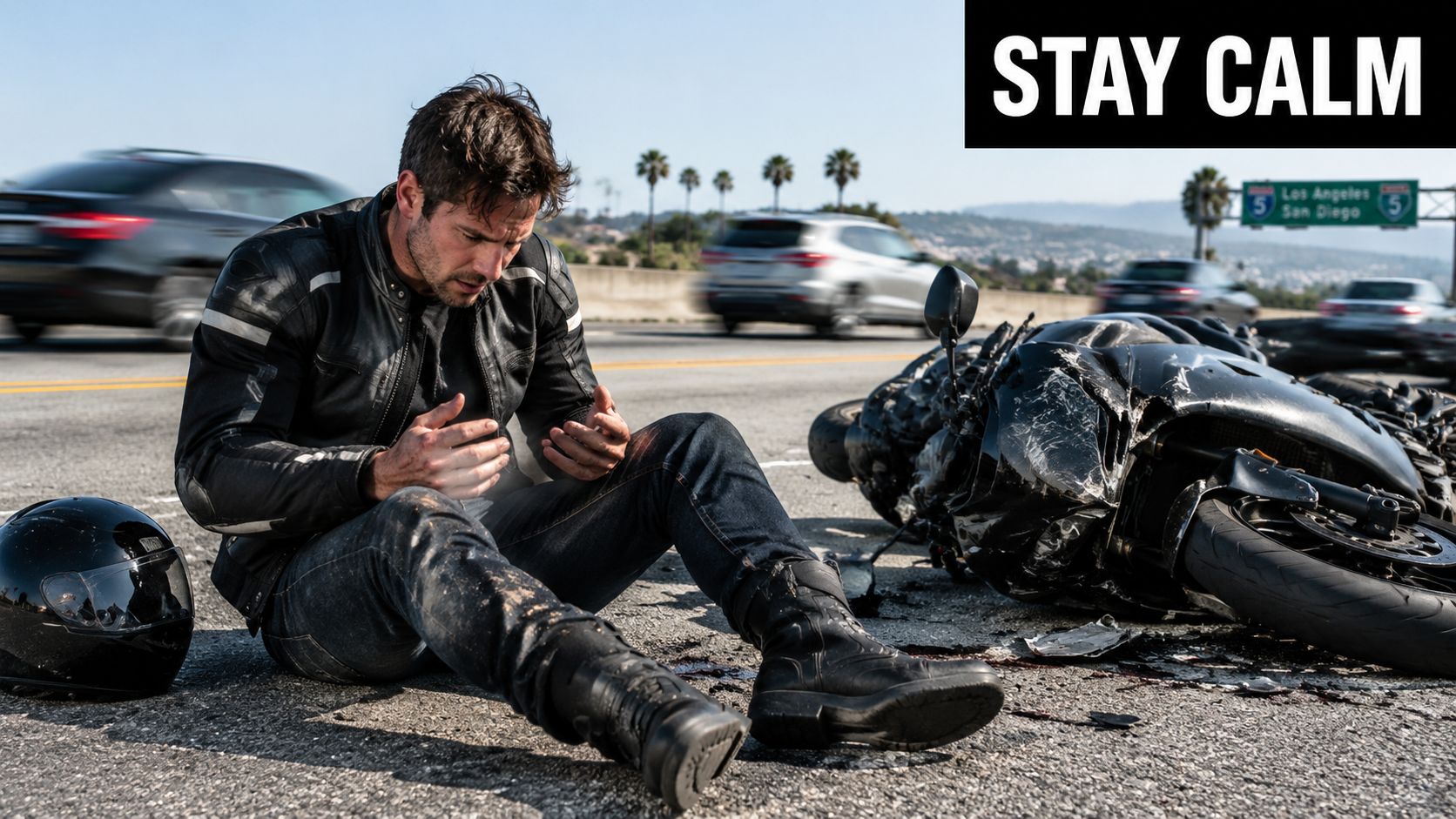
Protect your body first
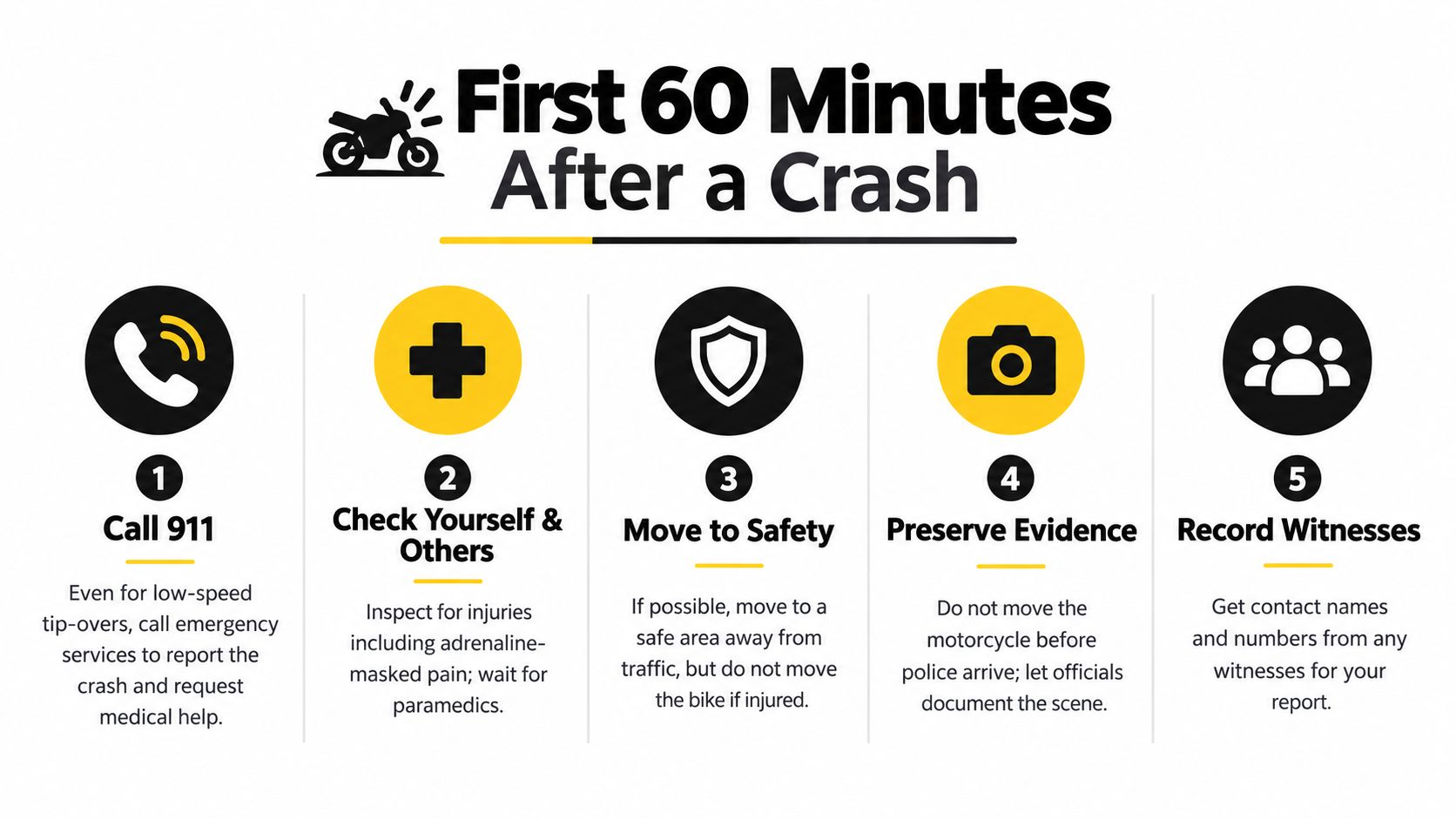
Before standing, perform a quick body scan. Check for bleeding, numbness, weakness, severe pain, confusion, and whether your arms and legs move normally. If you have possible head, neck, spinal, or internal injuries, stay still and wait for emergency responders unless remaining in place creates an immediate traffic danger.
If you can move without worsening an injury, get yourself out of live traffic. Move toward a shoulder, median refuge, or other protected area. Don’t drag yourself across the roadway merely to retrieve a phone or inspect the motorcycle.
Your bike is not a test of your condition. Don’t throw a leg over it to see whether you can ride home. A damaged fork, brake line, wheel, frame, or throttle may make the motorcycle unsafe, and pain or dizziness may worsen once you start moving.
Make the scene safer without erasing it
Turn on hazard lighting if available. Use reflectors, flares, or other warning equipment only if you can place them safely. Avoid walking through traffic, and don’t move the motorcycle or debris unless emergency personnel direct you to do so or leaving it in place creates a greater danger.
Call 911 first. Ask for police and medical assistance, even if the crash appears minor. The California-focused motorcycle accident checklist emphasizes securing safety, contacting law enforcement, and creating an official record.
Then call someone you trust. That person can help communicate with family, collect documents, arrange transportation, and remind you not to speculate about fault while you’re shaken.
Roadside rule: Your first statement should describe what you observed, not what you think caused the crash.
Get Medical Care and Call 911 Immediately
Call 911 even after a low-speed tip-over. Emergency services can document the collision, arrange appropriate evaluation, and create an official record. California guidance commonly recommends reporting motorcycle crashes and obtaining a police report even when the damage initially looks limited, while the Bureau of Transportation Statistics motorcycle safety data tracks both fatal and nonfatal injury crashes.
Adrenaline can make a rider feel capable of walking, talking, and even riding away while a serious condition develops underneath. Emergency-care guidance warns that symptoms may be delayed, particularly with concussion, internal trauma, spinal injury, and soft-tissue damage.
Treat symptoms as evidence of a medical problem
Tell paramedics exactly what you feel, even if the symptom seems small. Mention any possible loss of consciousness, memory gap, confusion, headache, neck pain, dizziness, weakness, numbness, or visual change. Also report abdominal tenderness, wrist or shoulder pain, deep road rash, and difficulty taking a full breath.
Accept ambulance transport when responders recommend it. If you refuse transport, arrange an urgent-care or emergency-room evaluation within hours, not days. Follow the clinician’s instructions and return promptly if pain, dizziness, numbness, or confusion appears later. The guidance on delayed and hidden motorcycle-crash injuries identifies delayed evaluation as an overlooked danger because riders may initially feel fine.
Gaps in treatment give an insurance adjuster an easy argument that the crash didn’t cause your symptoms or that the condition isn’t serious. That argument may be wrong, but you’ll have to overcome it with records.
Use the first calls wisely
Call 911 before calling your insurance carrier. An insurer can wait while you receive care. Your body can’t.
For persistent neck pain, stiffness, or other symptoms after the emergency evaluation, a reputable neck pain resource from Interventional Pain Management may help you understand potential treatment options. It doesn’t replace an emergency assessment after a crash.
Document the Scene and Preserve Motorcycle Evidence
Only document the scene if you’re physically able and the roadway is safe. Police and paramedics take priority. If officers are present, ask whether you may photograph the scene before the motorcycle or vehicles are moved.
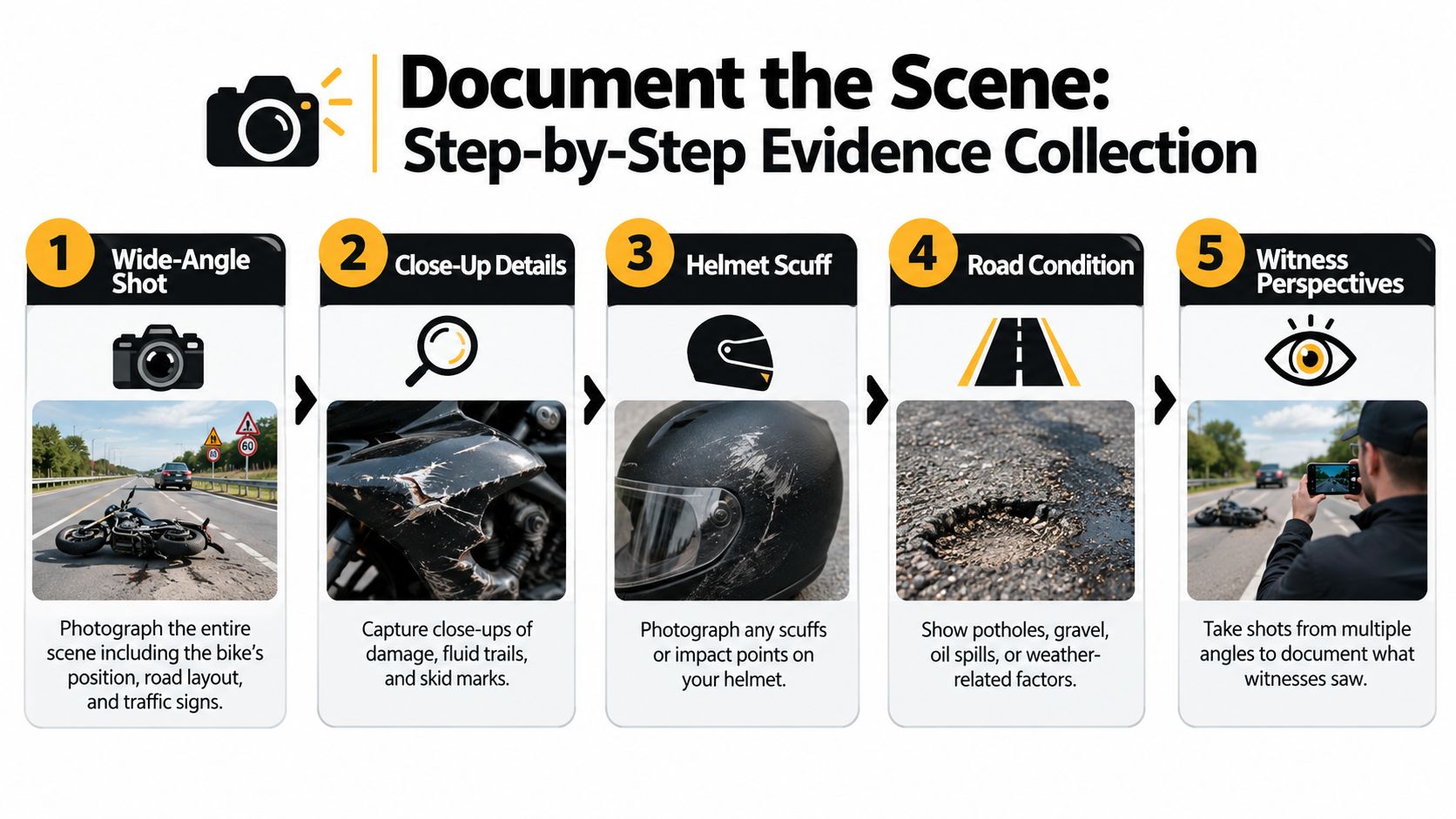
Start with wide-angle photographs. Capture the motorcycle’s resting position, the other vehicle, lane markings, traffic signs, signal visibility, roadway layout, debris, and surrounding businesses. Then take close-ups of damage, fluid trails, skid marks, tire marks, road defects, and any visible injury.
Collect information before witnesses disappear
Obtain the other driver’s full name, contact information, driver’s license details, insurance information, license plate, and vehicle identification number when available. Don’t argue with the driver or demand an admission. Exchange information and let the official investigation develop.
Witnesses often leave before anyone thinks to ask for their details. Record each witness’s name and phone number, and note where that person was standing or traveling when the collision occurred. A witness who saw a turn signal, lane movement, sudden braking, or a vehicle entering your path may later provide important context.
Your phone can record more than photographs. Preserve dashcam files, phone location records, navigation history, and any motorcycle telematics showing GPS, speed, braking, or crash-alert information. Download or screenshot the data before an app synchronizes, overwrites, or deletes it.
The motorcycle evidence guidance for 2026 highlights the growing importance of technical records alongside ordinary photographs and reports.
Preserve gear and the motorcycle
Don’t discard or wash your helmet, jacket, gloves, boots, or damaged motorcycle parts. Photograph each item from several angles, including scuffs, tears, broken fasteners, and impact marks. Store gear in paper bags or a ventilated paper container rather than plastic, which can trap moisture.
Keep the motorcycle available for inspection. Don’t authorize repairs, salvage disposal, or a total-loss release before a qualified inspection has considered the damage and potential crash evidence.
Start a private crash diary after leaving the scene. Record pain, sleep problems, dizziness, medication effects, missed activities, conversations with insurers, and changes in daily routines. Write entries promptly and keep the original photographs and files unedited.
File the Police Report and Notify Your Insurance
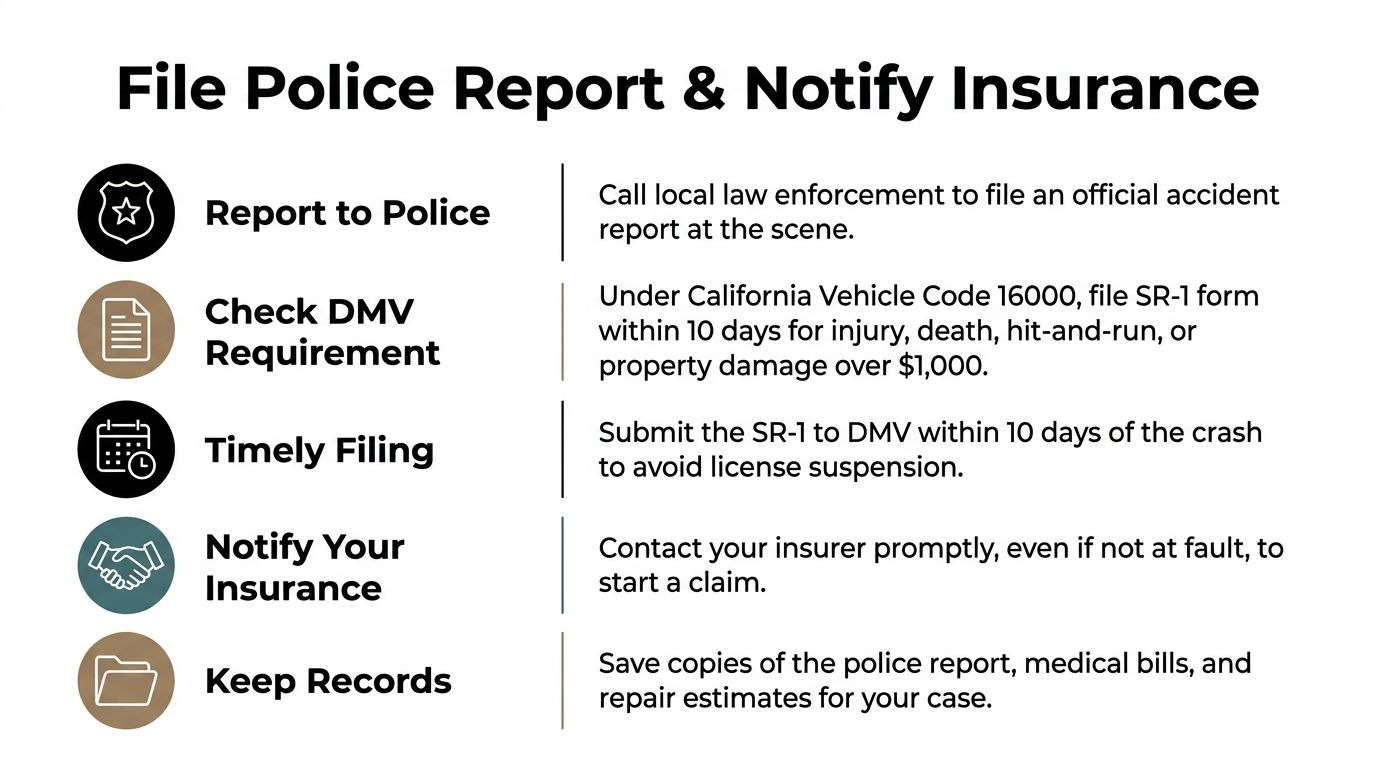
California separates the on-scene police report from the driver’s DMV reporting obligation. Guidance discussing California Vehicle Code reporting duties identifies crashes involving injury, death, hit-and-run, or property damage over $1,000 as requiring an SR-1 form within 10 days. Other California accident guidance cites injury, death, or more than $750 in property damage as a reporting threshold, so confirm the applicable requirement with the DMV or a California attorney rather than guessing.
That distinction matters. The police report is an incident record created by law enforcement. The SR-1 is a separate DMV filing. A rider may need to address both.
Speak to the officer in observable facts
Tell the responding officer what you saw, heard, and felt. Identify the direction of travel, lane position, traffic signal, impact location, and sequence of events as best you can remember.
Avoid guessing about speed, distance, timing, or fault. Don’t say you “weren’t paying attention” merely because you’re confused, and don’t agree with a driver’s version to end an uncomfortable roadside conversation. Ask for the report number and learn how to request a copy.
A report may contain mistakes. Review it when available and point out factual errors through the appropriate process. Don’t assume that silence at the scene means you’ve accepted the other driver’s account.
Notify your carrier carefully
Contact your own insurance carrier promptly to open a claim, even if you believe the other driver caused the crash. Provide the date, location, vehicles involved, report number, photographs, and witness contacts. Keep the conversation limited to necessary facts.
Before giving a recorded statement, review your policy and consider speaking with counsel. Don’t sign a release or accept a settlement check before understanding whether it resolves property damage only or also affects injury claims.
California’s pure comparative-fault system makes early wording important. An insurer may examine your statements for anything it can characterize as careless riding, excessive speed, or failure to avoid the collision. A California resource on motorcycle accident claims can help you identify the issues that typically require closer review.
The First Two Weeks That Protect Your Claim
The first two weeks are an evidence-gathering phase, not a waiting period. Medical records, photographs, wage documentation, gear preservation, and vehicle inspections establish a timeline that becomes harder to reconstruct as memories fade and evidence changes.
Follow the treatment trail
Attend every scheduled appointment. Tell each provider about symptoms that appeared after the initial examination, including headache, dizziness, numbness, neck or back pain, soft-tissue discomfort, sleep changes, concentration problems, and worsening road rash.
Keep a symptom journal with dates and practical details. Note how far you can walk, whether you can lift or grip normally, how pain affects sleep, and which ordinary tasks you can’t complete. Don’t exaggerate, but don’t minimize symptoms to appear tough.
A medical record should reflect the injury you have, not the injury you wish would disappear.
Store appointment summaries, prescriptions, imaging referrals, bills, and receipts together. Record mileage to appointments, wage loss, replacement services, and other out-of-pocket expenses. Those records give your attorney and the insurer a usable damages timeline.
Protect the evidence chain
Keep the helmet and riding gear in a clean, dry storage bin. Preserve the motorcycle before repair or salvage handling. Request available event-data-recorder information, dashcam footage, GPS records, braking data, and automated crash alerts before a device or service overwrites them.
Ask your attorney about preservation letters directed to the at-fault driver’s insurer and other parties who may control vehicle, phone, roadway, or surveillance evidence. Don’t edit original files. Save copies with clear filenames and retain the original metadata where possible.
Your California motorcycle accident claim guide offers a starting point for organizing the claim, but the evidence strategy should match the facts of your crash.
By the end of this period, you should have a dated medical chronology, an expense file, a wage-loss record, preserved gear, secured digital evidence, and a clear repair or inspection status. That package forms the spine of a serious demand.
When You Should Call a Motorcycle Accident Lawyer
Call early when the crash involves a meaningful injury, disputed fault, or an insurer that wants a quick resolution. Waiting doesn’t make a complicated claim simpler. It can give the carrier time to shape the evidence before you understand what matters.
California’s ordinary deadline for injury and property claims is two years, while claims against a government entity may require action within six months under the Tort Claims Act. Because deadlines and claim procedures depend on the defendant and claim type, get case-specific advice rather than relying on a general calendar.
These warning signs justify a consultation
- Liability is disputed: The driver blames you, the police report is incomplete, or a witness account conflicts with the other driver.
- The insurer offers fast money: A quick payment may not account for delayed symptoms, future treatment, lost income, or the full scope of property damage.
- Treatment continues: Ongoing care, imaging, surgery, therapy, or specialist referrals call for a coordinated damages record.
- The motorcycle valuation looks low: A carrier may focus on resale value while overlooking custom equipment, prior condition, parts, storage, towing, and inspection issues.
- The other carrier contacts you: Don’t provide a recorded statement or sign documents before you understand what the request accomplishes.
A rider may handle a minor, property-only collision when fault is clear, injuries are absent, and the insurer pays a fair repair amount. That changes once an insurer raises comparative fault or suggests that motorcyclist behavior caused the injury.
Why motorcycle-specific experience matters
Motorcyclists often face an unfair “reckless rider” assumption. A lawyer can separate stereotype from evidence by examining lane position, visibility, right of way, vehicle damage, roadway conditions, witness accounts, and available technical data.
You can review practical guidance on mistakes that may lower motorcycle accident compensation before deciding how to proceed. Contingency arrangements commonly avoid upfront attorney fees, and many firms offer an initial consultation without charge. Ask how fees, costs, expert expenses, and case termination are handled before signing an agreement.
Your Post-Crash Checklist and Where to Get Help
Save this checklist to your phone or print it for a family member, hospital room, or tow yard. It compresses the essential moves into a sequence you can follow when concentration is limited.
At the scene
- Move to safety: Leave live traffic only if you can do so without worsening an injury.
- Call 911: Request police and medical assistance.
- Accept evaluation: Tell responders about every symptom and possible head, neck, spinal, or internal injury.
- Protect the scene: Don’t move the motorcycle or evidence unless safety requires it.
- Collect witnesses: Record names and phone numbers if you can do so safely.
Within 24 hours
- Document the crash: Preserve photographs, video, report details, and roadway observations.
- Notify insurance: Open the claim, but don’t speculate or give a recorded statement without advice.
- Preserve gear: Keep the helmet, jacket, gloves, boots, and damaged parts.
- Secure digital records: Save telematics, dashcam, phone, GPS, braking, and crash-alert data.
- Request the report number: Follow up with the investigating agency about obtaining the report.
Within 14 days
- Attend follow-up care: Report delayed symptoms promptly.
- Keep a claim diary: Track pain, limitations, appointments, expenses, and missed work.
- Complete the damage estimate: Don’t authorize final repair or salvage disposal before inspection.
- Organize records: Keep medical bills, wage records, receipts, photographs, and correspondence.
- Pause recorded statements: Speak with counsel before giving a formal account to an insurer.
Beyond the immediate period
Confirm California DMV reporting requirements, including whether an SR-1 within 10 days applies to your crash. Check your policy for potentially relevant medical-payment, personal-injury-protection, and uninsured or underinsured motorist coverage. Consider contacting the California Highway Patrol or the appropriate local agency for report procedures, and use a county bar association referral service if you need a separate attorney referral.
This article is for informational purposes only and isn’t legal advice. No attorney-client relationship exists based on review of this article, and none of the information in this article is legal advice. The correct next step depends on your injuries, insurance policies, evidence, location, and the identity of every potentially responsible party.
Your next call should be to a trusted person who can help preserve your records and arrange medical follow-up. If another driver’s insurer has contacted you, make a lawyer consultation your next legal call.
LA Law Group, APLC can review a California motorcycle accident claim, help preserve evidence, and guide communications with insurers through a free initial consultation. Visit LA Law Group, APLC to request a case review and discuss the next step for your crash.
Attorney Advertising. This article is general information, not legal advice, and does not create an attorney-client relationship. Prior results do not guarantee a similar outcome.