
What to Do When Insurance Denies Claim: A Practical Guide

Disclaimer: This article is for informational purposes and not to be construed as legal advice. No attorney-client relationship is formed by reading this article, and none of the information herein constitutes legal advice.
That denial letter in your hand isn’t the final word. I know it feels like a punch to the gut, but it’s really just the start of the conversation. You have the right to challenge their decision, and doing it with a clear head and organized evidence is your best path forward.
Your Insurance Claim Was Denied—Now What?

It’s completely normal to feel shocked or angry when you get a denial. Let yourself feel it for a minute, then shift into a proactive mindset. A denial is just the insurance company’s opening move, not the end of the game. The key is to figure out exactly why they denied the claim, and that answer is right there in the formal letter (sometimes called an Explanation of Benefits).
Believe it or not, this happens all the time. Healthcare claim denials, for example, are a massive issue. Recent surveys show that around 41% of healthcare providers are seeing denial rates hit 10% or more. This isn’t just a “you” problem; it’s a systemic one.
Understanding Your Immediate Options
Before you fire off an angry email or spend hours on the phone, take a breath. You have clear options. What you do in these first few hours can set the tone for the rest of your appeal.
Right now, your only goals should be to:
- Pinpoint the specific reason for the denial in their letter.
- Pull together all your policy documents, medical records, and receipts.
- Avoid making emotional decisions or agreeing to anything verbally.
If it’s a car insurance claim that’s been shot down, your next move is to learn some proven strategies to fight back against a denied car insurance claim. It’s also incredibly important to know how to handle the conversations that are coming your way; our guide on https://www.bizlawpro.com/how-to-deal-with-insurance-adjusters/ is a must-read.
Decoding Your Denial Letter

That denial letter isn’t just a piece of bad news—it’s your roadmap. Tucked inside all the dense language and confusing codes is the exact reason your insurer rejected the claim. Getting to the bottom of it is the first real step in figuring out what to do next.
Don’t get discouraged by the formal tone. Your entire appeal strategy hinges on pinpointing the insurance company’s specific objection. By law, they must tell you why they denied the claim.
Finding Your Next Move in the Fine Print
Look for specific phrases like “not a covered benefit,” “lack of medical necessity,” or “pre-existing condition.” These aren’t just suggestions; they are the insurer’s official stance, and your counter-argument needs to target them directly.
Once you know the reason, you can build a targeted response. A denial for a simple billing code error is a world away from one questioning the medical necessity of a major procedure. The first is a quick fix; the second requires gathering substantial evidence from your doctors.
For example, if the letter says “lack of prior authorization,” your job is to prove authorization was obtained or argue why it wasn’t required in the first place. If the issue is an “out-of-network provider,” you’ll need to dig into your policy’s network rules and any exceptions for emergencies. Every reason has a specific counter-move.
Pinpointing the exact denial code or phrase is critical. It transforms a vague, frustrating problem into a specific, actionable task you can focus on solving.
Insurance companies often use standardized codes and language that can feel like a foreign language. This table breaks down some of the most common reasons into plain English to help you figure out what to do first.
Common Denial Reasons and What They Mean
| Denial Reason / Code | Plain English Translation | Your First Step |
|---|---|---|
| Lack of Prior Authorization | The insurer says they didn’t approve the service beforehand. | Contact your doctor’s office to confirm if they submitted an authorization request and get a copy. |
| Not Medically Necessary | The insurer believes the treatment wasn’t essential for your condition. | Request a detailed letter from your doctor explaining why the treatment was medically required. |
| Service Not Covered | Your policy doesn’t include this specific procedure or treatment. | Review your policy’s “Schedule of Benefits” and “Exclusions” sections to confirm what is covered. |
| Incorrect Coding | The provider’s office used the wrong billing code for the service. | Call your provider’s billing department and ask them to review and potentially resubmit the claim. |
Understanding these terms is the first step toward getting organized and preparing a strong, evidence-based appeal.
Disclaimer: This article is for informational purposes and not to be construed as legal advice. No attorney-client relationship is formed by reading this article, and none of the information herein constitutes legal advice.
Common Reasons Your Claim Was Denied
To figure out what to do when an insurance company denies your claim, you first have to understand why it happened. It can feel like a personal attack, but more often than not, the denial is triggered by simple, fixable administrative errors—not a judgment on you or your situation.
A lot of rejections are completely preventable and come down to basic human error during the submission process. Think of it like a misplaced form in a gigantic filing system. One tiny mistake—a misspelled name, an incorrect policy number, a single transposed digit in a date—can cause an automated system to flag and instantly reject your claim.
In fact, a huge number of denials trace back to issues that happened before your claim was even filed. Research shows the top culprits are missing or inaccurate data, authorization problems, and incomplete patient information. One survey of healthcare providers found that for 26% of them, simple data errors during patient intake were responsible for about 10% of all their claim denials. You can see more insights about these common denial reasons in Experian Health’s latest survey.
Beyond Simple Typos
While clerical mistakes are a big piece of the puzzle, denials can also stem from more fundamental disagreements with the insurance company. It’s crucial to scan your denial letter for these reasons, as they require a much more detailed and strategic response.
For instance, your insurer might dispute the medical necessity of a procedure. This is just their way of saying they don’t believe the treatment was essential for your diagnosis based on their internal guidelines. Another frequent roadblock is a lack of prior authorization, where the insurer claims they never approved the service before it was performed.
Other common reasons for a denial include:
- Out-of-Network Provider: You got care from a doctor or facility that isn’t part of your plan’s approved network.
- Lapsed Coverage: The insurance company is claiming your policy wasn’t active at the time you received the service.
- Filing Deadline Missed: Your claim was submitted after the time limit specified in your policy documents.
Spotting these issues is half the battle. Each reason requires a unique strategy, whether it’s getting a detailed letter from your doctor or proving your policy was active. Knowing the “why” empowers you to build a targeted and effective appeal.
How to Build a Powerful Appeal
This is your moment to take control of the narrative. When you’re building an appeal, it’s not about getting emotional; it’s about presenting a clear, organized, and fact-based argument that systematically dismantles the insurer’s reason for denial. Your goal is to make it easier for them to approve your claim than to keep fighting it.
Start by gathering every single piece of relevant paperwork. I’m not just talking about your policy and the denial letter. You’ll need medical records, test results, bills, and any correspondence you’ve had with the insurance company or your doctor’s office. Often, the most critical document is a detailed letter from your doctor explaining why the treatment or procedure was medically necessary.
The infographic below shows some of the most common—and often preventable—reasons claims get denied in the first place.
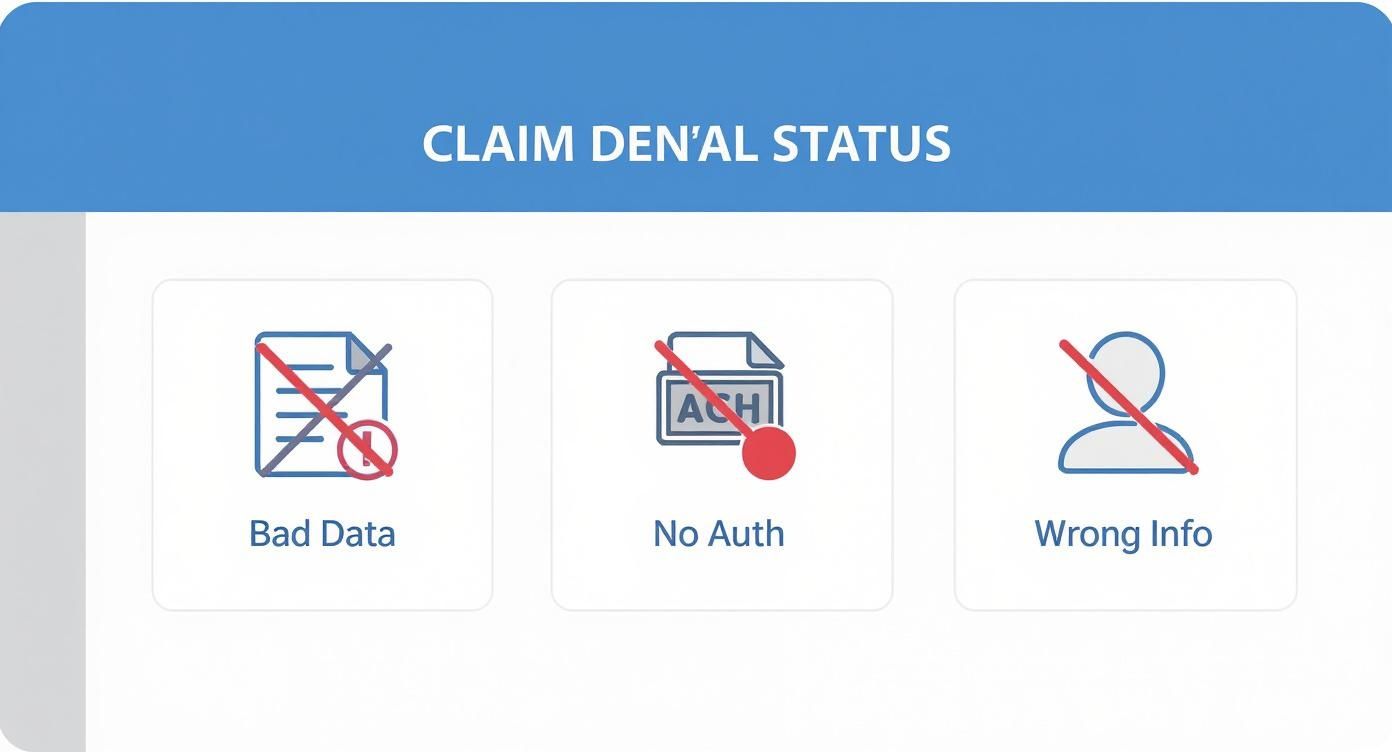
As you can see, simple administrative errors frequently derail a claim. This just reinforces the need for you to double-check that all your information is accurate in your appeal.
Crafting Your Appeal Letter
Your appeal letter is the centerpiece of your response. It needs to be professional, factual, and straight to the point. Clearly state what you’re appealing and why you believe the denial was a mistake.
Here are a few tips I give my clients for writing a persuasive letter:
- Start with the basics: Put your name, policy number, and claim number right at the top. No confusion.
- Reference the denial: Clearly state the date of the denial letter and the specific reason they gave for it.
- Build your case: Methodically lay out your evidence, referencing the documents you’ve included one by one.
- State your desired outcome: End by clearly stating that you want the claim reconsidered and approved.
Remember, you have several options when facing a denial. You can work with your healthcare provider to appeal, gather more medical documentation, or even request a peer-to-peer review with a physician at the insurance company. With 82% of providers now making denial reduction a top priority, they are often more willing than ever to support patients through this process.
Internal vs External Appeals
It’s also vital to understand the two main stages of this process. First, you’ll file an internal appeal, which means you are asking the insurance company itself to take a second look at its own decision.
An internal appeal is your first formal challenge. You are presenting new evidence or a stronger argument directly to the insurer, giving them a chance to correct a potential mistake.
If they uphold their denial after that, you can escalate to an external review. This is where an independent third party, with no connection to your insurer, reviews your case. Their decision is legally binding. Knowing the difference helps you plan your strategy for each stage and prepare for what’s next. If the process involves significant sums, our guide on how to negotiate an insurance settlement can provide additional valuable context.
Disclaimer: This article is for informational purposes and not to be construed as legal advice. No attorney-client relationship is formed by reading this article, and none of the information herein constitutes legal advice.
When to Seek Professional Help
Trying to handle an insurance appeal on your own is doable, especially if you’re just correcting a simple clerical error. But there are definite moments when you need to call in the professionals. Trying to figure out what to do when your insurance denies a claim can get complicated, fast.
If your appeal involves a huge dollar amount—say, for a critical medical procedure or catastrophic damage to your home—the stakes are simply too high to go it alone. The same goes for denials that are tangled in complex, technical policy language or arguments over what’s “medically necessary.” That’s when you need an expert in your corner.
Recognizing the Red Flags
Sometimes, the way the insurance company behaves is the biggest sign you need help. If your adjuster has gone silent, they keep asking for the same documents you’ve already sent, or they flat-out refuse to give you a straight answer for the denial, these are major red flags.
These kinds of tactics can be a sign of bad faith insurance practices, which basically means the insurer isn’t playing fair.
It’s probably time to escalate your case if you’re seeing signs like these:
- The insurer is unresponsive: Your calls and emails are being ignored, or it’s taking them an unreasonable amount of time to get back to you.
- The denial seems baseless: The reason they gave you completely contradicts the terms of your policy or the notes from your doctor.
- You feel pressured: An adjuster is pushing you hard to accept a lowball settlement offer that doesn’t even come close to covering your losses.
- Your claim involves a serious injury: Complex cases with long-term consequences need an expert legal strategy right from the very beginning.
Finding the Right Advocate
When you realize you need backup, you have a few options. Your state’s Department of Insurance is a good starting point; they can provide information and might even investigate your complaint against the insurer. Non-profit patient advocate organizations are another fantastic resource, especially for navigating tricky health insurance denials.
However, if you’re dealing with a significant claim or you suspect the insurer is acting in bad faith, your strongest move is to hire an attorney who specializes in insurance disputes. If your denial is tied to an accident, understanding the specifics of when to hire a personal injury attorney can give you a clear path forward. An experienced lawyer takes over completely—handling all communications, gathering evidence, and fighting to protect your rights.
Got Questions About Your Denied Claim? We Have Answers.
Disclaimer: This article is for informational purposes and not to be construed as legal advice. No attorney-client relationship is formed by reading this article, and none of the information herein constitutes legal advice.
When an insurance company tells you “no,” a flood of questions usually follows. The process can feel intimidating, but knowing the rules of the game is your first step toward fighting back. Here are some straightforward answers to the questions we hear most often from clients.
How Long Do I Have to File an Appeal?
You generally have 180 days (or about 6 months) from the day you get that denial letter to start an internal appeal. But don’t treat that as a hard-and-fast rule. The exact deadline can change depending on your state and the fine print in your insurance plan.
Your denial letter and policy documents are your source of truth here—check them immediately. These deadlines are no joke; if you miss the window, you could lose your chance to challenge the decision for good. My advice? Act fast.
Can My Insurer Drop Me if I Appeal a Denial?
No, they absolutely cannot. It is illegal for an insurance company to retaliate against you just for using your right to appeal a denied claim. They can’t cancel your policy, change your terms, or punish you in any way for challenging their decision.
Think of it this way: an appeal is a built-in part of the insurance system. The law protects your right to question a denial, and insurers are strictly forbidden from penalizing you for it.
What’s the Difference Between an Internal and External Appeal?
These are the two key stages in the fight.
An internal appeal comes first. This is your formal request asking your own insurance company to take a second look and conduct a full, fair review of its initial denial. You’re giving them a chance to correct their mistake.
If they stick to their guns and deny you again, you can move on to an external review. At this point, a neutral, independent third party—someone with no ties to the insurance company—steps in to examine your case. Their decision is legally binding, which means if they side with you, the insurer has to pay.
Navigating a claim denial is tough, but you don’t have to face it alone. The experienced team at LA Law Group, APLC is here to fight for your rights and make sure you get the compensation you’re owed. For a free, no-strings-attached consultation to go over your case, contact us online.
Attorney Advertising. This article is general information, not legal advice, and does not create an attorney-client relationship. Prior results do not guarantee a similar outcome.