
California Financial Responsibility Law: Your 2026 Guide
A collision happens fast. One second you are driving through an ordinary California intersection, and the next you are shaken, checking for injuries, looking at vehicle damage, and trying to think clearly.
In that moment, individuals often focus on the obvious steps first. Call for help. Exchange information. Take photos. But California law also puts another issue in front of you almost immediately. You must be able to show financial responsibility.
That phrase sounds technical. In practice, it usually means this: you need proof that you had a legally acceptable way to cover losses from a crash. If you were injured by someone else, that same rule can also become an important part of your personal injury claim. It can affect how the DMV treats the accident, how the insurance companies respond, and how a lawyer builds your case.
This article is for informational purposes only and is not to be construed as legal advice. No attorney client relationship exists based on the review of this article, and none of the information in this article is legal advice.
The Moments After an Accident and Your First Legal Duty
The first minutes after a crash are chaotic. You may be dealing with pain, rain, traffic, frightened passengers, or a driver who is already insisting the wreck was not their fault.
Your first priority is safety. Check for injuries. Call 911 if anyone may be hurt. Move to a safer location if you can do so without creating more danger. Then start documenting what happened.
A practical step-by-step refresher like What To Do After a Car Accident can help if you are trying to remember what information to collect at the scene.
What the law expects right away
California expects drivers and vehicle owners to be able to prove financial responsibility after a collision. That duty is separate from the question of who caused the crash.
This surprises people. Many assume, “I did nothing wrong, so I do not have to worry about insurance paperwork right now.” That is not how the system works. The legal duty to show financial responsibility can arise even while fault is still being investigated.
Why this matters to an injury claim
If another driver hit you, their compliance or noncompliance can matter. A driver who failed to maintain proper financial responsibility may create more problems for everyone involved, but that failure can also become useful evidence in a claim.
Key takeaway: After a crash, financial responsibility is not just an insurance issue. It is part of the legal record that can affect your right to drive, your dealings with the DMV, and the strength of an injury case.
What is California’s Financial Responsibility Law
California’s financial responsibility law answers a practical question that comes up after almost every crash: if someone is hurt or property is damaged, where is the money supposed to come from?
The rule requires drivers, and in some situations vehicle owners, to have an approved way to pay for losses caused by a collision. In plain English, the state does not want people using public roads with no financial backup plan. The law appears in California Vehicle Code sections 16000 through 16078, and the DMV explains the approved forms of financial responsibility in California.
That matters for more than traffic compliance. For an accident victim, this law can shape how a claim is investigated, what insurance is available, and whether there may be another source of recovery besides the driver’s word that “I’m covered.”
Who has to comply
This requirement applies broadly to people who drive in California. It also reaches vehicle owners, which surprises many families after a borrowed-car accident.
Here is the simple way to view it. The state is asking, “If this vehicle is involved in a crash, is there a legally recognized source of money behind it?” If the answer is no, DMV consequences can follow, even before an injury claim is fully sorted out.
The main ways California allows compliance
Auto liability insurance is the method nearly every driver uses, but it is not the only one. California recognizes several ways to satisfy the law:
- Liability insurance. This is the standard option. The policy provides a pool of money, up to the policy limits, if the insured driver causes harm.
- Cash deposit with the DMV. A driver can file a qualifying cash deposit with the state instead of buying a standard policy.
- Surety bond. A bond from an approved company can serve the same function.
- Self-insurance. Large companies or fleet operators may qualify if they meet state requirements.
If you want a plain-language explanation of the insurance option, this guide to California minimum car insurance requirements helps connect the rule to everyday coverage questions.
The 2025 minimum liability limits
California raised the required minimum liability limits effective January 1, 2025. The change appears in Senate Bill 1107.
| Coverage Type | Limit Before 2025 | Limit From Jan 1, 2025 |
|---|---|---|
| Bodily injury or death to one person | $15,000 | $30,000 |
| Bodily injury or death to more than one person | $30,000 | $60,000 |
| Property damage | $5,000 | $15,000 |
Those numbers matter because they set the floor, not the typical value of an injury claim. A single ambulance ride, ER visit, imaging study, and a few weeks off work can push past minimum coverage fast. For injured clients, that is often the first hard lesson this law reveals.
Why the law exists
Before these rules, accident victims often won the argument on fault but still lost the money question. A careless driver with no insurance and no assets could leave an injured person with medical bills and no realistic path to collect.
The law tries to reduce that problem by requiring an approved source of payment before a loss happens. It does not promise full compensation. It does create a starting point, and in a personal injury case, that starting point can be the difference between a collectible claim and a paper judgment.
Where confusion usually starts
People often assume this law only matters if they caused the crash. That is too narrow. Financial responsibility can become an issue for any driver involved in a reportable collision because the DMV is focused on compliance, while insurers and lawyers are focused on fault and damages.
Another common misunderstanding is treating an insurance card like a guaranteed shield. It is only proof that a policy appeared to exist. Coverage disputes still happen. Policies lapse. Exclusions apply. A listed vehicle may not match the one in the crash. The person driving may not be covered under the terms of the policy.
That is why this law matters strategically for accident victims. If the other driver did not maintain proper financial responsibility, that problem may affect settlement options, uninsured or underinsured motorist issues, and the broader investigation into every available source of recovery.
Demystifying the Paperwork SR-1 and SR-22 Forms
A crash can leave people worried about the wrong form.
Drivers often hear “SR-1” and “SR-22” and assume they are interchangeable. They are not. One reports a collision to the DMV. The other proves a driver has the required insurance on file after certain problems, such as a suspension or serious traffic offense. Mixing them up can create a second problem on top of the accident itself.
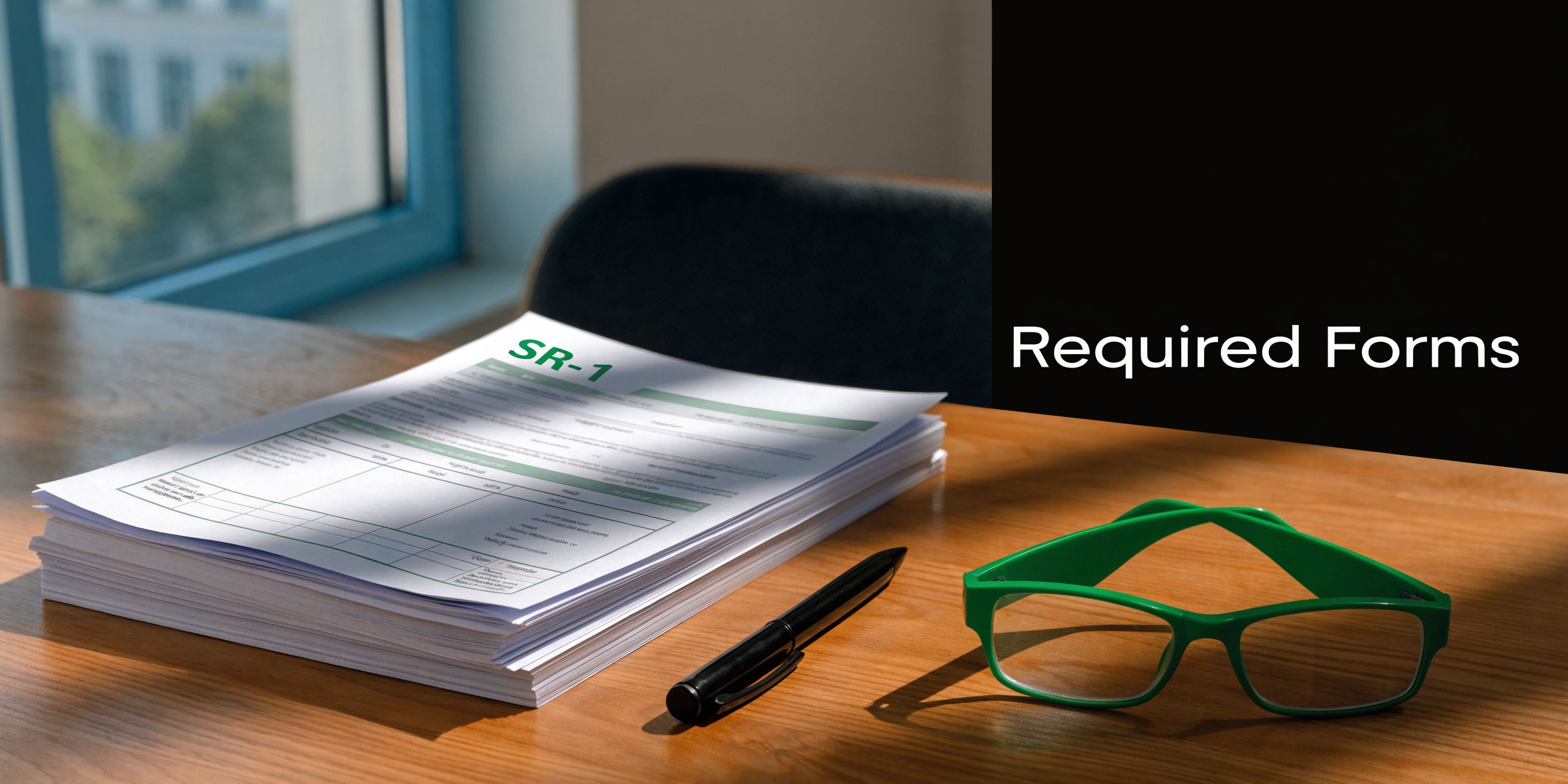
The SR-1 is the DMV’s accident notice
Under California law, a driver involved in a crash must report it to the DMV on Form SR-1 within 10 days if the collision caused injury, death, or property damage over the reporting threshold. The filing requirement comes from California Vehicle Code section 16000, and the DMV explains the process on its SR-1 reporting materials.
That deadline surprises many people. A police report does not automatically satisfy your DMV reporting duty. The DMV expects its own form.
If you want a practical walkthrough, this guide on the importance of filing an SR-1 form with the DMV after an accident in California explains the filing process in plain language.
Why the SR-1 matters beyond simple compliance
The SR-1 is more than paperwork. It puts the crash into the DMV system and triggers review of financial responsibility.
For an injured person, that can matter in a practical way. If the other driver had a lapse in coverage, listed the wrong vehicle, or failed to maintain valid insurance, the SR-1 process can help bring that issue to light early. That affects how a lawyer evaluates recovery options, including whether the case may involve uninsured and underinsured motorists.
In other words, this form is not just about avoiding DMV trouble. It can help identify where the money for a claim may come from.
The SR-22 serves a different purpose
An SR-22 is a certificate filed by an insurance company with the state to confirm that a specific driver carries the required coverage. It does not describe how the crash happened. It does not replace the SR-1.
A simple way to separate them is this:
- SR-1: reports the accident
- SR-22: proves ongoing financial responsibility for a driver who must keep that proof on file
That distinction matters because people often search for “the insurance form after an accident” and end up working from the wrong assumption.
Why lawyers pay attention to both forms
In a personal injury claim, form confusion can hide useful facts.
If an at-fault driver failed to file an SR-1, let an SR-22 lapse, or had coverage problems exposed during the DMV review, those facts can shape the claim strategy. They may explain why an insurer is denying coverage, why settlement talks are stalling, or why your own policy benefits need to be examined sooner rather than later.
That is the practical side of California’s financial responsibility law. For accident victims, understanding these forms is not about memorizing DMV terminology. It is about protecting your license, preserving your claim, and spotting insurance issues before they cost you time or compensation.
Your Post-Accident Checklist for Compliance and Claim Protection
A common first reaction after a crash is, “I already called my insurance company, so I must be covered.” In California, that assumption can create a second problem. You may have an injury claim to protect and a DMV reporting duty to meet, and those two tracks affect each other.
The practical question is simple. What should you do, in what order, so you do not damage your license status or weaken your case?
Under the California DMV’s financial responsibility guidance, a driver must report a collision to the DMV if anyone was injured or killed, or if property damage exceeded $1,000. That reporting duty applies even if you were not at fault. Missing it can lead to a suspension of the driver’s license and the vehicle registration, which is the kind of side issue that can complicate settlement discussions fast.
At the scene
Start with safety, then build a clear record.
-
Check for injuries and call for help If anyone may be hurt, call 911. If you feel dizzy, numb, sore, or disoriented, get checked the same day. A medical record created early often becomes one of the clearest pieces of evidence in a personal injury claim.
-
Exchange the right information Get the other driver’s name, contact information, driver’s license number, plate number, insurance company, and policy details. If the driver is not the owner, get the owner’s name too. That one detail can matter because the insurance money may come from the driver’s policy, the owner’s policy, or both.
-
Document the crash before the scene changes Take photos of the cars, the road, skid marks, debris, traffic controls, weather conditions, and visible injuries. Get witness names and phone numbers. If nearby homes or businesses may have cameras, note the location right away because video can be erased within days.
In the first few hours
What you do next affects both compliance and claim value.
- Get medical care if symptoms appear or worsen. Prompt treatment ties your symptoms to the collision and gives the insurer less room to argue that something else caused them.
- Report the crash to your insurer. Stick to facts. Do not guess about speed, fault, or the full extent of your injuries.
- Save every receipt and record. Keep discharge instructions, prescriptions, tow bills, repair estimates, rental car receipts, and app trip records if the crash involved Uber or Lyft.
If the other driver appears uninsured, or you have reason to believe coverage may be missing, review the practical steps after an accident with an uninsured driver. That issue changes the claim path early, especially if your own uninsured motorist coverage may need to step in.
In the next several days
Treat this stage like building a case file while the facts are still fresh. Small gaps now often become bigger disputes later.
| Task | Why it matters |
|---|---|
| Confirm whether the SR-1 must be filed | Missing the DMV deadline can create license and registration problems separate from the injury claim |
| Gather proof of insurance or other financial responsibility | The DMV, your insurer, and your attorney may all need it |
| Start a daily symptom journal | Pain levels, sleep disruption, headaches, and mobility problems are easier to prove when recorded day by day |
| Save repair bills and out-of-pocket expenses | These documents show the financial impact of the crash |
| Avoid casual fault discussions by text, phone, or social media | Insurers may use informal statements to reduce or deny part of a claim |
Where people lose ground
The biggest mistake is assuming the insurance company will handle every reporting issue for you. It may not. The insurer is protecting its own position while evaluating coverage, liability, and damages.
Another mistake is treating DMV compliance as separate from the injury case. In real life, the same documents often serve both purposes. A complete accident file can help show that you met your legal duties, identify every available policy, and expose coverage problems early enough to adjust the claim strategy.
That matters in cases involving uninsured and underinsured motorists. If the at-fault driver has little or no coverage, your recovery may depend on finding another policy layer quickly instead of waiting until negotiations stall.
Build one file from day one
Use one folder, digital or paper, and keep everything there. Include the crash date, claim number, photos, witness information, medical records, work-loss proof, repair documents, and every letter, email, or text from any insurance company.
That file works like the foundation of your claim. If an adjuster later questions when your pain started, whether you missed work, or how serious the vehicle damage was, you will have records instead of guesses.
Passengers, borrowed-car drivers, and vehicle owners often face extra confusion because several policies may apply at once. Early organization helps answer the question that matters most after a serious collision. Where is the insurance money going to come from, and how do you protect your right to recover it?
Why State Minimum Coverage Is Not Enough Protection
You can follow the law and still be underprotected.
That catches many drivers off guard after a serious crash. They assume the at-fault driver’s insurance will cover the harm because California requires insurance. In practice, minimum coverage often runs out long before the losses are paid.
According to Barry P. Goldberg’s discussion of California’s outdated financial responsibility law, California’s minimum liability limits, even after the update for 2025, often do not match the actual cost of an accident. The same analysis explains why Uninsured Motorist coverage matters and notes that an estimated 17% of California drivers were uninsured in 2023 (source).
Minimum coverage can disappear fast
A moderate injury claim can burn through policy limits quickly. One ambulance trip, imaging, follow-up care, time away from work, and car repairs can create losses that exceed a minimum policy.
Here is the practical problem for an injury victim. If the driver who hit you carries only the legal minimum, the insurance money available may be far less than what your case is worth. Even if liability is clear, there may be a hard cap on what that insurer will pay.
That changes case strategy. Your claim is no longer just about proving fault and damages. It also becomes a search for every possible source of recovery, including your own coverage, coverage tied to the vehicle, or another applicable policy.
Why UM and UIM matter so much
Uninsured Motorist (UM) coverage helps when the driver who caused the crash has no insurance.
Underinsured Motorist (UIM) coverage helps when that driver has insurance, but the limits are too low to cover the losses.
These coverages work like a backup fund built into your own policy. They do not make the crash easier, but they can keep a bad insurance situation from becoming a financial disaster.
Many California drivers buy only enough liability insurance to stay legal. That is understandable. Premiums matter. But from an injury lawyer’s perspective, a better question is not, “Did I buy the cheapest policy the DMV accepts?” A more important question is, “If the other driver has little or no coverage, what money is available to pay my medical bills, lost income, and pain-related losses?”
Three questions worth asking before a crash happens
- If an uninsured driver hits me, what coverage do I have to step in?
- If my treatment lasts months, will minimum limits cover the full claim?
- If I seriously injure someone else, what personal assets could be exposed?
Those are not abstract insurance questions. They affect settlement value, negotiation pressure, and whether an injured person is forced to absorb losses that should have been covered.
Key takeaway: State minimums satisfy California’s financial responsibility law. Higher liability limits and UM/UIM coverage do more to protect your finances and strengthen your options after a real accident.
Proposition 213 raises the cost of being uninsured
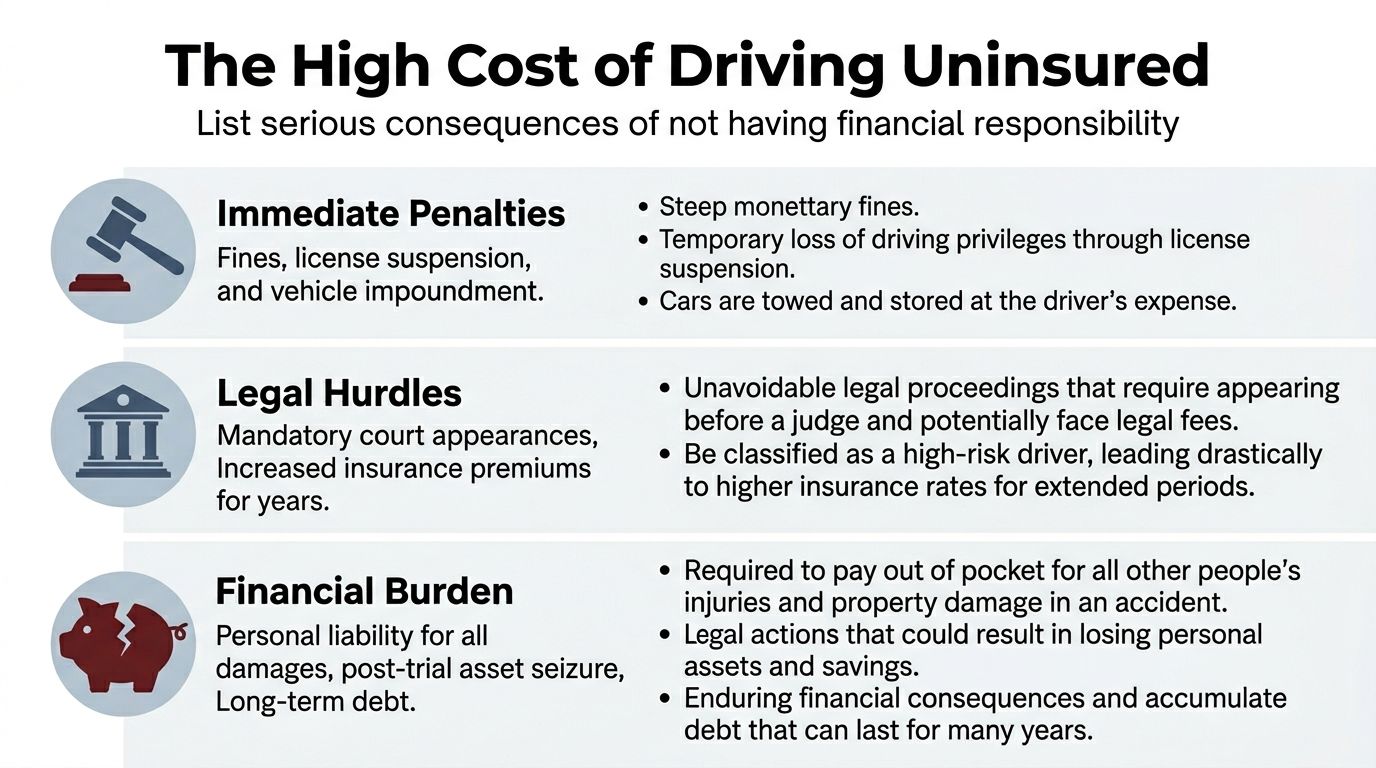
California also imposes a separate penalty on uninsured injured drivers. Under Proposition 213, an uninsured person may be barred from recovering non-economic damages, including pain and suffering, even if another driver caused the crash.
That rule has practical implications. A person can be hurt, need treatment, miss work, and still lose a major part of the claim because they were uninsured at the time of the collision.
For accident victims, this is the larger lesson. Financial responsibility law is not just a DMV rule sitting in the background. It can shape what damages are available, how insurance negotiations unfold, and whether there is enough coverage in play to make a claim worth pursuing.
How LA Law Group Helps with Insurance and Legal Claims
The aftermath of a crash usually involves three different systems at once. The DMV has its own requirements. Insurance companies conduct their own investigations. Injury claims follow their own legal rules.
Individuals generally do not need more complexity. They need someone to sort out what matters first.

Legal help is often practical, not dramatic
A good accident lawyer does more than argue in court. Their critical work often starts much earlier.
That work can include:
- Reviewing compliance issues: Determining whether a reportable crash triggered DMV obligations.
- Untangling insurance layers: Identifying primary, excess, rideshare, owner, and household policies.
- Protecting the claim record: Making sure early statements and missing paperwork do not damage an otherwise valid case.
Why the financial responsibility law can become a case tool
For injured clients, the law is not just a background rule. It can become part of claim strategy.
If the at-fault driver failed to maintain valid financial responsibility, that fact may support a broader negligence argument. It can also help explain why a normal claim turned into a disputed, delayed, or underfunded one.
Situations that often need close review
Some collisions look simple but are not:
| Situation | Why it gets complicated |
|---|---|
| Rideshare passenger injury | Multiple insurance policies may be involved |
| Borrowed vehicle crash | Driver and owner responsibilities may both matter |
| Fleet or delivery vehicle accident | Commercial coverage issues may affect the claim |
| Spanish-speaking driver facing DMV notices | Language barriers can lead to missed deadlines or misunderstandings |
What clients usually need most
They need clarity. They need someone to tell them what forms matter, what deadlines matter, and what to say carefully.
They also need someone who sees the connection between compliance and compensation. A missed DMV issue can become a disadvantage for the claimant, favoring an insurer. A well-documented compliance record can support credibility and keep the focus on the injury claim where it belongs.
Frequently Asked Questions About Financial Responsibility
Do I have to prove financial responsibility if the crash was not my fault
Yes, if the crash is the kind that triggers DMV reporting requirements. Fault and proof of financial responsibility are separate issues.
If the car is insured, am I automatically covered as the driver
Not always. Coverage depends on the policy terms, the listed drivers, the nature of the vehicle use, and other facts. Do not assume the owner’s card answers every question.
Is showing my insurance card to the police the end of the issue
Sometimes, but not always. A later DMV review can still examine whether valid financial responsibility was in effect at the time of the collision.
What if I own a car but was not driving it
Ownership can still matter. In some situations, the registered owner can face consequences tied to proof of financial responsibility after a reportable crash.
Can I satisfy the law without buying a standard insurance policy
Yes. California permits alternatives such as a DMV cash deposit, a surety bond, and self-insurance in qualifying situations. Those options are less common, but they exist.
Why does this law matter to my injury claim
Because it can affect available coverage, the DMV record, and the credibility of the at-fault party. In some cases, noncompliance helps explain why payment is being delayed or disputed.
If I am uninsured and injured, can I still bring a claim
You may still have a claim, but your recovery may be limited. Proposition 213 can bar recovery of non-economic damages for uninsured injured drivers in certain cases, which makes these situations especially sensitive.
If you were injured in a crash and need help dealing with the DMV, insurance carriers, or a difficult liability dispute, LA Law Group, APLC can evaluate your situation and help you understand your options. The firm handles accident-related claims across California and offers direct attorney access for people who need clear guidance after a collision.
Attorney Advertising. This article is general information, not legal advice, and does not create an attorney-client relationship. Prior results do not guarantee a similar outcome.