
Medical Payments Coverage (MedPay) in California
Short answer: The California Department of Insurance’s Automobile Insurance Text Version guide, read on November 20, 2026, says: “Medical Payments Coverage pays limited medical expenses for people injured in the car you are driving when you have an accident, whether or not you are at fault.” The same passage continues: “You may be offered this coverage, but you can choose not to buy it.” Your own policy spells out the details of its medical payments coverage, so it is the document to check.
Attorney Advertising. This page is general information, not legal advice, and it does not promise any outcome. Prior results do not guarantee a similar outcome. LA Law Group serves California personal injury clients from our main office in Chatsworth.
This guide is about medical payments coverage, often called MedPay, on a California auto policy. It is built on the California Department of Insurance’s own words and on one statute that talks about medical payment insurance in an uninsured motorist claim. It does not decide what any one policy pays.
Does fault matter for MedPay?
Under the heading “Medical Payments Coverage,” the same Automobile Insurance Text Version guide, read on November 20, 2026, says: “This covers the cost of medical expenses if you or your passengers are injured. This coverage can pay for immediate medical care, no matter who is at fault.”
Those lines describe the coverage in the Department’s words. They are not a promise that a given claim will be paid, or that it will be paid in a set amount or on a set timetable. Your own policy spells out the details of its medical payments coverage, so it is the document to check.
Who is covered by MedPay?
The first sentence of that Medical Payments Coverage passage, already quoted above, talks about “you or your passengers.” In a later paragraph, the same guide, read the same day, says: “You can buy medical payments coverage for you and your household members .”
The quoted lines are limited to what the Department of Insurance page says. This page does not add other categories of people. Your own policy spells out the details of its medical payments coverage, so it is the document to check.
The declarations page on a policy is the usual place to check whether medical payments coverage was purchased.
How does MedPay differ from a claim against the at-fault driver’s liability insurance?
The two are not the same thing. The Department of Insurance guide, read on November 20, 2026, says: “Liability coverage does not pay for injuries to you or the people in your household .”
A claim against the driver who caused the crash is usually made to that driver’s liability insurance. Our guide to bodily injury coverage explains that kind of coverage more generally.
Whether a MedPay claim, a liability claim, or both may be available depends on the facts and on the policies involved. This page does not assign fault or decide coverage for any crash.
How can MedPay interact with an uninsured motorist claim?
A California auto policy may also include uninsured motorist coverage. Insurance Code section 11580.2 talks about a possible offset when automobile medical payment insurance is also available. The section is framed as what a policy may provide. It does not say that every policy has the offset, and this page does not compute a reduction.
When we read it on November 20, 2026, Insurance Code section 11580.2, subdivision (e), said: “The policy or endorsement added thereto may provide that if the insured has valid and collectible automobile medical payment insurance available to him or her, the damages that the insured shall be entitled to recover from the owner or operator of an uninsured motor vehicle shall be reduced for purposes of uninsured motorist coverage by the amounts paid or due to be paid under the automobile medical payment insurance.”
The rest of the section is at the link. Our guide to underinsured motorist claims in California covers uninsured and underinsured motorist claims more generally.
MedPay and health insurance
The Department of Insurance guide asks its own question: “If I am injured in an accident, does my health insurance pay anything?” Its answer, read on November 20, 2026, is: “Usually, your health insurance pays for your immediate medical care. Then your health insurance company will typically try to get back money from your auto insurance or the other person’s auto insurance.” The next paragraph on the same page says: “When one insurance company tries to get money back from another insurance company, it is called subrogation.”
That is the Department’s description of how health insurance and auto insurance can interact, in its own words. This page does not describe any court holding. Your own policy spells out the details of its medical payments coverage, so it is the document to check.
What records often help later?
A few records often make a later review clearer:
- The declarations page, and any later endorsement that lists medical payments coverage
- Medical bills and records tied to the crash
- Letters, emails, or notices from an insurer about the claim
- The crash date, the claim or policy number, and the name of the insurer handling the file
This list is general. It is not a set of coverage requirements, and it does not include any dollar figures.
What can this look like in practice?
Illustrative hypothetical (not a real case): After a crash in California, a driver looks at the declarations page on their own auto policy and sees a medical payments coverage entry. The driver’s lawyer reads the California Department of Insurance’s description of medical payments coverage, checks whether a claim against another driver’s liability insurance may also be involved, and reads Insurance Code section 11580.2, subdivision (e), instead of assuming that an uninsured motorist payment would be reduced. The facts are made up.
How do attorney fees work at LA Law Group?
No attorney fee unless we win your case. You are responsible for case costs regardless of the outcome.
The written fee agreement explains how fees and costs are handled before work begins.
Key takeaways
- The California Department of Insurance’s Automobile Insurance Text Version guide says: “Medical Payments Coverage pays limited medical expenses for people injured in the car you are driving when you have an accident, whether or not you are at fault.”
- The same passage says: “You may be offered this coverage, but you can choose not to buy it.”
- Under the heading “Medical Payments Coverage,” the guide also says: “This coverage can pay for immediate medical care, no matter who is at fault.”
- The guide says: “Liability coverage does not pay for injuries to you or the people in your household .” A claim against the driver who caused the crash is usually made to that driver’s liability insurance.
- Insurance Code section 11580.2, subdivision (e), says a policy “may provide” for a reduction of uninsured motorist damages by amounts paid or due under automobile medical payment insurance. This page does not compute a reduction.
- Your own policy spells out the details of its medical payments coverage, so it is the document to check.
Short checklist
- The declarations page, and any endorsement that lists medical payments coverage.
- Medical bills and records tied to the crash.
- Letters or messages from an insurer about the claim.
- Whether a claim against another driver’s liability insurance may also be involved.
- Whether an uninsured or underinsured motorist claim may also be involved, and what the policy says about medical payment insurance.
- The official Department of Insurance guide and the statute, re-opened on the day they are relied on.
How can LA Law Group help?
LA Law Group serves California personal injury clients from our main office at 21540 Prairie St Unit A, Chatsworth, CA 91311. We can review the policy declarations, the medical bills, and the insurance correspondence, and explain the next steps in a written agreement before any work starts.
To learn more, visit our personal injury practice page.
Your initial consultation is free.
Call (866) 625-2529.
Sources checked
Official sources checked on November 20, 2026 (America/Los_Angeles):
- California Department of Insurance, Automobile Insurance Text Version
- Insurance Code section 11580.2, subdivision (e)
Agency details and policy terms can change. Re-check the official page, and the policy itself, before you rely on either.
This article is for general information only. It is not legal advice and does not create an attorney-client relationship. Reading it does not make LA Law Group your lawyers. Results depend on the facts and California law. Prior results do not guarantee a similar outcome. Attorney Advertising.
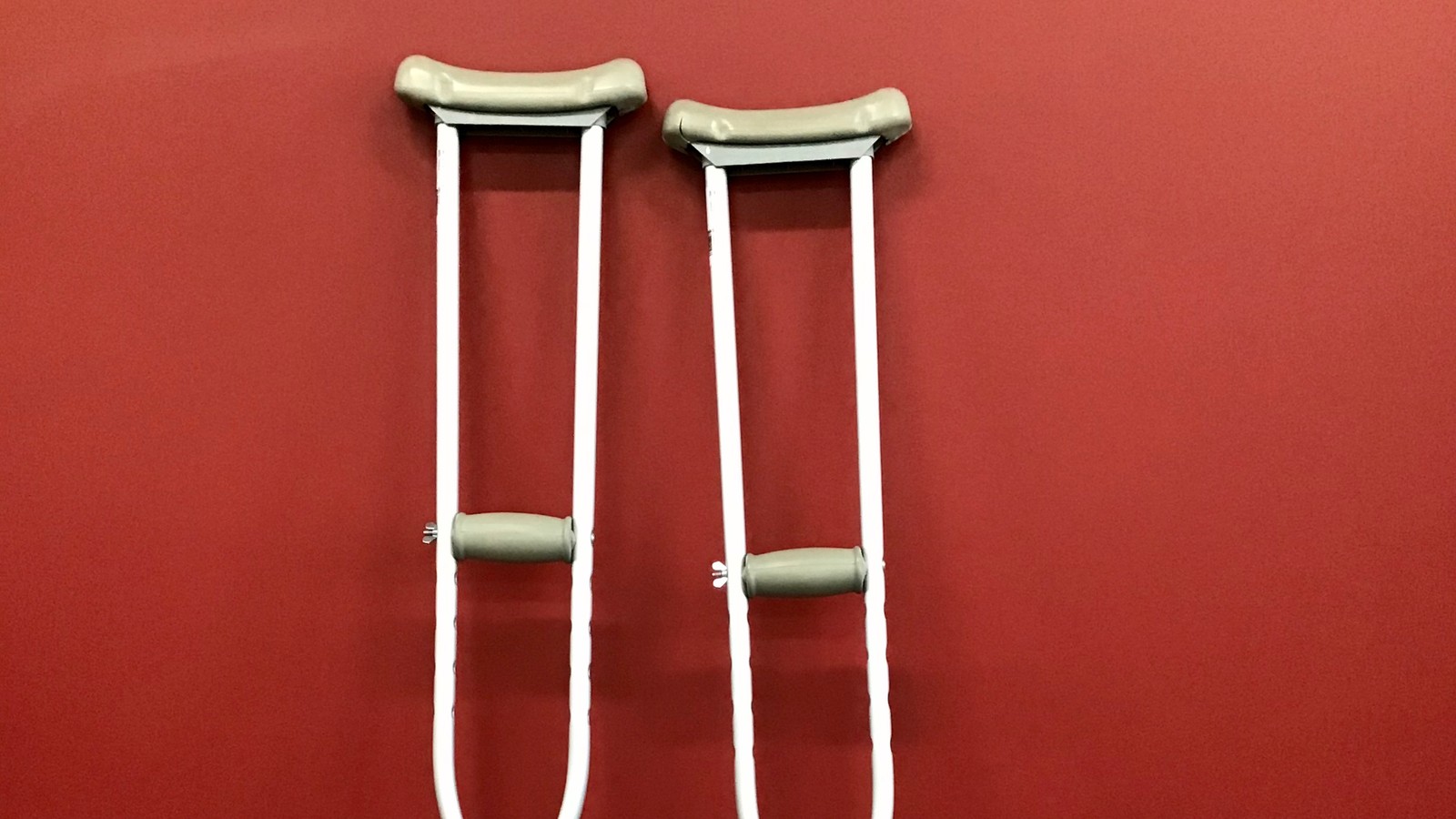
Photo: “Axillary Crutches” by Jessica Fisher / Wikimedia Commons (https://commons.wikimedia.org/wiki/File:Axillary_Crutches.jpg), CC BY-SA 4.0 (https://creativecommons.org/licenses/by-sa/4.0/), cropped and resized.

Used for illustration only.
Frequently asked
What is medical payments coverage (MedPay) in California?
The California Department of Insurance's Automobile Insurance Text Version guide, read on November 20, 2026, says: "Medical Payments Coverage pays limited medical expenses for people injured in the car you are driving when you have an accident, whether or not you are at fault."
Is MedPay required in California?
The same California Department of Insurance guide, read on November 20, 2026, says: "You may be offered this coverage, but you can choose not to buy it."
Does MedPay pay if I caused the crash?
The California Department of Insurance's Automobile Insurance Text Version guide, in its Medical Payments Coverage passage, says: "This coverage can pay for immediate medical care, no matter who is at fault." Your own policy spells out the details of its medical payments coverage, so it is the document to check.
Who does MedPay cover?
The California Department of Insurance's Automobile Insurance Text Version guide, read on November 20, 2026, says: "This covers the cost of medical expenses if you or your passengers are injured." The same guide also says: "You can buy medical payments coverage for you and your household members ." Your own policy spells out the details of its medical payments coverage, so it is the document to check.
Is MedPay the same as a claim against the at-fault driver?
No. The California Department of Insurance's Automobile Insurance Text Version guide, read on November 20, 2026, says: "Liability coverage does not pay for injuries to you or the people in your household ." A claim against the driver who caused the crash is usually made to that driver's liability insurance. Our guide to [bodily injury coverage](/blog/what-is-bodily-injury-coverage/) explains that kind of coverage more generally.
Can MedPay reduce an uninsured motorist claim?
A policy may provide for a reduction. When we read it on November 20, 2026, Insurance Code section 11580.2, subdivision (e), said: "The policy or endorsement added thereto may provide that if the insured has valid and collectible automobile medical payment insurance available to him or her, the damages that the insured shall be entitled to recover from the owner or operator of an uninsured motor vehicle shall be reduced for purposes of uninsured motorist coverage by the amounts paid or due to be paid under the automobile medical payment insurance." The statute uses "may provide"; it does not say every policy has that offset, and this page does not compute a reduction. Our guide to [underinsured motorist claims in California](/blog/underinsured-motorist-claim-california/) covers uninsured and underinsured motorist claims more generally.
Is there a deadline to bring an injury claim?
Legal deadlines can apply to property-damage and injury claims, and they depend on the facts. Our guide to the [car accident statute of limitations in California](/blog/car-accident-statute-of-limitations-california/) explains the general rules.
Attorney Advertising. This article is general information, not legal advice, and does not create an attorney-client relationship. Prior results do not guarantee a similar outcome.