
Statement of Damages in California Personal Injury Cases
Short answer: The California Courts Self-Help Guide, read on November 20, 2026, says: “Tells the other side the maximum amount of damages you are seeking in a personal injury or wrongful death case.” A statement of damages comes up in California personal injury and wrongful death lawsuits. This page is not a guide to filling out, serving, or filing the form.
The rules below come from the Code of Civil Procedure and the California Courts Self-Help Guide. On that self-help page, the form is named Statement of Damages (Personal Injury or Wrongful Death) (CIV-050). Every case is different, and the court’s own rules and forms control.
Attorney Advertising. This page is general information, not legal advice, and it does not promise any outcome. Prior results do not guarantee a similar outcome. LA Law Group serves California personal injury clients from our main office in Chatsworth.
This guide is about the statement of damages in California personal injury and wrongful death lawsuits. It does not cover how to value a claim, and it does not give step-by-step court instructions.
What is a statement of damages in California?
The California Courts Self-Help Guide page for Statement of Damages (Personal Injury or Wrongful Death) (CIV-050), read on November 20, 2026, says: “Tells the other side the maximum amount of damages you are seeking in a personal injury or wrongful death case.”
A statement of damages comes up in California personal injury and wrongful death lawsuits. This page is not a guide to filling out, serving, or filing the form.
The self-help page is the official place to start for the form’s name and for those two sentences. The statutes that talk about the statement are in the Code of Civil Procedure, and they are quoted below from a writing-day reading of the official text.
People who have been hurt often also want a broader picture of pain and suffering claims. Our guide to pain and suffering in a personal injury case covers that topic more generally.
Why doesn’t a personal injury complaint list the amount of damages?
The complaint is the paper that starts a lawsuit. In many civil cases, the general rule about what a complaint contains is in Code of Civil Procedure section 425.10, subdivision (a). For personal injury and wrongful death cases, the official text then turns to subdivision (b).
When we read it on November 20, 2026, Code of Civil Procedure section 425.10, subdivision (b), said: “(b) Notwithstanding subdivision (a), where an action is brought to recover actual or punitive damages for personal injury or wrongful death, the amount demanded shall not be stated, but the complaint shall comply with Section 422.30 and, in a limited civil case, with subdivision (b) of Section 70613 of the Government Code.”
That is the official wording. This page does not add a separate reason of its own, and it does not explain the other sections named inside that sentence.
Can the defendant ask how much I am seeking?
When we read it on November 20, 2026, Code of Civil Procedure section 425.11, subdivision (b), said: “(b) When a complaint is filed in an action to recover damages for personal injury or wrongful death, the defendant may at any time request a statement setting forth the nature and amount of damages being sought. The request shall be served upon the plaintiff, who shall serve a responsive statement as to the damages within 15 days. In the event that a response is not served, the defendant, on notice to the plaintiff, may petition the court in which the action is pending to order the plaintiff to serve a responsive statement.”
This page does not explain how that period is counted or what happens if a statement is not served on time.
The rest of the section, including the section’s definitions, is at the official link.
Is a statement of damages filed with the court?
The same California Courts Self-Help Guide page, read on November 20, 2026, says: “It is not filed with the court except when the defendant defaults.”
When we read it the same day, Code of Civil Procedure section 425.11, subdivision (c), said: “(c) If no request is made for the statement referred to in subdivision (b), the plaintiff shall serve the statement on the defendant before a default may be taken.”
This page does not explain default procedure beyond that official wording. This page is not a guide to filling out, serving, or filing the form.
How is a statement of damages served?
When we read it on November 20, 2026, Code of Civil Procedure section 425.11, subdivision (d), said:
“(d) The statement referred to in subdivision (b) shall be served in the following manner: (1) If a party has not appeared in the action, the statement shall be served in the same manner as a summons. (2) If a party has appeared in the action, the statement shall be served upon the party’s attorney, or upon the party if the party has appeared without an attorney, in the manner provided for service of a summons or in the manner provided by Chapter 5 (commencing with Section 1010) of Title 14 of Part 2.”
The same section, subdivision (e), said: “(e) The statement referred to in subdivision (b) may be combined with the statement described in Section 425.115.”
This page names Section 425.115 only as it appears inside that official sentence. It does not explain that section.
What should you look for in a lawyer who is handling a statement of damages?
A few direct questions help:
- License. Is the lawyer licensed in California?
- The statutes. Does the lawyer read Code of Civil Procedure sections 425.10 and 425.11 at the official source, instead of relying on a summary?
- The form. Does the lawyer use the form name given on the California Courts Self-Help Guide, Statement of Damages (Personal Injury or Wrongful Death) (CIV-050)?
- The court’s own rules. Does the lawyer treat the court’s own rules and forms as controlling, because every case is different, and the court’s own rules and forms control?
- Terms in writing. Does the written agreement explain how the case will be handled before any work starts?
How do attorney fees work at LA Law Group?
No attorney fee unless we win your case. You are responsible for case costs regardless of the outcome.
The written fee agreement explains how fees and costs are handled before work begins.
How can LA Law Group help?
We serve California personal injury clients from our main office at 21540 Prairie St Unit A, Chatsworth, CA 91311. We can review the complaint, any request for a statement of damages, and the official statutes and self-help page quoted here, and explain the next steps.
Sources checked
Official pages and statutes checked on November 20, 2026 (America/Los_Angeles):
- California Courts Self-Help Guide, Statement of Damages (Personal Injury or Wrongful Death) (CIV-050)
- Code of Civil Procedure section 425.10
- Code of Civil Procedure section 425.11
The wording of a statute or a court page can change. Re-check the official page before you rely on it.
Key takeaways
- The California Courts Self-Help Guide, read on November 20, 2026, says the form Statement of Damages (Personal Injury or Wrongful Death) (CIV-050) “Tells the other side the maximum amount of damages you are seeking in a personal injury or wrongful death case.”
- A statement of damages comes up in California personal injury and wrongful death lawsuits.
- This page is not a guide to filling out, serving, or filing the form.
- Code of Civil Procedure section 425.10, subdivision (b), as read on November 20, 2026, is quoted above in full.
- Code of Civil Procedure section 425.11, subdivision (b), as read the same day, is quoted above in full. This page does not explain how that period is counted or what happens if a statement is not served on time.
- The same self-help page says: “It is not filed with the court except when the defendant defaults.”
- The rules on this page come from the Code of Civil Procedure and the California Courts Self-Help Guide. Every case is different, and the court’s own rules and forms control.
Short checklist
- The official self-help page for Statement of Damages (Personal Injury or Wrongful Death) (CIV-050).
- Code of Civil Procedure section 425.10, including subdivision (b), read at the official source.
- Code of Civil Procedure section 425.11, including subdivisions (b), (c), (d), and (e), read at the official source.
- Any request for a statement of damages, and any statement that has already been served, kept with the rest of the case papers.
- The official pages, re-opened on the day you rely on them.
To learn more, visit our personal injury practice page.
Your initial consultation is free.
Call (866) 625-2529.
This article is for general information only. It is not legal advice and does not create an attorney-client relationship. Reading it does not make LA Law Group your lawyers. Results depend on the facts and California law. Prior results do not guarantee a similar outcome. Attorney Advertising.
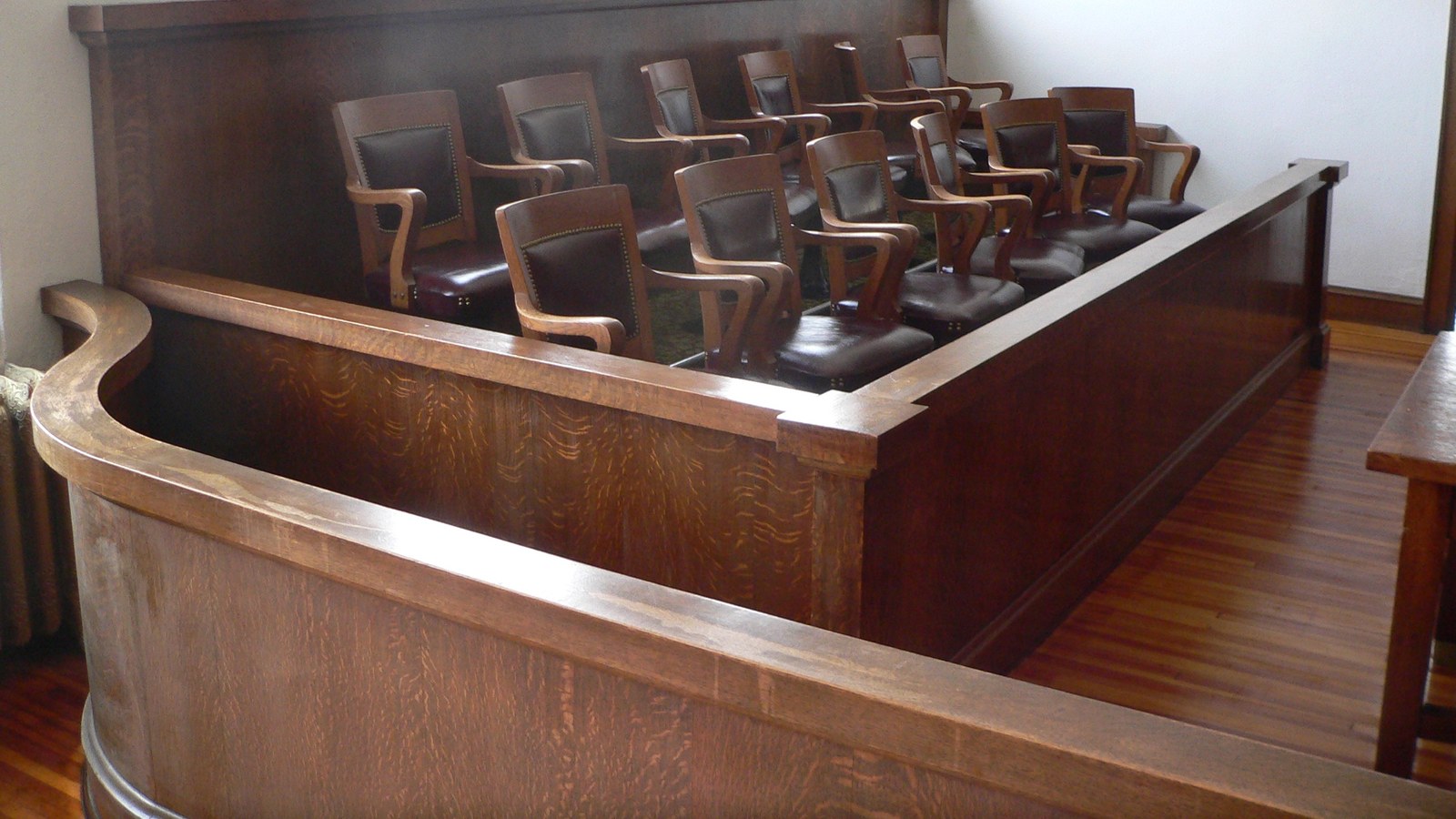
Photo: “Webster County, Nebraska courthouse courtroom 3” by Ammodramus / Wikimedia Commons (https://commons.wikimedia.org/wiki/File:Webster_County,_Nebraska_courthouse_courtroom_3.JPG), CC0 (https://creativecommons.org/publicdomain/zero/1.0/), cropped and resized.

Used for illustration only.
Frequently asked
What is a statement of damages in California?
The California Courts Self-Help Guide, read on November 20, 2026, says the form Statement of Damages (Personal Injury or Wrongful Death) (CIV-050) "Tells the other side the maximum amount of damages you are seeking in a personal injury or wrongful death case."
Why doesn't a personal injury complaint list the amount of damages?
When we read it on November 20, 2026, Code of Civil Procedure section 425.10, subdivision (b), said: "(b) Notwithstanding subdivision (a), where an action is brought to recover actual or punitive damages for personal injury or wrongful death, the amount demanded shall not be stated, but the complaint shall comply with Section 422.30 and, in a limited civil case, with subdivision (b) of Section 70613 of the Government Code."
Can the defendant ask how much I am seeking?
When we read it on November 20, 2026, Code of Civil Procedure section 425.11, subdivision (b), said: "(b) When a complaint is filed in an action to recover damages for personal injury or wrongful death, the defendant may at any time request a statement setting forth the nature and amount of damages being sought. The request shall be served upon the plaintiff, who shall serve a responsive statement as to the damages within 15 days. In the event that a response is not served, the defendant, on notice to the plaintiff, may petition the court in which the action is pending to order the plaintiff to serve a responsive statement." This page does not explain how that period is counted or what happens if a statement is not served on time.
Is a statement of damages filed with the court?
The California Courts Self-Help Guide, read on November 20, 2026, says: "It is not filed with the court except when the defendant defaults." When we read it the same day, Code of Civil Procedure section 425.11, subdivision (c), said: "(c) If no request is made for the statement referred to in subdivision (b), the plaintiff shall serve the statement on the defendant before a default may be taken."
How is a statement of damages served?
When we read it on November 20, 2026, Code of Civil Procedure section 425.11, subdivision (d), said: "(d) The statement referred to in subdivision (b) shall be served in the following manner: (1) If a party has not appeared in the action, the statement shall be served in the same manner as a summons. (2) If a party has appeared in the action, the statement shall be served upon the party’s attorney, or upon the party if the party has appeared without an attorney, in the manner provided for service of a summons or in the manner provided by Chapter 5 (commencing with Section 1010) of Title 14 of Part 2."
Is there a deadline to bring an injury claim?
Legal deadlines can apply to property-damage and injury claims, and they depend on the facts. Our guide to the [car accident statute of limitations in California](/blog/car-accident-statute-of-limitations-california/) explains the general rules.
Attorney Advertising. This article is general information, not legal advice, and does not create an attorney-client relationship. Prior results do not guarantee a similar outcome.