
Truck Accident Lawyer in California
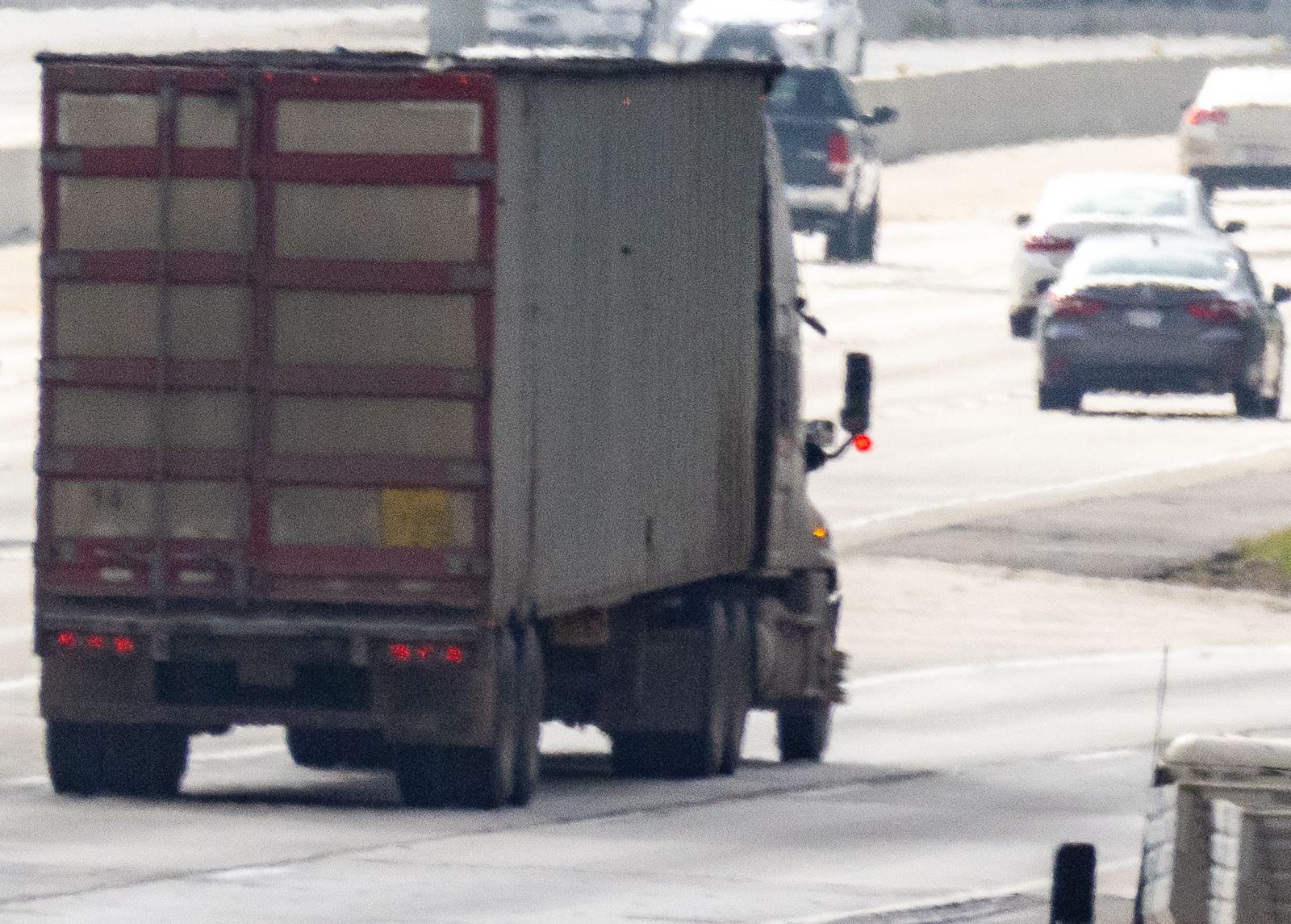
A truck accident lawyer in California can help review who may be responsible, which federal and state rules may apply, and which deadlines are running. Many California injury claims have a two-year filing deadline, and claims against a public entity can require notice within six months. Records such as driver logs and black box data can disappear quickly.
Attorney Advertising. This page is general educational information, not legal advice, a ranking, or an award. Prior results do not guarantee a similar outcome.
How are truck accident claims different from other crash claims?
A loaded commercial truck can be far heavier than a passenger car, and the companies behind it may have their own records and insurers. Federal rules for motor carriers add another layer. Those rules cover how many hours a driver may drive, how drivers are qualified, and how vehicles are inspected and maintained.
That is why a truck claim often looks less like a two-driver dispute and more like a records investigation. Our other guides cover related ground: what to do after a truck accident, semi truck accident claims in California, and California truck accident lawsuit legal information. For broader background on injury cases, see our personal injury practice area page.
How long can a California truck accident claim take to file?
Deadlines are one of the most important parts of any truck claim, and they are easy to miss.
- Private defendants. Code of Civil Procedure section 335.1 sets a two-year period for an action for injury to, or the death of, an individual caused by the wrongful act or neglect of another. See also our guide to the personal injury statute of limitations.
- Public entities. If a government-owned vehicle or a government road condition is involved, Government Code section 911.2 says a claim for death or injury to a person must be presented not later than six months after the cause of action accrues.
- Facts change the dates. Which deadline applies depends on who may be responsible. A lawyer can compare the dates for each possible party.
What federal rules apply to commercial truck drivers?
Many of the records in a truck case come from federal motor carrier rules. These are rules that apply to carriers and drivers who are subject to them, and a lawyer can help determine whether a given trip is covered by the federal rules, by California’s own rules, or both. The ones below are general descriptions, based on the eCFR as current on October 14, 2026.
- Hours of service. Under 49 CFR section 395.3, a property-carrying driver may not drive without first taking 10 consecutive hours off duty, may not drive after 14 consecutive hours following coming on duty, and may drive a total of 11 hours within that window. Most drivers also need a 30-minute break once 8 hours of driving time have passed. Weekly limits are 60 hours on duty in 7 days or 70 hours in 8 days, depending on the carrier’s operations. The rule lists exceptions.
- Logs and ELDs. 49 CFR section 395.8 requires carriers subject to it to have drivers record duty status, generally with an electronic logging device. Paragraph (k) says a carrier keeps records of duty status and supporting documents for not less than six months from the date of receipt.
- Driver qualification files. 49 CFR section 391.51 says each motor carrier maintains a driver qualification file for each driver it employs, including items such as the employment application and motor vehicle records.
- Inspection and maintenance. 49 CFR section 396.3 says motor carriers systematically inspect, repair, and maintain the vehicles they control, and keep the records at the place where the vehicle is housed or maintained for 1 year and for 6 months after the vehicle leaves the carrier’s control. 49 CFR section 396.11 covers daily driver vehicle inspection reports.
- Insurance minimums. For for-hire carriers moving nonhazardous property in interstate commerce with a vehicle that has a gross vehicle weight rating of 10,001 pounds or more, 49 CFR section 387.9 lists a $750,000 minimum level of financial responsibility. Other types of carriage have different minimums, and California intrastate carriers may be subject to different rules. A minimum is a floor, not a statement of what a case is worth or what coverage exists in a given crash.
What are common truck crash causes and the evidence to ask about?
Naming a cause is not the same as proving it. The table below pairs common themes with records that may help an investigation. It does not assign fault.
| Common theme | Evidence to ask about | Why it matters |
|---|---|---|
| Driver fatigue or hours | ELD records, duty status logs, dispatch messages, fuel and toll receipts | Shows driving time, breaks, and the schedule the driver was under |
| Distraction or speed | Dashcam video, engine control module (black box) data, phone records | Can show speed, braking, and timing before impact |
| Brakes, tires, or other equipment | Maintenance and inspection records, daily vehicle inspection reports, repair invoices | Can show known problems and when they were or were not addressed |
| Unsafe or shifting cargo | Bill of lading, loading records, cargo securement documents | Can show who loaded the truck and how |
| Driver hiring and training | Driver qualification file, training records, prior incident history | Can show what the carrier knew when it put the driver on the road |
| Road or work zone conditions | Photos, traffic camera footage, public agency records | Can point to a public entity and a much shorter claim deadline |
Practical rule: Ask early which company operated the truck and where its records are kept. Some federal retention periods are as short as six months, so a written preservation request to the carrier may be considered promptly.
Who may be responsible after a truck accident?
Responsibility in a truck case can be shared across several companies. Depending on the facts, the parties involved may include the following.
| Who may be involved | What they may control |
|---|---|
| Truck driver | Speed, following distance, attention, hours driven, pre-trip checks |
| Motor carrier (trucking company) | Hiring, training, dispatch schedules, driver logs, vehicle maintenance, insurance |
| Shipper or loader | How cargo was loaded, balanced, and secured |
| Maintenance contractor | Brake, tire, steering, and other repairs and inspections |
| Parts or vehicle manufacturer | Design or manufacturing of a component that failed |
| Freight broker | Selection of the carrier that moved the load |
| Public entity | Road design, signage, work zones, or a government-owned truck |
Whether any of these parties is actually responsible is a question of evidence and law. Naming a party in a table does not mean that party did something wrong.
How does shared fault work in a California truck claim?
California uses pure comparative negligence, adopted in Li v. Yellow Cab Co. (1975), which assesses liability in direct proportion to fault. A person who bears some fault may still seek compensation, reduced by their own percentage. For more, see our explainer on pure comparative negligence.
When more than one defendant is involved, Civil Code section 1431.2 provides that, in a comparative-fault personal injury action, each defendant’s liability for non-economic damages is several only, and each defendant is liable only for the amount allocated in direct proportion to that defendant’s percentage of fault. The statute defines non-economic damages as subjective, non-monetary losses such as pain, suffering, and emotional distress. It defines economic damages separately.
Hypothetical: records, deadlines, and shared fault (illustrative)
Hypothetical (illustrative only, not a real client, not a case result, not a prediction): A tractor-trailer changes lanes on a California freeway and hits a passenger car. The car’s driver is injured and starts treatment the same day. On day 3, the driver’s lawyer asks the trucking company in writing to preserve its ELD data, black box data, dashcam video, and maintenance records. The logs show the truck driver came on duty 13 hours and 40 minutes before the crash, so the lawyer checks the 14-hour window in 49 CFR section 395.3 and whether any exception applies. A carrier subject to the six-month retention rule in section 395.8(k) could, in principle, discard older logs about six months after receiving them, which is why the date of the request can matter.
Months later, assume a jury were to find non-economic damages of $100,000 and allocate fault as 70% to the truck driver, 20% to a maintenance contractor, and 10% to the car’s driver. As arithmetic only, the car’s driver would bear $10,000, the first defendant would be responsible for $70,000, and the contractor for $20,000 of the non-economic amount. The numbers are invented to show how the rule works. Economic damages are treated differently under the statute and are not covered by this example. Educational only.
How fees and case costs work at LA Law Group
No attorney fee unless we win your case. You are responsible for case costs regardless of the outcome.
All fee and cost terms are set out in a written fee agreement before work begins. Aryan Amid, Esq., the firm’s founding attorney, and the team can walk through that agreement line by line.
Talk with LA Law Group
LA Law Group, APLC is based in Chatsworth and handles California injury matters statewide, with Aryan Amid, Esq., the firm’s founding attorney. We communicate in English, Spanish, and Farsi.
Your initial consultation is free.
To discuss a truck crash, call (866) 625-2529. Our Chatsworth office is at 21540 Prairie St Unit A, Chatsworth, CA 91311. Read more on our personal injury practice area page or our truck accident cases page.
Key takeaways
- Many California injury lawsuits face a two-year deadline under Code of Civil Procedure section 335.1. Claims against a public entity can require a claim within six months under Government Code section 911.2.
- Federal rules on driver hours, logs, driver qualification, and maintenance create records that can matter, and some are kept for only six months or a year.
- Responsible parties may include the driver, the motor carrier, a shipper or loader, a maintenance contractor, a manufacturer, or a broker, depending on the facts.
- California’s comparative fault rules can reduce, but do not automatically bar, compensation when fault is shared.
- No attorney fee unless we win your case. You are responsible for case costs regardless of the outcome.
Checklist: information to gather when speaking with counsel (general information)
- Medical records, bills, and a list of providers
- Photos and video of the scene, the vehicles, and any visible company name or truck number
- The police or agency report number
- Witness names and phone numbers
- Dashcam or phone video from your own vehicle
- Auto, health, and uninsured motorist insurance information
- Dates, since deadlines can differ if a public entity may be involved
This article is for general information only. It is not legal advice and does not create an attorney-client relationship. Reading it does not make LA Law Group your lawyers. Results depend on facts and California law. Prior results do not guarantee a similar outcome. Attorney Advertising.
Frequently asked
How long do I have to file a truck accident lawsuit in California?
For many injury claims, California Code of Civil Procedure section 335.1 sets a two-year deadline to file a lawsuit. Claims against a public entity, such as a government-owned truck, can require a written claim within six months under Government Code section 911.2. Deadlines depend on the facts, so a lawyer can check the dates in a specific case.
Who can be held responsible for a California truck accident?
Depending on the facts, responsible parties may include the truck driver, the motor carrier that operated the truck, a company that loaded or secured the cargo, a maintenance contractor, a parts or vehicle manufacturer, or a freight broker. Records such as driver logs, maintenance files, and loading documents help show who controlled what.
What federal rules apply to truck drivers' hours?
Federal rules at 49 CFR section 395.3 limit driving time for property-carrying commercial vehicles. They include a 10-hour off-duty period before driving, an 11-hour driving limit within a 14-hour window, a 30-minute break after 8 hours of driving for most drivers, and 60 or 70 hour weekly on-duty limits. Exceptions exist, and whether a trip falls under federal or California rules is a fact question.
What evidence matters most after a truck accident?
Common examples include electronic logging device data, the truck's engine control module or black box data, dashcam video, driver qualification and maintenance records, and cargo loading documents. Some federal retention periods are short. For example, motor carriers must keep records of duty status and supporting documents for at least six months under 49 CFR section 395.8(k).
What is a preservation letter in a truck accident case?
A preservation letter is a written request asking a trucking company and related parties to keep records and data that could otherwise be overwritten or discarded, such as logs, black box data, video, and maintenance files. A lawyer can explain whether one makes sense for the facts of a particular crash.
What if I was partly at fault for a truck crash in California?
California follows pure comparative negligence under Li v. Yellow Cab Co. (1975). A person who shares some fault may still be able to seek compensation, which is reduced by that person's percentage of fault. Under Civil Code section 1431.2, each defendant's liability for non-economic damages is several only, in proportion to that defendant's share of fault.
How is a truck accident claim different from a car accident claim?
Truck claims can involve more parties, such as a motor carrier, a shipper, or a maintenance contractor, and federal motor carrier rules on hours, driver qualification, and vehicle maintenance. They also tend to involve more records and commercial insurance. Every case turns on its own facts.
Attorney Advertising. This article is general information, not legal advice, and does not create an attorney-client relationship. Prior results do not guarantee a similar outcome.