Car Owner Liability in California When Someone Else Is Driving: Permissive Use, Limits and Parents of Minor Drivers
Also available in Español
Short answer: In California, a car owner can be liable when someone else crashes the car, if that driver had the owner’s permission, express or implied, under Vehicle Code section 17150. Section 17151 caps that owner liability at $15,000 per person, $30,000 per accident, and $5,000 for property. The driver’s own liability is not capped by that section.
There is also a Spanish version of this page.
This page explains the permissive-use statutes and the parent rules for minor drivers. For employers, agents and other forms of vicarious liability, see our broader vicarious liability guide.
Attorney Advertising. This guide explains California owner liability rules and primary sources, not a promise of any outcome. Prior results do not guarantee a similar outcome. This page is general information, not legal advice.
What does California’s permissive-use law say?
Vehicle Code section 17150 reads: “Every owner of a motor vehicle is liable and responsible for death or injury to person or property resulting from a negligent or wrongful act or omission in the operation of the motor vehicle, in the business of the owner or otherwise, by any person using or operating the same with the permission, express or implied, of the owner.”
Four parts of that sentence do most of the work:
- “Every owner”: the rule attaches to ownership. The owner does not need to be in the car or to have done anything careless.
- “Negligent or wrongful act or omission in the operation”: the driver’s careless or wrongful driving is what creates the claim. If the driver was not at fault, there is nothing for the owner to answer for under this section.
- “In the business of the owner or otherwise”: the trip does not have to be for the owner’s benefit. A personal errand counts.
- “With the permission, express or implied”: permission can be spoken or written, or it can be implied. Without permission, section 17150 does not apply by its terms.
So when a friend, relative or roommate borrows your car with your OK and causes a crash, the injured person may look to the driver and, under section 17150, to you as the owner.
When does a driver have the owner’s permission?
The statute names two kinds of permission and stops there. It helps to separate what the text says from what it leaves open:
- Express permission: the owner told the driver they could use the car. That fits the plain words of section 17150.
- Implied permission: section 17150 covers implied permission too, but the statute does not define it. Whether permission can be implied from a pattern of use, a shared household, or leaving keys available depends on the facts.
- Theft or use without permission: the section speaks only of use “with the permission, express or implied, of the owner.” A car taken without permission falls outside that wording.
- Going beyond what was allowed: the statute does not say what happens when a permitted driver uses the car for a different trip, at a different time, or after being told to stop. Those questions are decided on the facts and on court decisions this page does not summarize.
- Who must prove what: section 17150 itself does not create a presumption of permission or say who has to prove it. Evidence of what the owner allowed can matter.
How much can a car owner owe under section 17151?
Vehicle Code section 17151(a) limits the liability “imposed by this chapter” on an owner, an owner’s bailee, or a decedent’s personal representative. The limits apply per accident:
| What the cap covers | Owner liability limit under section 17151(a) |
|---|---|
| Death of or injury to one person | $15,000 |
| Death of or injury to more than one person, subject to the one-person limit | $30,000 |
| Damage to property of others | $5,000 |
The caps come with an important carve-out. They apply only to liability “not arising through the relationship of principal and agent or master and servant.” When the driver was acting as the owner’s agent or employee, the owner’s liability may rest on that relationship instead, and section 17151(a) does not cap it. Our vicarious liability guide covers those relationships.
Practical rule: the section 17151 caps limit what the owner owes under the permissive-use statute. They do not limit what the driver owes, and they are not insurance limits.
Can the owner be charged punitive damages for the driver’s conduct?
No, not under this chapter. Section 17151(b) says an owner, bailee, or personal representative “is not liable under this chapter for damages imposed for the sake of example and by way of punishing the operator of the vehicle.”
The same subdivision keeps one door open. It does not make the owner “immune from liability for damages imposed for the sake of example and by way of punishing him for his own wrongful conduct.” So the owner is shielded from punitive damages based on the driver’s conduct, not from punitive damages based on the owner’s own conduct.
Are parents liable when a minor crashes a car?
A separate chapter of the Vehicle Code deals with minor drivers. Three sections fit together:
- Section 17707, the license signer: civil liability of a minor arising from driving on a highway is imposed on the person who signed and verified the minor’s license application. That person is jointly and severally liable with the minor. An employer who signed is covered only if an unrestricted license was issued on the employer’s written authorization. No liability is imposed under section 17707 or 17708 on the state or a county, or on a probation officer or child protective services worker acting as an officer of the court, for damages caused solely by the minor’s negligence or willful misconduct when that worker or officer signed the application while the minor was a dependent or ward of the court.
- Section 17708, parents or guardian who gave permission: when a minor, “whether licensed or not,” drives on a highway with the express or implied permission of the parents or the person or guardian having custody, liability is imposed on them, jointly and severally with the minor.
- Section 17709, the cap and no punitive damages: no person, or group of persons collectively, is liable under sections 17707 and 17708 for more than $15,000 for one person, $30,000 for all persons, and $5,000 for property damage in any one accident. No one is liable under those sections for punitive damages based on the minor’s conduct, though there is no immunity for a person’s own wrongful conduct.
The section 17709 limits are fixed dollar amounts written into that section. They are not tied to the insurance minimums discussed below. If a parent also owns the car, the owner rules in sections 17150 and 17151 can apply as well, so it helps to check both chapters.
If the injured person is a minor, a court may need to approve a settlement. See our guide to minor’s compromise in California.
Who can be responsible, and under which rule?
| Who | When the rule applies | Statute | Statutory limit |
|---|---|---|---|
| Driver who caused the crash | Negligent or wrongful driving | General negligence law | None set by sections 17151 or 17709 |
| Owner of the car | Driver used it with express or implied permission | Veh. Code §17150 | §17151(a): $15,000 / $30,000 / $5,000 |
| Owner when the driver was an agent or employee | Liability arising through that relationship | See the vicarious liability guide | §17151(a) caps do not apply |
| Person who signed a minor’s license application | Minor’s negligent driving on a highway | Veh. Code §17707 | §17709(a): $15,000 / $30,000 / $5,000, collectively |
| Parents or guardian who gave a minor permission | Minor drove on a highway with their permission | Veh. Code §17708 | §17709(a): $15,000 / $30,000 / $5,000, collectively |
When fault is shared, see what pure comparative negligence means.
Illustrative hypothetical (not a case result)
Suppose an owner lends a car to an adult friend for a weekend errand. The friend runs a red light and hits another car. Two people in that car are hurt, and their car is damaged.
Under section 17150, the owner can be liable because the friend drove with permission. Under section 17151(a), the owner’s liability under that chapter is limited to $15,000 for either injured person, $30,000 for both together, and $5,000 for the damage to their car. The friend’s own liability is not limited by section 17151. Whether the owner’s insurance policy or the friend’s policy pays, and how much, depends on the policy terms and limits. These numbers are statutory limits used to show how the caps work; they are not an outcome or an estimate of any claim.
How do the owner caps differ from California’s insurance minimums?
The owner caps and the insurance minimums use some of the same dollar figures, which causes confusion. They are different rules.
Vehicle Code section 16056 sets minimum liability insurance amounts. Under section 16056(a)(2), for any policy or bond issued or renewed on or after January 1, 2025, the minimums are $30,000 for bodily injury or death of one person, $60,000 for bodily injury or death of two or more persons in one accident, and $15,000 for property damage.
Section 17151(a), by contrast, limits how much the owner can owe personally under the permissive-use chapter: $15,000, $30,000 and $5,000. Insurance minimums describe what a policy must carry. The owner caps describe a limit on one kind of legal liability. Neither one limits what the at-fault driver may owe.
When the driver’s or owner’s coverage is too small, uninsured motorist coverage on your own policy may matter. See our uninsured motorist claim guide and our financial responsibility law guide.
What should you gather after a crash in a borrowed car?
These records help show who owned the car, who was driving, and whether permission existed:
- The driver’s name, license and insurance information
- The registered owner’s name and the vehicle registration
- Any statements about whether the driver had permission, including texts or messages
- The police report number and the names of any witnesses
- Photos of the scene and the vehicles
- Medical records and bills, and any letters from insurers
Medical providers may claim part of a recovery. See our medical liens guide. For how damages are valued in general, see how much a personal injury case may be worth, and for fault questions see car accident claims when fault is disputed.
What is the deadline to file?
Code of Civil Procedure section 335.1 generally gives two years to sue for injury caused by another’s wrongful act or neglect. Which deadline applies to a particular claim, including one against an owner, depends on the facts. Exceptions and tolling rules can move these dates, and waiting for a report generally does not pause them. See our statute of limitations guide.
How LA Law Group can help from Chatsworth
LA Law Group serves California personal injury clients from our Chatsworth office at 21540 Prairie St Unit A, Chatsworth, CA 91311. We can review who owned the car, the facts about permission, and which statutes and policies may apply to your claim.
No attorney fee unless we win your case. You are responsible for case costs regardless of the outcome.
Your initial consultation is free.
To see how payment works, read how personal injury lawyers get paid. To learn more, visit our personal injury practice page or contact us. Call (866) 625-2529.
Video transcript
This video uses AI-generated visuals and an AI-generated voice. It is general information, not legal advice. Attorney Advertising.
In California, a car owner can be liable when someone else crashes the car, if the driver had the owner’s permission, express or implied. That rule comes from Vehicle Code section 17150.
Section 17151 caps that owner liability at fifteen thousand dollars for one person, thirty thousand for more than one person, and five thousand for property, in any one accident. The caps do not limit what the at-fault driver owes. They also do not apply when the driver was acting as the owner’s agent or employee.
The owner is not liable under that chapter for punitive damages based on the driver’s conduct.
For minor drivers, the person who signed the license application, and parents who let the minor drive, can share liability under sections 17707 and 17708. Section 17709 caps that liability at the same amounts.
These caps are not the insurance minimums, which are set by a different statute.
LA Law Group serves California clients from our Chatsworth office. Learn more at bizlawpro.com.
This video uses AI-generated visuals and an AI-generated voice. It is general information, not legal advice. Attorney Advertising.
Sources checked
Official statutes checked on November 1, 2026:
- Vehicle Code section 17150
- Vehicle Code section 17151, subdivisions (a) and (b)
- Vehicle Code section 17707
- Vehicle Code section 17708
- Vehicle Code section 17709
- Vehicle Code section 16056, subdivision (a)(2)
- Code of Civil Procedure section 335.1
Statutes and agency pages can change. Re-check the official page before you rely on it.
Key takeaways
- Under section 17150, an owner can be liable for a crash caused by anyone driving with the owner’s express or implied permission.
- Section 17151(a) caps that owner liability at $15,000 per person, $30,000 per accident, and $5,000 for property, except for liability through an agency or employment relationship.
- The caps do not limit what the at-fault driver owes, and they are not the insurance minimums in section 16056.
- Section 17151(b) bars punitive damages against the owner for the driver’s conduct, but not for the owner’s own conduct.
- License signers and parents who allow a minor to drive can be liable under sections 17707 and 17708, collectively capped by section 17709.
- Use without permission falls outside section 17150, and disputes about permission turn on the facts.
Short checklist
- Write down who owns the car and who was driving.
- Save any messages about whether the driver had permission.
- Get the insurance information for both the driver and the owner.
- If the driver was a minor, find out who signed the license application and who gave permission.
- Keep your medical records, bills, and the police report number.
- Mark the two-year date and talk to a lawyer early.
This article is for general information only. It is not legal advice and does not create an attorney-client relationship. Reading it does not make LA Law Group your lawyers. Results depend on the facts and California law. Prior results do not guarantee a similar outcome. Attorney Advertising.
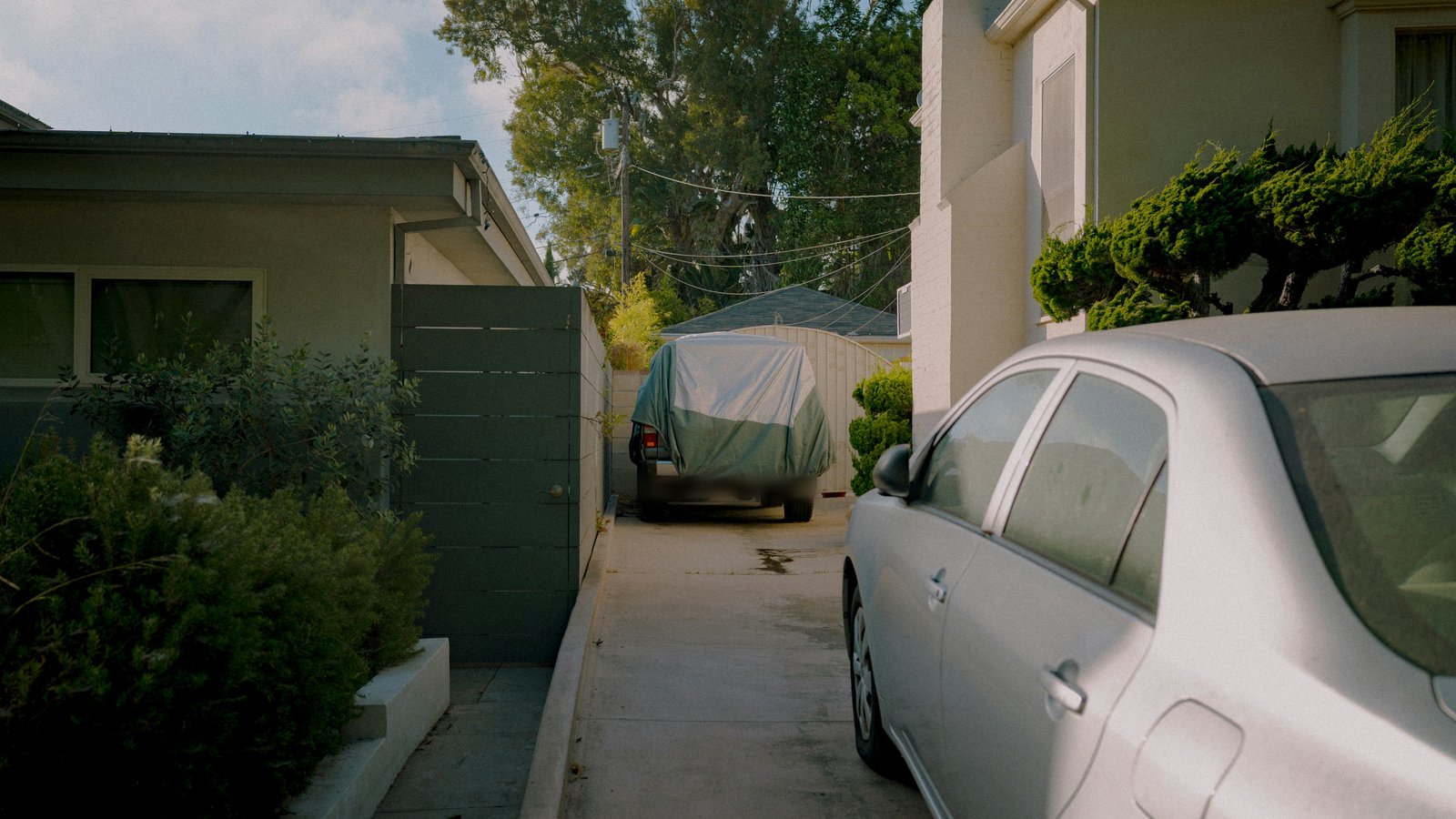
Photo: Lerone Pieters on Unsplash (photo WvkEiDEMshM), under the Unsplash License. Cropped and resized to 1600x900, with model lettering on the rear mud flaps of the covered vehicle blurred.
Frequently asked
Is the car owner responsible if someone else crashes their car in California?
It can be, if the driver had the owner's permission. Vehicle Code section 17150 makes every owner liable for death or injury to person or property caused by the negligent or wrongful operation of the vehicle by any person using it with the owner's permission, express or implied.
Is there a limit on what the owner can owe under the permissive-use rule?
Yes. Vehicle Code section 17151(a) limits the owner's liability under that chapter to $15,000 for injury to or death of one person, $30,000 for more than one person, and $5,000 for property damage in any one accident. The caps do not apply to liability that arises through a principal and agent or master and servant relationship.
Is the driver still responsible when the owner is also liable?
The owner caps in section 17151(a) limit the owner's liability under that chapter. They do not set a limit on what the driver who caused the crash may owe. The injured person may have claims against the driver, the owner, and the insurance that applies to each.
Can the owner be made to pay punitive damages for the driver's conduct?
Not under that chapter. Section 17151(b) says the owner is not liable for damages imposed to punish the operator of the vehicle. The owner is not immune from punitive damages for the owner's own wrongful conduct.
Are parents responsible when their teenager crashes a car?
They can be. Under Vehicle Code section 17707, the person who signed and verified the minor's license application is jointly and severally liable with the minor for damages from the minor's negligent driving on a highway. Under section 17708, parents or a guardian with custody who gave the minor express or implied permission to drive are jointly and severally liable too, whether or not the minor is licensed.
Is there a cap on parents' liability for a minor driver?
Yes. Vehicle Code section 17709(a) says no person, or group of persons together, is liable under sections 17707 and 17708 for more than $15,000 for one person, $30,000 for all persons, and $5,000 for property damage in any one accident. Section 17709(b) bars punitive damages for the minor's conduct under those sections.
What if the driver took the car without permission?
Section 17150 applies only to use with the owner's permission, express or implied. A car taken without permission, such as a stolen car, falls outside that wording. Whether a use was permitted, or went beyond what the owner allowed, depends on the facts, so talk to a lawyer about your situation.
How long do I have to file an injury claim after a crash in someone else's car?
Code of Civil Procedure section 335.1 generally gives two years to sue for injury caused by another's wrongful act or neglect. Exceptions and tolling rules can move these dates, and waiting for a report generally does not pause them.
Attorney Advertising. This article is general information, not legal advice, and does not create an attorney-client relationship. Prior results do not guarantee a similar outcome.