
Truck Driver Hours-of-Service Violations and Crashes in California
Short answer: Federal rules generally limit an interstate property-carrying truck driver to 11 hours of driving inside a 14-hour on-duty window after 10 hours off. California intrastate truck drivers have separate limits of 12 hours of driving and a 16-hour window. A driver can also break the rules while fatigued even within those hours.
Attorney Advertising. This guide explains California and federal truck driver hours-of-service rules and primary sources, not a promise of any outcome. Prior results do not guarantee a similar outcome. This page is general information, not legal advice.
Hours-of-service rules control how long a commercial truck driver may drive and stay on duty before resting. After a crash with a large truck, those rules, and the logs that track them, can matter to the question of whether the driver and the trucking company followed the law. For an overview of truck crash claims in general, see our California truck accident guide. This page goes deeper on the hours rules themselves: which set applies, how fatigue is treated, who the rules are directed at, what records exist, how the California Highway Patrol (CHP) enforces the limits, and which deadlines apply. Every figure below was read in the linked primary source on October 29, 2026.
Which hours rules apply to a truck driver in California?
Two sets of rules can apply, and the first question is which one governs the driver at the time of the crash.
Under California Code of Regulations, title 13, section 1212.5, subdivision (b), motor carriers and drivers engaged in interstate commerce, and drivers of vehicles transporting hazardous substances or hazardous waste, follow the federal hours-of-service rules in Title 49, Code of Federal Regulations, Part 395. Drivers operating only within California (intrastate) generally follow the California limits in subdivision (a) of section 1212.5, which are adopted by the CHP.
The table below compares the main limits for property-carrying trucks. Both sets have exceptions, listed in 49 CFR section 395.1 for the federal rules and in 13 CCR section 1212 for the California rules.
| Limit | Federal interstate (49 CFR 395.3) | California intrastate truck (13 CCR 1212.5) |
|---|---|---|
| Off duty before driving | 10 consecutive hours off duty | Limits run from 10 consecutive hours off duty |
| Driving limit | 11 hours of driving | 12 cumulative hours of driving (10 hours for a tank vehicle over 500 gallons carrying flammable liquid) |
| On-duty window | No driving after the 14th consecutive hour after coming on duty | No driving after the end of the 16th hour after coming on duty |
| Break | No driving once 8 hours of driving pass without a 30-minute interruption (short-haul exceptions apply) | No matching break rule in section 1212.5 |
| Multi-day limit | 60 hours in 7 consecutive days, or 70 hours in 8 consecutive days if the carrier operates every day | 80 hours on duty in any 8 consecutive days |
| Restart | 34 or more consecutive hours off duty can end the 7 or 8 day period | 34 or more consecutive hours off duty can end the 8 day period |
Sources: 49 CFR section 395.3 on eCFR (current through October 27, 2026) and 13 CCR section 1212.5 on Cornell LII, both read on October 29, 2026.
A detail that is easy to miss: the federal 14-hour window is not a cap on total work. Under section 395.3(a)(2), a driver may not drive after 14 consecutive hours have passed since coming on duty, even if some of that time was spent loading, waiting, or on a break. The California 16-hour window works the same way for intrastate drivers.
Is it a violation to drive tired if the driver is still within the hours limits?
It can be. For interstate drivers, 49 CFR section 392.3 says no driver shall operate a commercial motor vehicle, and a motor carrier shall not require or permit a driver to operate one, while the driver’s ability or alertness is so impaired, or so likely to become impaired, through fatigue, illness, or any other cause, as to make it unsafe to begin or continue driving. The only stated exception is a grave emergency, where stopping would increase the hazard, and then only to the nearest place where the hazard is removed. California’s motor carrier regulations contain a parallel rule with nearly identical wording, 13 CCR section 1214.
Practical rule: being within the hours limits is not the same as being fit to drive. The hour counts and the fatigue rule are separate questions, and a log that shows legal hours does not answer the second one.
Some types of crashes in which hours and fatigue questions can come up include rear-end collisions, drifting out of a lane, run-off-road crashes, and crashes at night or early in the morning. These are examples only. Whether fatigue or hours played any role depends on the evidence in a particular case.
Who may be responsible when a driver is over hours?
The rules are written to reach more than the driver. Both 49 CFR section 395.3 and 13 CCR section 1212.5 say that no motor carrier shall permit or require a driver to drive beyond the limits, nor shall any driver drive. For fatigue, 49 CFR section 392.3, which applies to interstate drivers, and its California parallel, 13 CCR section 1214, use the same “require or permit” wording. Who is legally responsible in a civil injury claim is a separate question that depends on the facts and California law. The table below describes the roles different people and organizations can have, without suggesting that any one of them is at fault in a given crash.
| Person or organization | Role under the hours rules | What it may have or do after a crash |
|---|---|---|
| Truck driver | Records duty status and may not drive beyond the limits or while impaired by fatigue | Keeps the previous 7 days of records while on duty; may be placed out of service or cited |
| Motor carrier (the trucking company) | Shall not permit or require driving beyond the limits or while fatigued; keeps logs and supporting documents | Holds ELD data, dispatch, payroll, fuel, and trip records; its insurer may handle the claim |
| Broker or shipper | The hours rules quoted here are directed at carriers and drivers, not brokers or shippers | Whether either shares responsibility depends on the facts, such as schedule demands, and California law |
| California Highway Patrol | Enforces the state and federal hours rules on California roads | Inspects records, places drivers out of service, issues citations, and may prepare a crash report |
| Insurance company | No role under the hours rules | Investigates and responds to claims for the insured carrier or driver |
If a crash involves a truck owned or operated by a city, county, or state agency, different claim procedures apply. Our government claim guide explains that process.
What records can show an hours-of-service violation?
Under 49 CFR section 395.8, a motor carrier generally has to install and require its drivers to use an electronic logging device (ELD) to record duty status. Paper records of duty status are still allowed in limited situations listed in section 395.8(a)(1)(ii), including a driver who completes records on not more than 8 days within any 30-day period, certain driveaway-towaway operations, and vehicles manufactured before model year 2000.
Key timing and retention rules in section 395.8:
- Submission: the driver submits each record of duty status to the motor carrier within 13 days of the 24-hour period it covers (section 395.8(a)(2)(ii)).
- Carrier retention: the motor carrier keeps records of duty status and supporting documents for each driver for not less than 6 months from the date of receipt (section 395.8(k)(1)).
- Driver copy: the driver keeps a copy of each record of duty status for the previous 7 consecutive days, in the driver’s possession while on duty (section 395.8(k)(2)).
- Accuracy: no driver or motor carrier may make a false report in connection with a duty status, or disable, jam, or tamper with an ELD so it does not accurately record and retain required data (section 395.8(e)).
Logs are only one source. Supporting documents, dispatch messages, fuel and toll receipts, delivery records, and vehicle data can confirm or contradict what a log shows. Because 6 months is only a minimum retention period, some records may no longer exist after that time. Our guide to trucking accident lawsuits discusses the broader litigation process.
Illustrative hypothetical (not a case result)
A driver hauling freight only within California comes on duty at 5:00 a.m. after 10 consecutive hours off. The driver drives 6 hours, spends 3 hours loading and waiting, then drives another 5.5 hours. A crash happens at 9:30 p.m.
- Driving total: 6 + 5.5 = 11.5 hours, which is under the 12-hour intrastate driving limit in 13 CCR 1212.5(a)(2)(A).
- On-duty window: the 16th hour after coming on duty ended at 9:00 p.m. Driving at 9:30 p.m. is after the end of that window under section 1212.5(a)(2)(B).
- If the trip were interstate: the federal 14-hour window would have ended at 7:00 p.m., and the 11.5 driving hours would exceed the 11-hour federal limit in 49 CFR 395.3.
The numbers are invented to show how the limits are counted. They say nothing about fault, causation, or the value of any claim, and real cases often turn on exceptions, team driving, or records that do not match.
How does CHP enforce hours-of-service rules in California?
The CHP’s commercial enforcement manual, Highway Patrol Manual 82.6, chapter 7, “Driver Requirements” (revised April 2024), describes how officers handle hours violations:
- Intrastate truck drivers exceeding the limits in 13 CCR section 1212.5 shall be placed out of service. The manual lists exceptions, including adverse driving conditions and listed operations such as retail store deliveries, construction materials, tow trucks, and drivers operating within a 100-mile air radius of their normal work reporting location.
- Interstate drivers and drivers of vehicles transporting hazardous substances or federally designated hazardous wastes follow 49 CFR Part 395, and those exceeding the federal limits shall be placed out of service.
- Drivers exceeding permitted hours shall be cited under Vehicle Code section 34506(a), with the appropriate regulation noted on the CHP 215 Notice to Appear, subject to local District Attorney preferences.
Vehicle Code section 34506 makes it a misdemeanor to fail to comply with any CHP rule or regulation adopted under the listed sections regarding hours of service of drivers. A citation or out-of-service order is an enforcement step. It is not a finding in a civil injury case, and a crash claim does not depend on whether a citation was issued.
What deadlines apply after a truck crash in California?
These rules come from the sections linked below, as read on October 29, 2026. Each is a general rule. Exceptions and tolling rules can move these dates, and waiting for a report generally does not pause them.
| Rule | Generally | Primary source |
|---|---|---|
| Personal injury or wrongful death lawsuit | Within two years | CCP §335.1 |
| Government claim for injury, when a public agency’s truck is involved | Presented not later than six months after the claim accrues | Gov. Code §911.2 |
| Carrier retention of hours records | Not less than 6 months from receipt | 49 CFR §395.8(k) |
The record retention period is not a filing deadline, but it can be shorter than the time to file. Our California personal injury statute of limitations guide covers the general lawsuit timeline.
Key takeaways
- Interstate and hazardous materials drivers follow 49 CFR Part 395; intrastate truck drivers generally follow 13 CCR section 1212.5.
- Federal: 11 hours of driving, a 14-hour window, a 30-minute break after 8 hours of driving, and 60 or 70 hour multi-day limits.
- California intrastate: 12 hours of driving (10 for certain flammable liquid tank vehicles), a 16-hour window, and an 80-hour limit in 8 days.
- A 34-hour off-duty period can restart the multi-day count under both sets of rules.
- For interstate drivers, driving while impaired by fatigue can violate 49 CFR 392.3 even within the hour limits; 13 CCR 1214 contains a parallel California rule.
- The rules say a motor carrier shall not permit or require violations, so company records can matter as much as the driver’s.
- Carriers keep hours records for at least 6 months, and CHP can place over-hours drivers out of service and cite them.
Short checklist
- Note the date, time, and place of the crash, and whether the truck was operating within California only or across state lines.
- Write down any company name, truck number, or trailer details visible at the scene, and whether the truck appeared to belong to a public agency.
- Ask for the CHP or police report number.
- Keep your own medical records, photos, and witness names together.
- Keep in mind that the carrier’s hours records may be kept for as little as 6 months.
- Track the two-year lawsuit date and, for a public agency truck, the six-month claim date.
- Re-open the primary sources on the day you rely on them.
Video transcript
This video uses AI-generated visuals and an AI-generated voice. It is general information, not legal advice. Attorney Advertising.
Interstate truck drivers generally follow federal hours rules, and California intrastate drivers generally follow state rules.
Federal rules generally allow 11 hours of driving after 10 hours off duty, with no driving after the 14th consecutive hour after coming on duty. A 30-minute break is due after 8 hours of driving. Multi-day limits are 60 hours in 7 consecutive days or 70 hours in 8, and 34 or more hours off duty can restart that count.
California intrastate drivers generally may drive 12 hours, may not drive after the end of the 16th hour after coming on duty, and have an 80-hour limit in 8 days.
For interstate drivers, federal rules also bar unsafe fatigued driving, even within the limits.
Carriers keep duty status records for at least 6 months. Because 6 months is only the minimum retention period, some records may not be kept longer than that.
A California injury lawsuit generally has a two-year deadline, and a government claim over a public agency’s truck generally has six months. Exceptions and tolling rules can move these dates, and waiting for a report generally does not pause them.
This video uses AI-generated visuals and an AI-generated voice. It is general information, not legal advice. Attorney Advertising.
How LA Law Group can help from Chatsworth
LA Law Group serves California personal injury clients from our Chatsworth office at 21540 Prairie St Unit A, Chatsworth, CA 91311. We do not have offices in other cities. In a truck crash claim, our work can include reviewing which hours rules applied, requesting that logs and supporting records be preserved, and explaining the deadlines that fit the facts. Learn more on our personal injury practice page.
No attorney fee unless we win your case. You are responsible for case costs regardless of the outcome.
The written fee agreement explains how fees and costs are handled before any work begins. Our article on how personal injury lawyers get paid explains the basics.
Your initial consultation is free.
Call (866) 625-2529, or reach us through our contact page. More about the firm: about us.
Sources checked (dated October 2026)
Opened on October 29, 2026 (America/Los_Angeles). Electronic Code of Federal Regulations (eCFR, Title 49 current through October 27, 2026): 49 CFR §392.3; §395.1; §395.3; §395.8. California Code of Regulations: 13 CCR §1212.5 (Cornell LII); 13 CCR §1214 (Cornell LII). California Highway Patrol: HPM 82.6, chapter 7, Driver Requirements (revised April 2024). California Legislative Information: Veh. Code §34506; CCP §335.1; Gov. Code §911.2. The Cornell LII text of 13 CCR 1212.5 was read on that date; no conflicts were found among the sources.
This article is for general information only. It is not legal advice and does not create an attorney-client relationship. Reading it does not make LA Law Group your lawyers. Results depend on the facts and California law. Prior results do not guarantee a similar outcome. Attorney Advertising.
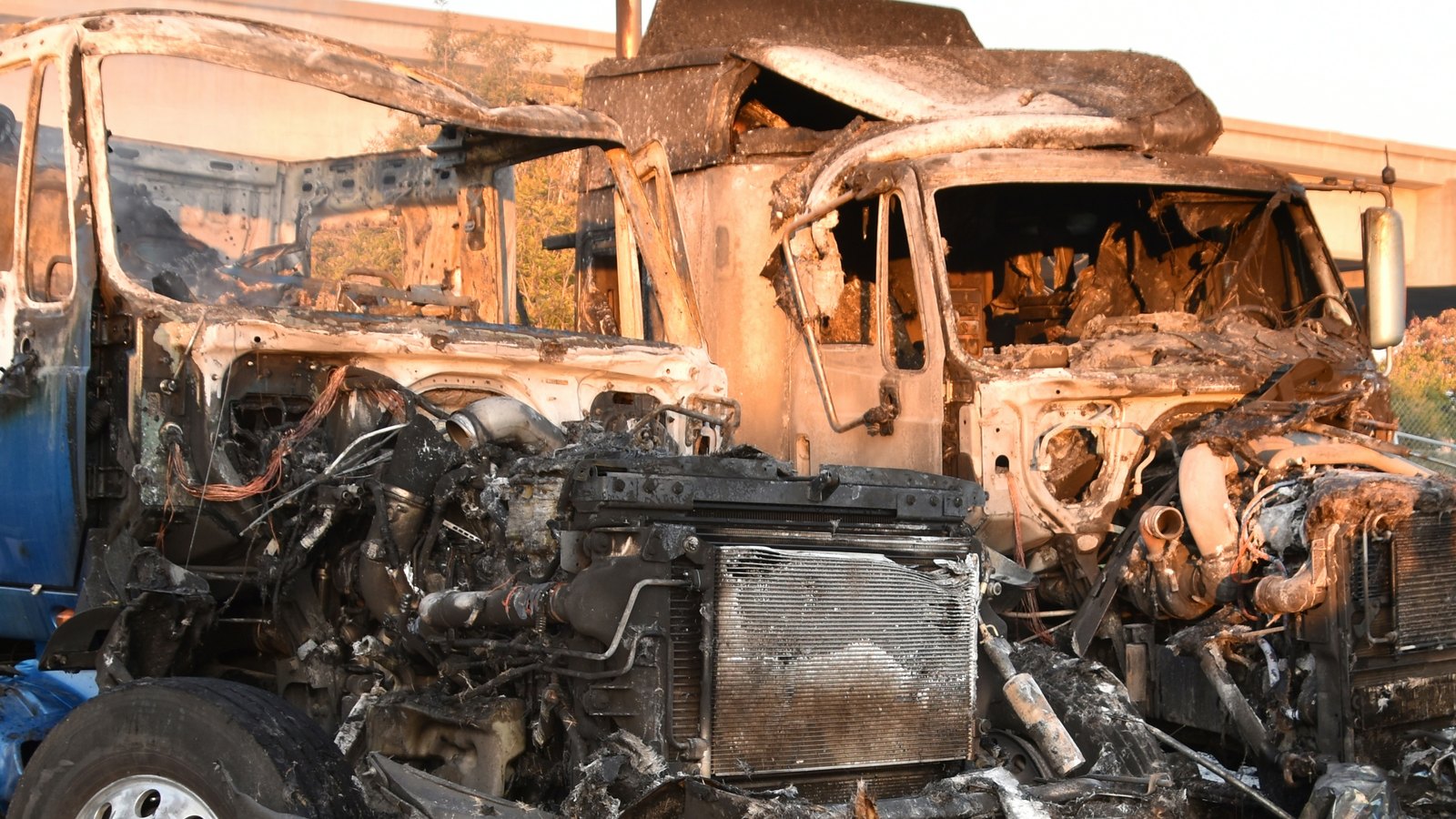
Photo: Bill Aboudi on Unsplash (photo np7tO3EYgww), under the Unsplash License. Cropped and resized to 1600x900; no other edits.
Frequently asked
What are the federal hours-of-service limits for property-carrying truck drivers?
Under 49 CFR section 395.3, a property-carrying driver generally needs 10 consecutive hours off duty before driving, may drive a total of 11 hours, and may not drive after the 14th consecutive hour following coming on duty. Driving is not permitted once 8 hours of driving have passed without a 30-minute interruption, unless a short-haul exception applies. Weekly limits are 60 hours on duty in 7 consecutive days or 70 hours in 8 consecutive days, depending on whether the carrier operates every day of the week.
Do California intrastate truck drivers follow different hours rules?
Yes. Under California Code of Regulations, title 13, section 1212.5, an intrastate truck driver generally may not drive more than 12 cumulative hours following 10 consecutive hours off duty, or after the end of the 16th hour after coming on duty. A driver of a tank vehicle over 500 gallons carrying flammable liquid is limited to 10 hours of driving. There is also an 80-hour limit for on-duty time in any 8 consecutive days. Interstate drivers and drivers hauling hazardous substances or hazardous waste follow the federal rules in 49 CFR Part 395 instead.
How many hours off duty does a truck driver need to reset the weekly limit?
Under both 49 CFR section 395.3(c) and 13 CCR section 1212.5(a)(5), the 7 or 8 consecutive day period can end with an off-duty period of 34 or more consecutive hours. Those 34 hours are a restart option, not a requirement after every trip.
Can a trucking company be responsible when its driver is over hours?
It can be. The federal and California hours rules are written to apply to motor carriers as well as drivers: they say a motor carrier shall not permit or require a driver to drive beyond the limits. Whether a company is legally responsible in a civil injury claim depends on the facts and California law, including the driver's relationship to the company and what the company knew or required.
Is it a violation to drive while fatigued even within the hours limits?
It can be. For interstate drivers, 49 CFR section 392.3 says no driver shall operate a commercial motor vehicle, and a motor carrier shall not require or permit a driver to operate one, while the driver's ability or alertness is so impaired, or so likely to become impaired, through fatigue, illness, or any other cause, as to make it unsafe. That rule applies on its own terms, separate from the hour counts, with a narrow exception for grave emergencies.
What records can show an hours-of-service violation, and how long are they kept?
Most carriers record duty status on an electronic logging device under 49 CFR section 395.8, with limited exceptions. The driver submits each record of duty status to the carrier within 13 days, the carrier keeps records of duty status and supporting documents for at least 6 months from receipt, and the driver keeps the previous 7 consecutive days while on duty. Because 6 months is only the minimum retention period, some records may not be kept longer than that.
What happens if CHP finds a driver over hours in California?
Under CHP Highway Patrol Manual 82.6, chapter 7, drivers who exceed the applicable hours limits are placed out of service, and drivers exceeding permitted hours are cited under Vehicle Code section 34506(a), subject to local District Attorney preferences. Section 34506 makes failing to comply with CHP hours-of-service regulations a misdemeanor. An out-of-service order or citation is separate from any civil injury claim.
Does an hours-of-service violation change the deadline to file an injury claim?
No. The ordinary deadline for a California personal injury lawsuit is generally two years under Code of Civil Procedure section 335.1, whether or not a log violation is found. If the truck belongs to a public agency, a government claim for injury generally is presented within six months under Government Code section 911.2. Exceptions and tolling rules can move these dates, and waiting for a report generally does not pause them.
Attorney Advertising. This article is general information, not legal advice, and does not create an attorney-client relationship. Prior results do not guarantee a similar outcome.