
Is California a No-Fault State?
No, California is an at-fault state. Under Civil Code section 1714(a), people are responsible for injuries caused by their lack of ordinary care. Vehicle Code section 16020(a) requires drivers to be able to establish financial responsibility, with minimum limits set in section 16056(a)(2), quoted below. The real question is who was at fault, and by how much.
Attorney Advertising. This guide explains how fault and insurance work after a California car crash, using official California statute and agency text. It is not a promise of any outcome or amount. This page is general information, not legal advice.
What does “no-fault” mean, and why isn’t California one?
“No-fault” and “at-fault” describe where an injured person looks first for payment after a crash.
In general terms, a no-fault system sends certain injury costs to the injured person’s own insurance policy first, no matter who caused the crash, and it limits when a lawsuit against the other driver can be brought. An at-fault system works the other way around. The person who caused the crash is responsible for the harm, and that person’s liability insurance is the usual source of payment.
California uses the at-fault approach. California does not use a no-fault system that sends injury costs to your own policy first simply because a crash happened.
| At-fault (California) | No-fault (general concept) | |
|---|---|---|
| Who is responsible for the harm | The person who caused the crash | The injured person’s own policy pays certain costs first |
| Main insurance source for an injured person | The at-fault driver’s liability coverage | The injured person’s own policy |
| Does fault matter? | Yes. It decides who pays, and shared fault changes the share | Less at the first stage; it can still matter later |
| Can the injured person bring a claim against the other driver? | Yes, based on fault | Limited by the rules of that system |
This page describes no-fault systems only as a concept. It does not list or count other states.
Where does California’s fault rule come from?
The basic rule of responsibility for carelessness is in Civil Code section 1714(a). The official text, read on California Legislative Information on November 12, 2026 (America/Los_Angeles), states:
“Everyone is responsible, not only for the result of his or her willful acts, but also for an injury occasioned to another by his or her want of ordinary care or skill in the management of his or her property or person, except so far as the latter has, willfully or by want of ordinary care, brought the injury upon himself or herself.”
In plain terms, a driver who fails to use ordinary care, and injures someone as a result, is responsible for that injury. That is why fault is central to California car-accident claims.
The California Department of Insurance says the same thing from the insurance side. Its consumer guide to automobile insurance, read on November 12, 2026 (America/Los_Angeles), opens its coverage summary with this line:
“Liability Coverage is for accidents that are your fault.”
Do California drivers have to carry insurance?
Yes. California requires drivers and owners to be able to show financial responsibility. Vehicle Code section 16020(a), read on California Legislative Information on November 12, 2026 (America/Los_Angeles), states:
“(a) All drivers and all owners of a motor vehicle shall at all times be able to establish financial responsibility pursuant to Section 16021, and shall at all times carry in the vehicle evidence of the form of financial responsibility in effect for the vehicle.”
The DMV’s insurance requirements page, read the same day, puts it this way:
“Insurance (also referred to as financial responsibility) is required on all vehicles operated or parked on California roads.”
The same DMV page explains what that insurance is for, and what does not count:
“Liability insurance compensates a person other than the policy holder for personal injury or property damage.”
“Comprehensive or collision insurance does not meet vehicle financial responsibility requirements.”
Notice what the required coverage protects. Liability insurance pays other people when the policyholder is at fault. That fits an at-fault system. A no-fault system would center on your own injuries instead.
What are the minimum liability limits?
The minimum limits are written into Vehicle Code section 16056. Paragraph (a)(2), read on California Legislative Information on November 12, 2026 (America/Los_Angeles), states:
“(2) Notwithstanding paragraph (1), for any policy or bond issued or renewed on or after January 1, 2025, if the accident has resulted in bodily injury or death, to a limit, exclusive of interest and costs, of not less than thirty thousand dollars ($30,000) because of bodily injury to or death of one person in any one accident and, subject to that limit for one person, to a limit of not less than sixty thousand dollars ($60,000) because of bodily injury to or death of two or more persons in any one accident, and, if the accident has resulted in injury to, or destruction of property, to a limit of not less than fifteen thousand dollars ($15,000) because of injury to or destruction of property of others in any one accident.”
Those are the statute’s own words. A minimum is a legal floor for a policy; it says nothing about what any injury is worth. For a fuller walk-through of the required coverage, see our guide to minimum insurance requirements in California.
Who pays first after a California car accident?
Because California is an at-fault state, the starting point is the at-fault driver’s liability coverage. In practice, though, more than one policy can be involved, and they do not all pay at the same moment. The Department of Insurance consumer guide, read on November 12, 2026 (America/Los_Angeles), describes each coverage in its own words:
| Source of payment | What the Department of Insurance guide says | Does fault matter? |
|---|---|---|
| The at-fault driver’s liability coverage | “Liability Coverage is for accidents that are your fault.” | Yes. It responds to the at-fault driver’s responsibility |
| Your own uninsured/underinsured motorist coverage | “Uninsured/Underinsured Motorist Coverage is for accidents when the other driver is at fault and does not have insurance or does not have enough insurance.” | Yes. The other driver must be at fault |
| Your own medical payments coverage | “Medical Payments Coverage pays limited medical expenses for people injured in the car you are driving when you have an accident, whether or not you are at fault.” | No. It applies whether or not you are at fault, if your policy includes it |
| Your health insurance | “Usually, your health insurance pays for your immediate medical care. Then your health insurance company will typically try to get back money from your auto insurance or the other person’s auto insurance.” | Not at first; the health plan may later seek repayment from an auto policy |
The same guide explains why the at-fault driver’s policy does not cover everything. It says that “Liability coverage does not pay for injuries to you or the people in your household”. About Uninsured/Underinsured Motorist Coverage, it says: “You must be offered this coverage, but you can choose not to buy it.” About Medical Payments Coverage, it says: “You may be offered this coverage, but you can choose not to buy it.” So which of these sources exists in a given crash depends on the policies actually in place.
In general: In California, a crash alone does not decide whose policy pays. Key questions include who caused the crash, in what share, and what coverage stands behind that person.
What if the other driver has no insurance?
Driving without insurance is against the law, but it still happens. The Department of Insurance guide says plainly: “Driving without insurance is illegal.”
When the at-fault driver has no liability coverage, the injured person’s own uninsured motorist coverage, if the policy includes it, may become the main source. California’s Insurance Code ties that coverage to what a person is legally entitled to recover from the at-fault driver. Insurance Code section 11580.2(a)(1), read on California Legislative Information on November 12, 2026 (America/Los_Angeles), describes the provision as one:
“insuring the insured, the insured’s heirs or legal representative for all sums within the limits that he, she, or they, as the case may be, shall be legally entitled to recover as damages for bodily injury or wrongful death from the owner or operator of an uninsured motor vehicle.”
The phrase “legally entitled to recover” points straight back to fault. Even when your own policy is paying, the claim still turns on whether the other driver was at fault. For more on these situations, see our guide on what happens after an accident with an uninsured driver.
What happens when both drivers share the fault?
Many crashes are not one driver’s fault alone. The Department of Insurance guide, read on November 12, 2026 (America/Los_Angeles), answers the question “What if both drivers are at fault?” this way:
“In many accidents, both drivers share the fault. The police, the insurance companies, or the courts, decide the comparative negligence. This states each driver’s share of the responsibility.”
The guide’s glossary defines comparative negligence as “The percent of responsibility that each driver shares in an accident when both drivers are at fault.”
Shared fault does not turn California into a no-fault state. It does the opposite: it makes fault even more important, because each driver’s share affects the claim. This page does not work through percentages or sample reductions. For how shared fault is handled in California, see our guide to comparative negligence in California.
Do I have to report a crash to the DMV?
California has a separate reporting rule under the financial responsibility laws. Vehicle Code section 16000(a), read on California Legislative Information on November 12, 2026 (America/Los_Angeles), states:
“(a) The driver of a motor vehicle who is in any manner involved in an accident originating from the operation of the motor vehicle on a street or highway, or is involved in a reportable off-highway accident, as defined in Section 16000.1, that has resulted in damage to the property of any one person in excess of one thousand dollars ($1,000), or in bodily injury, or in the death of any person shall report the accident, within 10 days after the accident, either personally or through an insurance agent, broker, or legal representative, on a form approved by the department, to the office of the department at Sacramento, subject to this chapter. The driver shall identify on the form, by name and current residence address, if available, any person involved in the accident complaining of bodily injury.”
This DMV report is not the same thing as a police report, and it is not the same thing as an insurance claim. Each runs on its own track.
Section 16000 has exceptions in other subdivisions. For more, see our guide on failure to report an accident.
What can this look like in practice?
Illustrative hypothetical, not a case result: This example is fictional. It does not describe a real client and does not predict any outcome. Two cars collide at an intersection, and one passenger is hurt. One driver says the light was yellow; the other says it was red. A week later, both insurers are still trading statements. The injured passenger’s health plan has covered the first urgent-care visit and has sent a letter about getting repaid later. Nobody’s policy pays simply because a crash happened. The questions that move the claim are the ones in this guide: which driver failed to use ordinary care, whether both share some of the fault, what liability coverage each driver carries, and whether the passenger’s own policy includes medical payments or uninsured motorist coverage. The details are made up to show how the pieces fit together. They are not a case result, and they do not convert into a dollar figure.
How do attorney fees work at LA Law Group?
No attorney fee unless we win your case. You are responsible for case costs regardless of the outcome.
The written fee agreement explains how fees and costs are handled before work begins.
Key takeaways
- California is an at-fault state, not a no-fault state. The answer does not change for shared-fault crashes or uninsured drivers.
- Civil Code section 1714(a) is the general rule of responsibility for a lack of ordinary care.
- Vehicle Code section 16020(a) requires drivers and owners to be able to establish financial responsibility, and section 16056(a)(2) sets the minimum limits in the statute’s own words.
- The at-fault driver’s liability coverage is the usual starting point. Your own medical payments, uninsured motorist, and health coverage may also be involved, depending on the policies.
- When both drivers share fault, each driver’s share affects the claim.
- Vehicle Code section 16000(a) has its own DMV reporting rule, separate from any insurance claim.
Short checklist
- The crash report or report number, photos, and the names of any witnesses.
- The other driver’s name, insurer, and policy number, if available.
- Your own auto policy declarations page, showing which coverages you carry.
- Health insurance information and any letters about repayment.
- Medical records and bills from the first visit onward.
- Any DMV accident report filed under Vehicle Code section 16000(a).
- Notes on how the crash happened, written while memories are fresh.
How can LA Law Group help?
LA Law Group serves California personal injury clients from our main office at 21540 Prairie St Unit A, Chatsworth, CA 91311. We can review the fault picture, the insurance policies involved, and the deadlines, and explain the next steps in a written agreement before any work starts.
To learn more, visit our personal injury practice page.
Your initial consultation is free.
Call (866) 625-2529.
Sources checked
Official sources checked on November 12, 2026 (America/Los_Angeles):
- Civil Code section 1714
- Vehicle Code section 16000
- Vehicle Code section 16020
- Vehicle Code section 16056
- Insurance Code section 11580.2
- California DMV, Insurance Requirements
- California Department of Insurance, Automobile Insurance consumer guide
This article is for general information only. It is not legal advice and does not create an attorney-client relationship. Reading it does not make LA Law Group your lawyers. Results depend on the facts and California law. Prior results do not guarantee a similar outcome. Attorney Advertising.
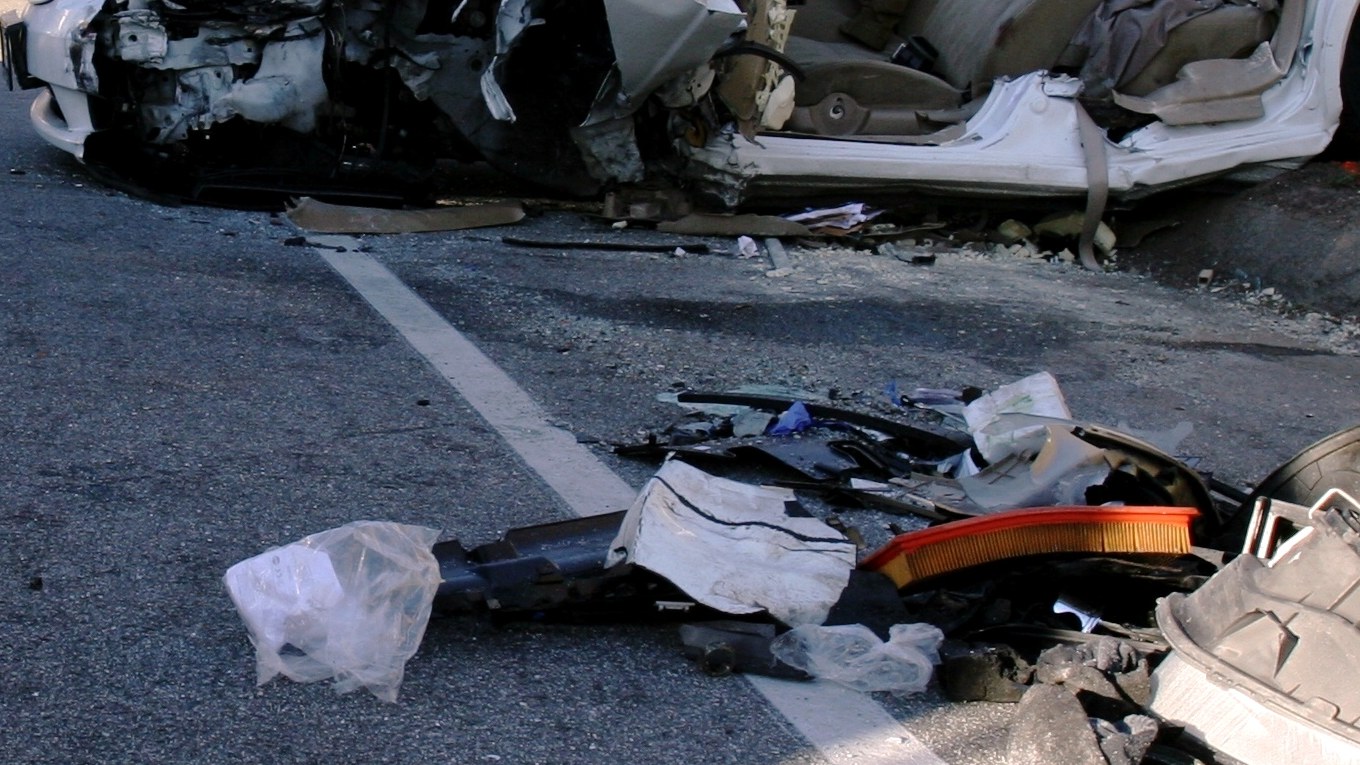
Photo: Daniel Boothe, U.S. Marine Corps, public domain, via Wikimedia Commons; cropped. Use of this photo does not imply endorsement by the U.S. Marine Corps or the Department of Defense. The photo is illustrative and does not show a client or a case handled by LA Law Group.
Frequently asked
Is California a no-fault state?
No. California is an at-fault state. Civil Code section 1714(a) states: "Everyone is responsible, not only for the result of his or her willful acts, but also for an injury occasioned to another by his or her want of ordinary care or skill in the management of his or her property or person, except so far as the latter has, willfully or by want of ordinary care, brought the injury upon himself or herself." The California Department of Insurance auto guide says: "Liability Coverage is for accidents that are your fault."
What is the difference between a no-fault state and an at-fault state?
In general terms, a no-fault system routes certain injury costs through the injured person's own policy first, whoever caused the crash, and limits when a lawsuit can be brought. An at-fault system, which is what California uses, looks to the person who caused the crash, and that person's liability insurance, to pay for the harm. This page does not list or count other states.
Who pays for my injuries after a car accident in California?
Generally, the driver who caused the crash is responsible, and that driver's liability coverage is the usual source of payment. The California Department of Insurance describes it this way: "Liability Coverage is for accidents that are your fault." Your own coverages, such as medical payments or uninsured motorist coverage, may also play a role depending on the policy.
What happens if both drivers share the fault?
Shared fault is common. The California Department of Insurance auto guide says: "In many accidents, both drivers share the fault. The police, the insurance companies, or the courts, decide the comparative negligence. This states each driver's share of the responsibility." Our guide to comparative negligence in California explains how shared fault affects a claim.
Do California drivers have to carry car insurance?
Yes. Vehicle Code section 16020(a) states: "All drivers and all owners of a motor vehicle shall at all times be able to establish financial responsibility pursuant to Section 16021, and shall at all times carry in the vehicle evidence of the form of financial responsibility in effect for the vehicle." The DMV says: "Insurance (also referred to as financial responsibility) is required on all vehicles operated or parked on California roads."
What are the minimum liability insurance limits in California?
The minimums are set by Vehicle Code section 16056(a)(2), which this page quotes in full in the section on minimum liability limits, as read on California Legislative Information on November 12, 2026 (America/Los_Angeles). For more detail, see our guide to minimum insurance requirements in California.
Can my own insurance pay if the other driver was at fault or uninsured?
It can, depending on the policy. The California Department of Insurance auto guide says: "Uninsured/Underinsured Motorist Coverage is for accidents when the other driver is at fault and does not have insurance or does not have enough insurance." It also says: "Medical Payments Coverage pays limited medical expenses for people injured in the car you are driving when you have an accident, whether or not you are at fault." Which coverages a person has depends on the policy.
Do I have to report a car accident to the DMV in California?
Vehicle Code section 16000(a) sets a DMV reporting rule for certain accidents. This page quotes the full subdivision, as read on California Legislative Information on November 12, 2026 (America/Los_Angeles). Section 16000 has exceptions in other subdivisions. For more, see our guide on failure to report an accident.
Attorney Advertising. This article is general information, not legal advice, and does not create an attorney-client relationship. Prior results do not guarantee a similar outcome.