
Car Accident Lawyer in California
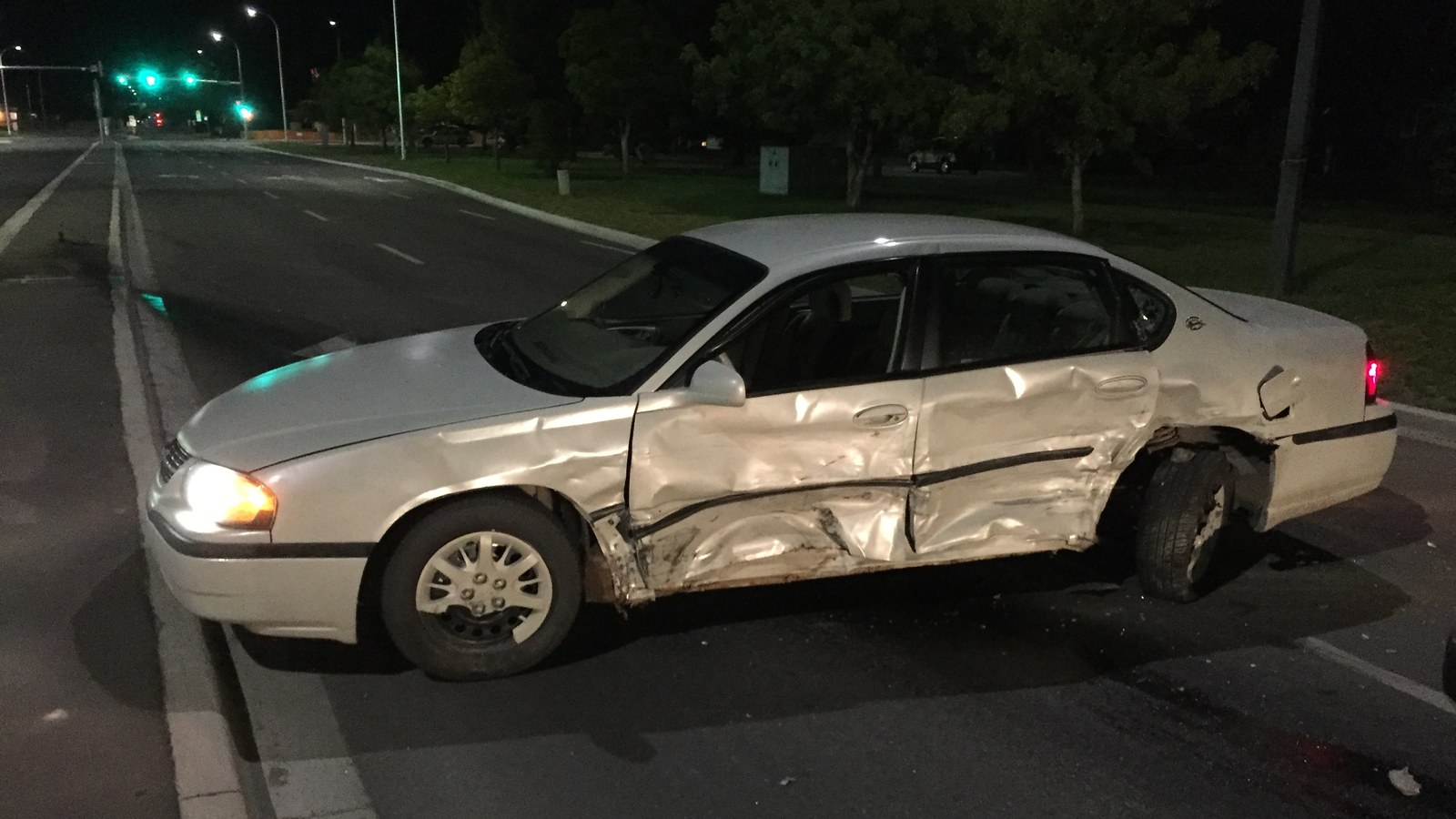
A car accident lawyer in California can help review who may be at fault, which reports were due, and which deadlines are running. Many California injury claims have a two-year filing deadline, claims against a public entity can require notice within six months, and the DMV asks drivers to report many crashes within 10 days.
Attorney Advertising. This page is general educational information, not legal advice, a ranking, or an award. Prior results do not guarantee a similar outcome.
What do the numbers say about California traffic crashes?
The California Office of Traffic Safety (OTS), drawing on state SWITRS and federal FARS data and updated in July 2025, reports that traffic fatalities decreased nearly 11% from 4,539 in 2022 to 4,061 in 2023. These are fatality counts for the stated years. They do not measure injuries, and they do not say who was at fault in any crash.
What should a driver do right after a crash in California?
Many drivers begin with safety and medical care. Vehicle Code section 20002 says the driver in a property-damage accident shall stop at the nearest location that will not impede traffic or jeopardize others, and that moving the vehicle this way does not affect the question of fault. Many people then photograph the scene and collect names, phone numbers, insurance details, and a report number.
What reporting duties does California law set out?
Several different reports can apply to the same crash. The table summarizes what the sources say and does not apply them to any particular crash.
| Situation | What the source says | Source |
|---|---|---|
| Property damage only | Stop, then locate the owner and give name and address, or leave a written notice and notify police or the CHP without unnecessary delay | Veh. Code 20002 |
| Injury or death | Stop at the scene, give name, address, vehicle registration, and owner details, and give reasonable assistance to anyone injured | Veh. Code 20001 and 20003 |
| Injury or death, written report | A written report to the CHP, or to the CHP or city police if the crash was in a city, within 24 hours (common carrier vehicles have a different rule) | Veh. Code 20008 |
| DMV report (SR 1) | A report to the DMV within 10 days if anyone was injured or killed or property damage to any one person exceeded $1,000, filed by the driver personally or through an insurance agent, broker, or legal representative | Veh. Code 16000 and the DMV SR-1 page |
The DMV says the SR 1 is required in addition to any report made to the police, the CHP, or an insurance company, and that it applies regardless of fault. The SR 1 form also says untimely reporting could lead to a license suspension. Section 16000 lists exceptions, including certain government-owned vehicles.
Practical note: When it is safe, photographs of every vehicle, the road, skid marks, and traffic signs can be taken before vehicles are moved or repaired, because details can be hard to reconstruct later.
How long can a California car accident claim take to file?
Deadlines are one of the most important parts of any injury claim, and they are easy to miss.
- Private defendants. Code of Civil Procedure section 335.1 sets a two-year period for an action for injury to, or the death of, an individual caused by the wrongful act or neglect of another. See also our guide to the personal injury statute of limitations.
- Public entities. If a government vehicle or a government road condition is involved, Government Code section 911.2 says a claim for death or injury to a person must be presented not later than six months after the cause of action accrues.
- Your own uninsured or underinsured motorist coverage. Insurance Code section 11580.2(i) says no cause of action accrues under that coverage unless, within two years of the accident, a suit has been filed against the uninsured motorist, the amount due has been agreed, or arbitration has been started by written notice sent by certified mail, return receipt requested. The same subdivision lists situations that can excuse a missed date.
- Facts change the dates. Which deadline applies depends on who may be responsible and what coverage is involved. A lawyer can compare the dates for each possible party.
How does shared fault work in a California car accident claim?
California uses pure comparative negligence, adopted in Li v. Yellow Cab Co. (1975). The court held that damages awarded are diminished in proportion to the negligence attributable to the person recovering, so a driver who bears some fault may still seek compensation, reduced by their own percentage.
When more than one defendant is involved, Civil Code section 1431.2 provides that, in a comparative-fault personal injury action, each defendant’s liability for non-economic damages is several only, and each defendant is liable only for the amount allocated in direct proportion to that defendant’s percentage of fault. The statute defines economic damages as objectively verifiable monetary losses such as medical expenses, loss of earnings, and costs of repair or replacement. It defines non-economic damages as subjective, non-monetary losses such as pain, suffering, and emotional distress.
What are California’s minimum insurance limits?
Vehicle Code section 16056, as shown in Justia’s 2025 California Code and checked on October 16, 2026, sets the following financial responsibility limits.
- Policies issued or renewed on or after January 1, 2025: $30,000 for bodily injury or death of one person, $60,000 for two or more people in one accident, and $15,000 for property damage. The DMV’s SR 1 form states the same figures.
- Earlier policies: $15,000, $30,000, and $5,000 for the same three categories.
- Policies issued or renewed on or after January 1, 2035: subdivision (d) increases the minimums by $20,000 for one person, $40,000 for all persons, and $10,000 for property damage.
A minimum is a floor, not a statement of what a claim is worth or what coverage exists after a particular crash.
Who may pay, and who acts first?
After a crash, several sources of payment can be in play, and each has its own steps and timing. The table describes possibilities only. Policy wording and the facts decide what applies.
| Source | When it may apply | Who acts, and how |
|---|---|---|
| The at-fault driver’s liability insurance | When another driver is legally responsible for injuries or damage | The injured person or a representative presents the claim to that driver’s insurer, and a lawsuit may follow |
| Your own medical payments coverage | If your policy includes it, for medical bills regardless of fault | You or your representative notifies your insurer under the policy terms. Section 11580.2(e) lets a policy reduce uninsured motorist damages by amounts paid under medical payments coverage |
| Your own uninsured or underinsured motorist coverage | If the other driver has no applicable insurance, too little insurance, or cannot be identified and the statute’s conditions are met | You or your representative notifies your insurer. For underinsured claims, the statute says coverage does not apply until the at-fault liability limits are exhausted by payment |
| A public entity | If a government vehicle or road condition played a role | A written claim goes to the entity within six months under Government Code section 911.2 |
| A rideshare or commercial policy | If a rideshare or commercial vehicle was involved | Different coverage rules can apply, depending on the vehicle and the facts |
What if the other driver is uninsured or leaves the scene?
Insurance Code section 11580.2 generally requires California auto liability policies to include uninsured motorist coverage unless the insurer and the named insured agree in writing to delete it or reduce it, and it treats an underinsured vehicle as an uninsured one. Where the owner or operator is unknown, the statute describes two conditions: the injury arose out of physical contact of that vehicle with the insured or the vehicle the insured occupied, and someone reported the accident within 24 hours to the police or the CHP (or the county sheriff in unincorporated areas) and the insured filed a sworn statement with the insurer within 30 days.
Whether a driver can be identified, and what coverage applies, are fact questions. Our guide to the uninsured motorist claim explains the general process.
Hypothetical: shared fault and who pays first (illustrative)
Hypothetical (illustrative only, not a real client, not a case result, not a prediction): A driver is rear-ended after slowing for a yellow light on a California surface street. Within 10 days an SR 1 report is filed with the DMV because a passenger went to urgent care. The driver photographs the road and both vehicles and keeps the report number.
Months later, assume a fact-finder were to find economic damages of $40,000 and non-economic damages of $60,000, a total of $100,000. It assigns 80% of fault to the other driver and 20% to the injured driver, for example over a disputed braking distance. As arithmetic only, the award is reduced by 20%, which is $20,000, leaving $80,000.
Now assume the other driver’s policy has the $30,000 per-person minimum and the injured driver carries $100,000 in underinsured motorist limits. The other driver’s policy pays $30,000. The statute describes the underinsured insurer’s cap as its coverage limits less the amount paid by the liable party, which here is $70,000, so the remaining $50,000 is within that cap, subject to the policy terms. The totals: $30,000 plus $50,000 equals $80,000. The numbers are invented to show how the rules fit together. Real cases involve many more variables. Educational only.
How fees and case costs work at LA Law Group
No attorney fee unless we win your case. You are responsible for case costs regardless of the outcome.
All fee and cost terms are set out in a written fee agreement before work begins. Aryan Amid, Esq., the firm’s founding attorney, and the team can walk through that agreement line by line.
Your initial consultation is free.
Talk with LA Law Group
LA Law Group, APLC is based in Chatsworth and handles California injury matters statewide, with Aryan Amid, Esq., the firm’s founding attorney. We communicate in English, Spanish, and Farsi.
Your initial consultation is free.
To discuss a car crash, call (866) 625-2529. Our Chatsworth office is at 21540 Prairie St Unit A, Chatsworth, CA 91311. Read more on our personal injury practice area page.
More California crash guides
Key takeaways
- Many California injury lawsuits face a two-year deadline under Code of Civil Procedure section 335.1. Claims against a public entity can require a claim within six months under Government Code section 911.2.
- Several reports can apply to one crash: the Vehicle Code sections 20001 through 20003 duties at the scene, a written report within 24 hours for injury or death under section 20008, and the DMV SR 1 within 10 days under section 16000.
- California’s comparative fault rules can reduce, but do not automatically bar, compensation when fault is shared.
- For policies issued or renewed on or after January 1, 2025, the minimum limits are $30,000, $60,000, and $15,000 under Vehicle Code section 16056, and a minimum is a floor, not a measure of a claim.
- The Office of Traffic Safety reports 4,061 California traffic deaths in 2023, down from 4,539 in 2022. These are fatality counts, not injury counts.
- No attorney fee unless we win your case. You are responsible for case costs regardless of the outcome.
Checklist: information to gather when speaking with counsel (general information)
- Medical records, bills, and a list of providers
- Photos and video of the scene, the vehicles, the road, and any visible damage
- The police or CHP report number, and a copy of any DMV SR 1 filed
- Names, phone numbers, and insurance details for the other drivers and any witnesses
- Dashcam or phone video from your own vehicle
- Auto, medical payments, health, and uninsured motorist insurance information
- Dates, since deadlines can differ if a public entity may be involved
This article is for general information only. It is not legal advice and does not create an attorney-client relationship. Reading it does not make LA Law Group your lawyers. Results depend on facts and California law. Prior results do not guarantee a similar outcome. Attorney Advertising.
Photo: “Vehicle After a Side-Impact Collision” by Kkiefuik (cropped and resized), Wikimedia Commons, CC BY 4.0

Frequently asked
What steps do California rules describe after a car accident?
Many drivers start by moving to a safe spot if the vehicle can be moved, checking for injuries, and calling 911 when someone is hurt. Vehicle Code sections 20001 through 20003 describe duties to stop, share name, address, and vehicle information, and give reasonable help to anyone injured. Photos and witness details can help later.
Do I have to report a car accident to the DMV or police in California?
Often yes. The DMV says an SR 1 report is due within 10 days if anyone was injured or killed or property damage was over $1,000, whatever the fault. Separately, Vehicle Code section 20008 calls for a written report to the CHP, or to the CHP or city police if the crash was in a city, within 24 hours when someone is injured or killed.
How long do I have to file a car accident claim in California?
For many injury claims, Code of Civil Procedure section 335.1 sets a two-year deadline to file a lawsuit. A claim against a public entity can require a written claim within six months under Government Code section 911.2. Which deadline applies depends on who may be responsible.
How does fault work when both drivers share blame in California?
California follows pure comparative negligence under Li v. Yellow Cab Co. (1975). A person who shares some fault may still seek compensation, reduced by that person's own percentage of fault. Under Civil Code section 1431.2, each defendant's liability for non-economic damages is several only.
Should I give the other driver's insurer a recorded statement?
A recorded statement is something an insurer asks for, and what is said early can come up later when fault and injuries are discussed. A lawyer can explain the tradeoffs before one is given.
What if the other driver is uninsured or leaves the scene?
A driver's own policy may include uninsured and underinsured motorist coverage. For a driver who cannot be identified, Insurance Code section 11580.2 describes conditions that include physical contact, a police report within 24 hours, and a sworn statement to the insurer within 30 days.
What damages can be claimed after a California car accident?
Depending on the facts, a claim can involve economic damages, which Civil Code section 1431.2 describes as objectively verifiable monetary losses such as medical expenses and loss of earnings, and non-economic damages such as pain and emotional distress. What a claim is worth turns on the evidence.
What are California's minimum car insurance limits?
Vehicle Code section 16056 sets $30,000 for injury or death of one person, $60,000 for two or more people, and $15,000 for property damage for policies issued or renewed on or after January 1, 2025. A further increase is scheduled for policies issued or renewed on or after January 1, 2035. A minimum is a floor, not a measure of a claim.
Attorney Advertising. This article is general information, not legal advice, and does not create an attorney-client relationship. Prior results do not guarantee a similar outcome.